
Grass Types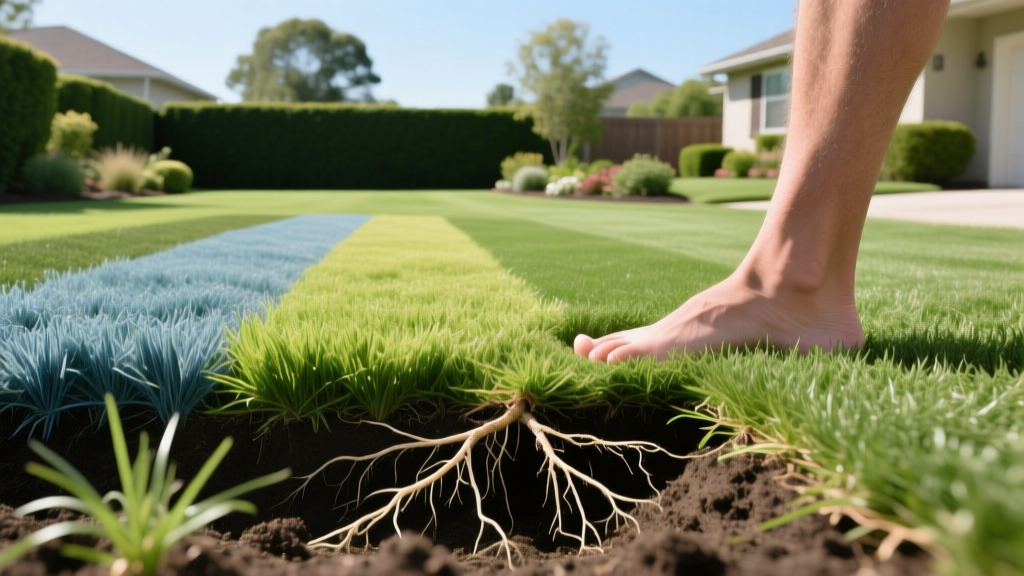
What Happens If I Walk on New Turf? A Root Establishment Guide
The Immediate Consequences of Foot Traffic on Fresh Sod
When homeowners ask, what happens if i walk on new turf, the answer lies in the fragile biological and physical state of the grass during its first 30 days. Freshly laid sod or newly germinated seed has virtually no anchoring root system. When sod is harvested at the farm, up to 95% of its deep root mass is severed and left behind. The grass survives temporarily on stored carbohydrates and surface moisture while it attempts to push new adventitious roots into your soil.
If you walk on new turf before these roots have penetrated the soil profile, you trigger three specific failure modes: root shearing, subsurface compaction, and moisture barrier disruption. According to turfgrass researchers at Penn State Extension, the critical establishment window requires absolute minimal traffic to allow the sod knit to form without mechanical separation.
⚠️ WARNING: The 'Tug Test' Misconception
Many guides suggest pulling gently on the grass to see if it resists. If you perform this test too early (before Day 14) or with too much force, you will manually snap the microscopic root hairs (which are only 1–3 mm long) that are just beginning to bridge the sod-soil interface. Always test by lightly pressing your thumb into the soil seam, not by pulling the grass blades.
The Biological Mechanics of Turf Establishment
To understand the damage caused by walking on new grass, you must understand the timeline of root regeneration. The establishment process occurs in distinct biological phases, each with varying levels of vulnerability to physical pressure.
Phase 1: Hydration and Initial Knitting (Days 1–14)
During the first two weeks, the sod is essentially a sponge sitting on top of the soil. The primary goal is keeping the root zone moist to prevent the base of the plant (the crown) from desiccating. New root primordia begin to emerge from the basal nodes. These new roots are highly succulent, lack a protective lignified outer layer, and are incredibly prone to snapping. A single footstep during this phase can shift the entire sod slab by a fraction of an inch, instantly severing every new root connection.
Phase 2: Deep Root Penetration (Days 15–30)
By week three, cool-season grasses like Kentucky Bluegrass and Tall Fescue begin pushing roots 1 to 2 inches deep into the native soil. The grass transitions from relying on stored carbohydrates to actively photosynthesizing and drawing nutrients from the soil. Foot traffic during this phase doesn't just snap roots; it compresses the soil pores, restricting the oxygen necessary for continued root elongation.
What Physically Happens When You Step on Fresh Sod
The mechanical impact of a human footstep (which exerts roughly 10 to 15 psi of pressure) on wet, newly laid turf causes severe subsurface damage. Here is the exact physical breakdown of the damage:
- Micro-Tearing of the Crown: The crown is the growth point of the grass, located right at the soil line. When the sod slab shifts under your weight, the crown is twisted against the rough native soil, causing vascular damage that restricts water uptake.
- Soil Compaction and Bulk Density Spikes: Healthy, aerated topsoil has a bulk density of roughly 1.2 g/cm³. When you walk on wet new turf, the water acts as a lubricant, allowing soil particles to slide together. This can spike the bulk density in the top 2 inches past 1.5 g/cm³. As noted by Michigan State University Extension, root growth severely restricts and eventually halts when soil bulk density exceeds 1.4 to 1.6 g/cm³, depending on soil texture.
- Seam Separation: Sod is laid in rolls with tight seams. Foot traffic near the edges of these rolls causes the edges to lift and curl. Once a seam lifts, the exposed soil dries out rapidly, killing the roots at the perimeter of the roll and creating permanent brown lines in your lawn.
Turf Vulnerability vs. Foot Traffic Tolerance Timeline
Not all days are equally dangerous. Use this data matrix to determine when your lawn can handle specific types of traffic. This timeline assumes optimal watering and temperatures between 65°F and 80°F.
| Timeframe | Root Depth | Vulnerability Level | Permitted Traffic |
|---|---|---|---|
| Days 1–10 | 0 mm (Surface only) | Critical (100%) | None. Only enter to move sprinklers or check irrigation. |
| Days 11–20 | 5–15 mm | High (75%) | Light, flat-footed walking in soft-soled shoes for mowing only. |
| Days 21–30 | 20–40 mm | Moderate (40%) | Normal walking. Avoid sharp pivots, running, or heavy equipment. |
| Days 31–45 | 50+ mm | Low (10%) | Full recreational use, pet traffic, and standard lawn care. |
Identifying Foot Traffic Damage on New Grass
If you have already walked on your new turf, you need to identify whether structural damage has occurred. Look for these three specific visual indicators:
1. Non-Rebounding Footprinting
Walk across the lawn and look back at your path. If the grass blades remain flattened and do not spring back upright within 30 minutes, the turgor pressure inside the plant cells has collapsed. This indicates severe moisture stress, often caused by severed roots that can no longer pull water from the soil to keep the blades rigid.
2. Chlorotic (Yellow) Traffic Paths
If you see a faint yellowing exactly where you or a pet have been walking, this is not a disease. It is mechanical chlorosis. The pressure of the footstep has crushed the leaf tissue and damaged the chloroplasts. While the blade itself will eventually be replaced, it signals that the underlying crown is under immense stress.
3. Edge Curling and Seam Gaps
Inspect the seams where the sod rolls meet. If you see gaps wider than 1/8 of an inch, or if the edges of the sod are curling upward like a taco shell, foot traffic has shifted the slabs. This exposes the underlying soil to UV radiation and wind, rapidly drying out the critical root zone.
Recovery Protocols for Accidental Trampling
If you discover that your new turf has been damaged by premature foot traffic, immediate intervention is required to save the grass. Do not apply high-nitrogen fertilizers; this forces the plant to push top growth at the expense of the damaged root system. Instead, follow this targeted recovery protocol:
- Re-Knit the Seams: If edges have lifted, gently press them back down. If gaps have formed, fill them with a 50/50 mix of topsoil and fine compost to prevent the edges from drying out.
- Apply a Rooting Stimulant: Apply a liquid kelp and humic acid blend (such as SeaHume at a rate of 3 oz per 1,000 sq ft). The natural cytokinins and auxins in kelp extract stimulate lateral root branching and help the plant recover from physical shock.
- Adjust Irrigation Cycles: Damaged roots cannot absorb water efficiently. Switch from deep, infrequent watering to short, frequent pulses. Apply 0.25 inches of water three times a day (morning, noon, and early afternoon) for 5 days to keep the crown hydrated without waterlogging the compacted soil.
- Delay Core Aeration: While aeration fixes compaction, doing it on new turf will tear the fragile root mat. Wait until Day 45, then perform a shallow core aeration using 2-inch tines to relieve the bulk density spikes caused by your footsteps.
For comprehensive regional data on grass species and their specific rooting depths, consult the NC State TurfFiles database, which provides exact establishment metrics for both warm-season and cool-season cultivars.
Frequently Asked Questions
Can I mow my new lawn if I walk on it?
Yes, but only after the grass reaches 3.5 inches in height and has passed the 'tug test' (usually around Day 14-18). Use a lightweight push mower, ensure the blades are razor-sharp to prevent lifting the sod, and walk with a flat-footed gait. Never use a heavy riding mower or zero-turn on turf less than 45 days old.
Does walking on new winter dormant sod cause damage?
Yes. Even if the grass is dormant (brown) and installed in late fall, the root-to-soil interface still needs to knit before the ground freezes. Walking on dormant sod compresses the soil and breaks the initial root hairs, leading to severe winter desiccation and dead patches when the grass breaks dormancy in spring.
What if my dog runs across the new turf once?
A single pass by a dog will likely cause localized seam separation and minor crown damage. Immediately inspect the path, press down any lifted seams, fill gaps with topsoil, and increase watering on that specific path by 20% for the next week to mitigate the stress. Keep pets entirely off the lawn until Day 30.

