Grass Types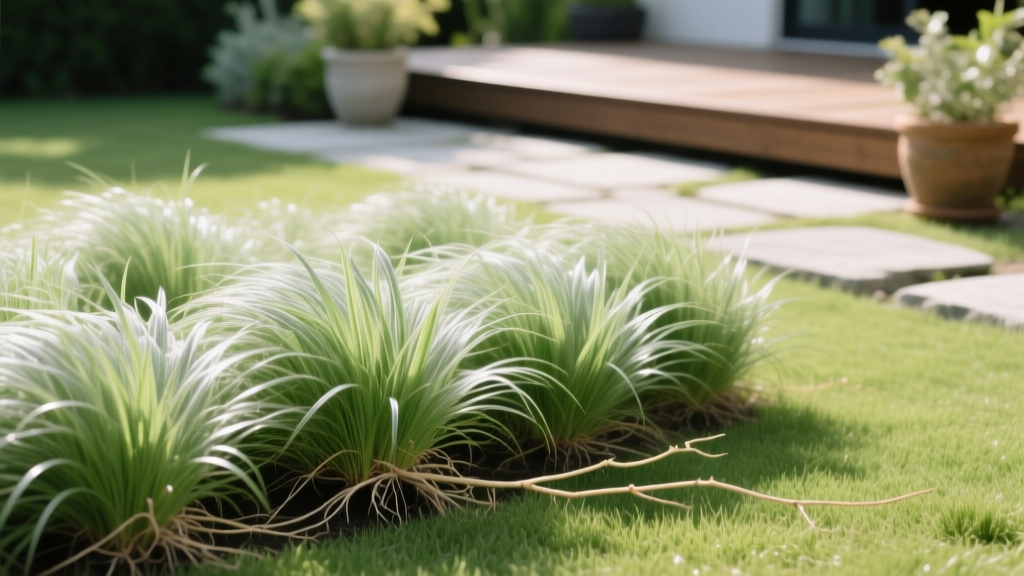
What Does Centipede Grass Look Like? Identification Guide
The Definitive Visual Profile of Centipede Grass
When homeowners ask, "what does centipede grass look like?", the most accurate answer requires looking beyond a simple color description. Centipede grass (Eremochloa ophiuroides) is a warm-season, creeping turfgrass native to Southern China and Southeast Asia. It is visually defined by its pale, apple-green hue, slow lateral spread, and distinct leaf blade architecture. Unlike aggressive turfgrasses that form dense, carpet-like mats, centipede presents a more open, relaxed canopy that thrives in low-fertility, acidic soils.
To accurately identify this species in the field, you must examine three primary morphological features: the leaf blade, the ligule, and the stolon structure. According to turfgrass morphology data from NC State Extension, centipede grass exhibits a folded vernation (the way the leaf emerges from the bud), which is a critical diagnostic trait when distinguishing it from grasses that emerge rolled.
Field Identification Tip: The Ligule Test
Part the grass canopy and look exactly where the leaf blade meets the stolon (the collar region). Centipede grass features a short, membranous ligule that is distinctly fringed with tiny white hairs. If the ligule is a solid membrane without hairs, you are likely looking at St. Augustine or Zoysia.
Key Morphological Measurements
- Leaf Blade Width: 3 to 5 millimeters (narrower than St. Augustine, wider than Bermuda).
- Leaf Tip Shape: Tapered to a sharp, distinct point (unlike the boat-shaped tip of St. Augustine).
- Stolon Thickness: Approximately 1/8 inch (3mm) thick, creeping above ground, and rooting heavily at the nodes.
- Canopy Height: Naturally grows to 3–5 inches if left unmowed, but is typically maintained at 1.5 to 2.5 inches.
Centipede vs. Look-Alikes: A Field Identification Matrix
Centipede grass is most frequently confused with St. Augustine grass and Zoysia grass, especially in the transitional zones of the Southeastern United States. While all three are warm-season species, their visual and structural differences become obvious when placed side-by-side. Clemson University's Home & Garden Information Center emphasizes that misidentification often leads to improper mowing and fertilization, which can fatally damage a centipede lawn.
| Diagnostic Trait | Centipede Grass | St. Augustine Grass | Zoysia Grass |
|---|---|---|---|
| Leaf Color | Pale apple-green to yellow-green | Medium to dark blue-green | Dark emerald to olive green |
| Blade Width | 3mm – 5mm | 7mm – 9mm (Broad) | 1mm – 3mm (Fine to Medium) |
| Leaf Tip | Sharp, tapered point | Rounded, boat-shaped | Sharp, needle-like point |
| Vernation | Folded | Folded | Rolled |
| Growth Habit | Creeping stolons (slow spread) | Creeping stolons (fast, aggressive) | Stolons and rhizomes (dense mat) |
Cultivar Nuances: Not All Centipede Looks Identical
While "common" centipede grass is what most people picture, university breeding programs have developed several improved cultivars that alter the standard visual profile. If you are trying to identify a specific centipede lawn, knowing these cultivar variations is essential.
'TifBlair' Centipede
Released by the University of Georgia, 'TifBlair' is visually distinct from common centipede due to its slightly darker green coloration and broader leaf blades. It also exhibits a more upright growth habit before being mowed. Its primary visual advantage is its extended green period in the fall; it stays green 2 to 3 weeks longer than common varieties before entering winter dormancy.
'Centennial' Centipede
Developed for slightly more alkaline soils, 'Centennial' features a finer leaf texture and a denser canopy. Visually, it looks more like a Zoysia lawn from a distance due to its tight growth habit, but up close, the distinct folded vernation and hairy ligule confirm its centipede lineage.
'Oklawn' Centipede
This cultivar is prized for its superior disease resistance, particularly against large patch fungus. Visually, it maintains a more uniform apple-green color under stress and shows less localized yellowing (chlorosis) when soil nutrient levels fluctuate.
Seasonal Color Shifts and Dormancy Patterns
Understanding what centipede grass looks like requires observing it across a full calendar year. Its visual profile changes drastically based on soil temperature and daylight hours.
Warning: The Spring Green-Up Delay
Do not panic if your centipede lawn remains straw-brown in early April while neighboring Bermuda or Zoysia lawns are turning green. Centipede grass requires sustained soil temperatures above 65°F at a 4-inch depth to break dormancy. It is typically the last warm-season grass to green up in the spring, often waiting until mid-to-late May in the transitional zone.
- Spring (Green-Up): Emerges with a pale, almost yellowish-green tint before deepening to its characteristic apple-green as nitrogen uptake increases.
- Summer (Peak Growth): Displays its truest color—a soft, light green. If the grass turns dark green in the summer, it is a visual indicator of over-fertilization, which can lead to thatch buildup and centipede decline.
- Fall (Transition): Remains green until the first hard frost. Unlike Zoysia, which turns a beautiful golden-tan, centipede transitions to a dull, mottled brown.
- Winter (Dormancy): Completely straw-brown. The stolons remain visible on the soil surface, looking like a web of pale, dormant vines.
Visual Diagnostics: Reading Your Lawn's Stress Signals
Centipede grass is highly communicative through its color changes. Because it thrives in low-nitrogen, acidic environments (pH 5.0 to 6.0), visual anomalies almost always point to soil chemistry imbalances rather than pest damage. Research published by the University of Florida IFAS outlines specific visual symptoms tied to soil mismanagement.
Iron Chlorosis (The Yellowing Effect)
If your centipede grass shifts from apple-green to a stark, neon yellow, you are likely witnessing iron chlorosis. This occurs when soil pH rises above 6.5, locking up iron in the soil so the roots cannot absorb it. The visual hallmark of chlorosis is that the leaf veins may remain slightly green while the interveinal tissue turns bright yellow. The fix is not adding more nitrogen; it requires applying chelated iron and elemental sulfur to lower the soil pH.
Centipede Decline (Thinning and Dieback)
Centipede decline is not a specific pathogen, but a complex physiological disorder. Visually, it manifests as irregular, thinning patches where the stolons fail to root at the nodes. The grass looks "tired" and sparse, and you can easily pull the stolons away from the soil surface with zero resistance. This is usually caused by excessive nitrogen application (more than 2 lbs per 1,000 sq ft annually) or severe thatch accumulation exceeding 0.5 inches.
Frequently Asked Identification Questions
Does centipede grass produce seed heads?
Yes, but they are visually subtle. Centipede grass produces short, spike-like racemes that resemble small, slender fingers extending just above the turf canopy. They are typically pale green or purplish and appear in late summer. Unlike the aggressive, tall seed heads of annual ryegrass or crabgrass, centipede seed heads are easily hidden by a standard 2-inch mowing height.
Can centipede grass look like weeds?
When centipede grass is stressed, thinned out, or suffering from nematode damage, its open canopy allows invasive broadleaf weeds and grassy weeds like crabgrass to infiltrate. Because centipede stolons creep along the ground, a damaged patch can visually mimic a weed infestation until you examine the individual leaf blades for the sharp tip and folded vernation.
Why does my centipede grass look dark green?
A dark, emerald-green centipede lawn is a visual red flag. This species is genetically adapted to low-fertility soils. If it looks dark green, it has been over-fertilized with nitrogen. This artificial darkening forces rapid, weak vertical growth, depletes the plant's carbohydrate reserves, and sets the stage for severe winter kill and fungal infections the following season.