
Grass Types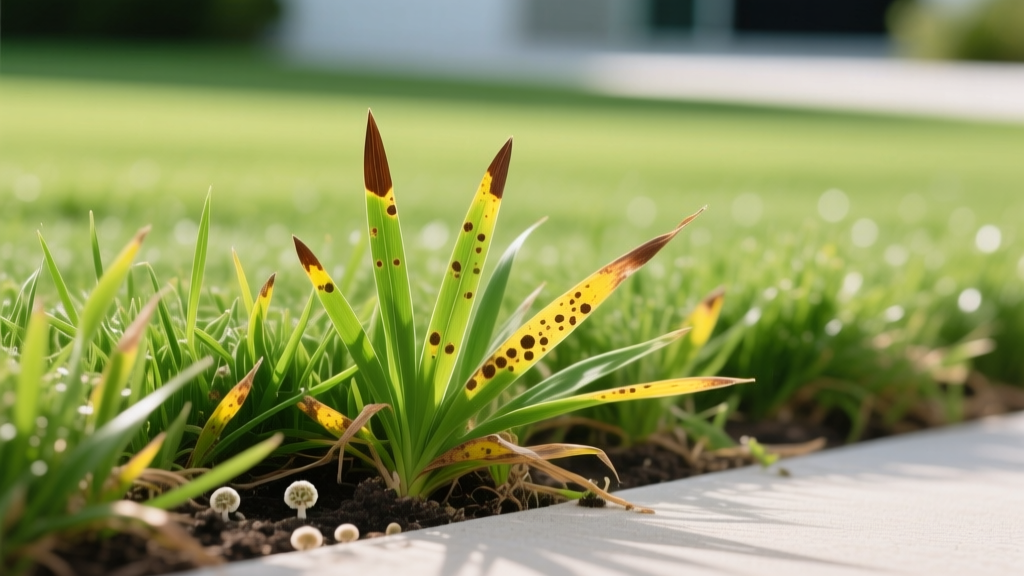
What Kills Bermuda Grass: Top Causes and Identification Guide
What Kills Bermuda Grass? Identifying the Culprits
Bermuda grass (Cynodon dactylon) is celebrated for its aggressive stoloniferous growth and drought tolerance, leading many homeowners to believe it is indestructible. However, when turf managers and homeowners ask, 'what kills bermuda grass,' the answer is rarely a single catastrophic event. Instead, lawn decline is typically the result of compounding biological, environmental, and chemical stressors. Understanding the exact mechanism of decline is the only way to implement a targeted recovery protocol rather than wasting money on generalized lawn treatments.
This guide breaks down the primary assassins of Bermuda grass, providing specific diagnostic markers, chemical active ingredients, and cultural corrections required to save a dying lawn.
Fungal Pathogens: The Invisible Killers
While Bermuda is highly disease-resistant compared to cool-season grasses, specific fungal pathogens exploit the turf during seasonal transitions. The most devastating of these is Spring Dead Spot (SDS).
Spring Dead Spot (SDS)
SDS is the number one killer of hybrid Bermuda cultivars (such as Tifway 419, Celebration, and Latitude). Caused by the soil-borne fungi Ophiosphaerella korrae and O. herpotricha, this disease attacks the roots, rhizomes, and stolons in the fall when soil temperatures drop below 70°F. The damage remains dormant over winter and manifests in spring as distinct, sunken, circular patches of dead turf that can range from 6 inches to several feet in diameter.
Identification Marker: Dark, sunken circular patches that fail to green up in late spring. If you dig at the edge of the patch, the roots and stolons will appear black, brittle, and necrotic rather than white and firm.
Chemical Intervention: Curative fungicide applications in spring are largely ineffective because the pathogen has already destroyed the root system. Prevention requires fall applications of FRAC Group 11 (QoI) or FRAC Group 3 (DMI) fungicides. According to NC State Extension, applying Azoxystrobin (e.g., Heritage SC at 0.4 oz per 1,000 sq ft) or Fluoxastrobin (Disarm) in September and October, when soil temperatures are between 70°F and 80°F, provides the most reliable suppression.
Brown Patch and Dollar Spot
During periods of high humidity and nighttime temperatures above 65°F, Rhizoctonia solani (Brown Patch) and Clarireedia jacksonii (Dollar Spot) can cause rapid foliar blight. While rarely fatal to the crown of established Bermuda, severe outbreaks can thin the canopy drastically, inviting weed invasion. Propiconazole or Myclobutanil applied at the first sign of mycelium (early morning dew) will halt foliar spread within 48 hours.
⚠️ CRITICAL HERBICIDE WARNING: Never use products containing Sethoxydim (e.g., Vantage, Hi-Yield Grass Killer) or Fluazifop (e.g., Fusilade, Ortho Grass-B-Gon) on or near a Bermuda lawn. These are post-emergent herbicides designed to kill grassy weeds in broadleaf ornamental beds. Because they are grass-specific, they will systematically destroy your Bermuda grass upon contact and absorption.
Environmental and Cultural Assassins
When fungal diseases are ruled out, environmental mismanagement is usually the primary answer to what kills bermuda grass. Bermuda is a C4 warm-season plant with highly specific metabolic requirements.
Shade Intolerance and Canopy Die-Off
Bermuda grass requires a minimum of 8 to 10 hours of direct, unfiltered sunlight daily to maintain sufficient photosynthetically active radiation (PAR) levels. As landscape trees (like oaks or maples) mature, their expanding canopies slowly starve the turf below. The first symptom is a thinning of the turf density, followed by elongated, spindly internodes, and eventually, total canopy die-off. If an area receives less than 6 hours of direct sun, Bermuda will not survive long-term. The only cultural fix is aggressive tree canopy elevation or transitioning the shaded zone to a shade-tolerant groundcover like Liriope or St. Augustine grass.
Soil Compaction and Asphyxiation
Bermuda has an incredibly dense, fibrous root system that requires high oxygen exchange in the soil profile. In heavy clay soils, foot traffic and mowing cause severe compaction, crushing the macropores necessary for gas exchange. The roots essentially asphyxiate, leading to shallow rooting and drought stress, even when irrigation is adequate. Annual core aeration—pulling 3-inch plugs with a heavy-duty walk-behind aerator—is non-negotiable for clay-based Bermuda lawns.
Diagnostic Matrix: Symptom to Solution
Use this matrix to cross-reference your lawn's visual symptoms with the most likely underlying cause.
| Visual Symptom | Primary Suspect | Diagnostic Test / Marker | Corrective Action |
|---|---|---|---|
| Sunken, dead circular patches in spring | Spring Dead Spot | Black, necrotic stolons at patch margin | Fall preventive fungicide (Azoxystrobin); spring nitrogen push |
| Turf thinning under tree canopies | Shade Starvation | Less than 8 hours direct sunlight | Prune lower tree limbs; switch to shade-tolerant species |
| Yellowing, stunted growth, poor water uptake | Soil Compaction | Screwdriver test fails to penetrate soil easily | Deep core aeration; top-dress with compost |
| Bleached or scorched leaf tips, uniform browning | Herbicide / Fertilizer Burn | Follows spray pattern or spreader overlap lines | Heavy irrigation to leach salts; wait 14 days for recovery |
Chemical Burn and Pre-Emergent Timing Errors
Improper chemical application is a frequent, self-inflicted cause of Bermuda decline. Two specific scenarios routinely damage or kill turf:
- Early Pre-Emergent Application: Applying pre-emergent herbicides like Prodiamine (Barricade) or Dithiopyr (Dimension) too early in the spring (before soil temperatures consistently reach 55°F) can severely inhibit Bermuda's spring root flush. Because these chemicals create a barrier that stops cell division in growing roots, applying them while the Bermuda is trying to establish new spring roots will stunt the lawn, leaving it weak and vulnerable to summer drought stress.
- MSMA and Quinclorac Overdosing: While Quinclorac (Drive XLR8) is labeled for crabgrass control in Bermuda, applying it during peak summer heat (above 90°F) or exceeding the labeled rate of 0.367 fl oz per 1,000 sq ft will cause severe phytotoxicity, resulting in chlorosis and stunting. Always use a non-ionic surfactant at the exact labeled rate to ensure proper cuticle penetration without burning the leaf tissue.
Step-by-Step Recovery Protocol
If your Bermuda grass is actively declining, follow this sequence to arrest the damage and stimulate recovery, as recommended by Texas A&M AgriLife Extension:
- Step 1: Soil Diagnostics ($20-$40). Submit a soil sample to your local university extension. Bermuda thrives at a pH of 6.0 to 6.5. If pH drops below 5.5, essential nutrients like phosphorus become locked out, mimicking a nutrient deficiency. Apply pelletized lime at the recommended rate if pH is low.
- Step 2: Mechanical Relief. Perform core aeration to relieve compaction and break up thatch layers exceeding 0.5 inches. Leave the plugs on the lawn to decompose and reintroduce soil microbes to the thatch layer.
- Step 3: Targeted Nutrition. Apply a fast-release nitrogen source (like 46-0-0 Urea) at a rate of 1.0 lb of actual nitrogen per 1,000 sq ft. Water immediately to prevent volatilization and foliar burn.
- Step 4: Mowing Calibration. Lower your mower to the optimal height. Hybrid Bermuda requires a reel mower set between 0.5 and 1.5 inches. Common Bermuda thrives at 1.5 to 2.5 inches with a rotary mower. Scalping the turf below its growing point (the crown) will cause immediate die-back.
Frequently Asked Questions
Can overwatering kill Bermuda grass?
Yes. While Bermuda is drought-tolerant, chronic overwatering saturates the soil profile, displacing oxygen and promoting root rot pathogens like Pythium. Water deeply but infrequently—aiming for 1 inch of water per week, applied in one or two sessions, rather than light daily sprinklings.
Will vinegar or boiling water kill Bermuda grass?
Acetic acid (horticultural vinegar at 20-30% concentration) and boiling water will burn the foliar tissue of Bermuda grass, causing it to turn brown rapidly. However, because Bermuda stores massive energy reserves in its deep rhizomes, these contact-only methods will not kill the root system. The grass will typically regenerate from the rhizomes within 10 to 14 days. For complete eradication in garden beds, a systemic herbicide containing Glyphosate is required to translocate down to the rhizomes.

