
Grass Types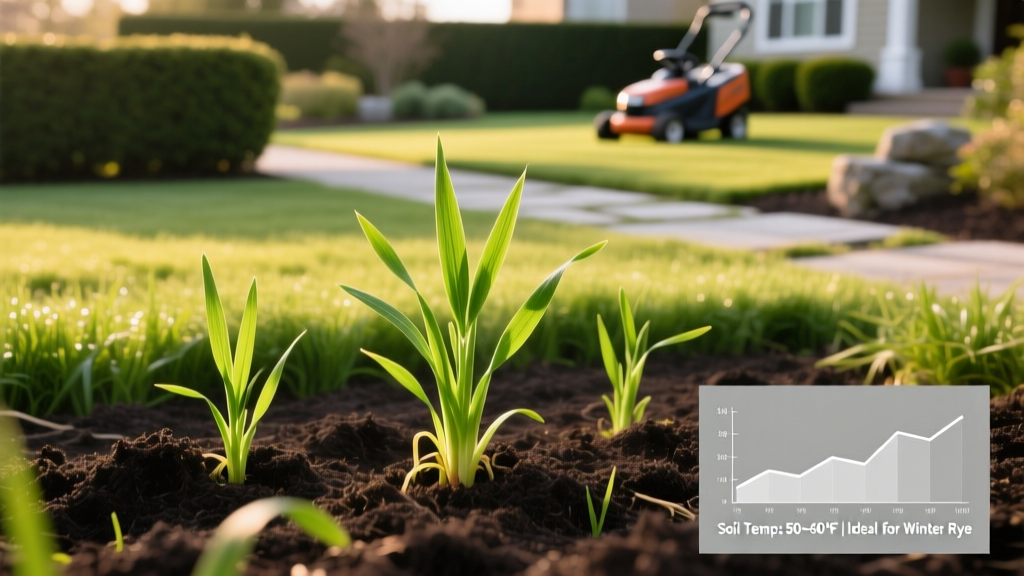
When to Plant Winter Rye: Regional Calendars & Soil Temps
The Soil Temperature Sweet Spot: The Real Planting Trigger
Calendar dates are helpful guidelines, but soil temperature is the biological trigger for winter rye germination. Whether you are planting cereal rye (Secale cereale) or annual ryegrass (Lolium multiflorum), the optimal soil temperature at a 2-inch depth is between 50°F and 65°F.
Planting when soil temperatures exceed 70°F invites fungal pathogens like Pythium blight, which can wipe out seedlings in 48 hours. Conversely, planting when soil drops below 45°F delays germination long enough that the plants fail to establish a sufficient root mass before the ground freezes, leading to severe winterkill.
Pro Tip: Do not rely on ambient air temperature. Air temps can fluctuate wildly in early autumn. Invest in a basic soil probe thermometer (typically $12–$20) and measure at 9:00 AM for the most consistent daily baseline.
Regional Planting Calendars for Winter Rye
Because autumn cooling patterns vary drastically across North America, your USDA Hardiness Zone dictates your specific planting window. The goal is to seed 4 to 6 weeks before your region's first average killing frost (28°F).
| USDA Zone | Target Planting Window | First Frost Context | Primary Use Case |
|---|---|---|---|
| Zones 3–4 | Late August – Early September | Frost arrives late Sept/early Oct | Soil erosion cover, biomass |
| Zones 5–6 | Early September – Mid-October | Frost arrives mid-to-late Oct | Cover crop, compaction relief |
| Zones 7–8 | Mid-October – Late November | Frost arrives late Nov/Dec | Weed suppression, lawn overseeding |
| Zones 9–10 | November – December | Rare or no hard freezes | Overseeding dormant warm-season lawns |
Cereal Rye vs. Annual Ryegrass: Know Your Seed
A critical mistake homeowners make is confusing cereal rye with annual ryegrass. Both are colloquially called "winter rye," but their growth habits, seeding rates, and termination requirements are vastly different. According to Ohio State University Extension, cereal rye is a grain crop that produces massive top-growth, while Penn State Extension notes that annual ryegrass is a forage grass known for deep, soil-fracturing roots.
| Feature | Cereal Rye (Secale cereale) | Annual Ryegrass (Lolium multiflorum) |
|---|---|---|
| Lawn Seeding Rate | 1.5 – 2.5 lbs per 1,000 sq ft | 0.5 – 1.0 lbs per 1,000 sq ft |
| 2025/2026 Seed Cost | $1.50 – $2.50 per lb | $3.00 – $5.00 per lb |
| Root Depth | 12 – 24 inches | 24 – 40 inches (breaks up hardpan) |
| Allelopathy | High (suppresses spring weed seeds) | Low |
| Best For | Bare soil cover crops, weed suppression | Overseeding warm lawns, clay soil aeration |
Step-by-Step Seeding Protocol
To ensure maximum germination and establishment before winter dormancy, follow this precise agronomic protocol:
- Prepare the Seedbed: For bare soil, till to a depth of 2 inches and rake level. For overseeding a warm-season lawn (like Bermuda or Zoysia), scalp the existing grass to 0.5 inches and heavily dethatch to expose the soil surface.
- Calibrate the Spreader: Set your rotary broadcast spreader to the manufacturer's setting for small seeds. Apply 70% of the seed walking North-South, and the remaining 30% walking East-West to prevent striping.
- Incorporate the Seed: Rake the seed into the top 1/4 to 1/2 inch of soil. Cereal rye can tolerate slightly deeper planting (up to 1 inch), but annual ryegrass will fail to emerge if buried deeper than 0.5 inches.
- Apply Starter Fertilizer: Use a high-phosphorus starter fertilizer (e.g., 10-18-10) at a rate of 5 lbs per 1,000 sq ft. Phosphorus is critical for rapid root development before frost.
- Watering Schedule: Apply 0.25 inches of water daily for the first 10 days to keep the top inch of soil consistently moist. Once seedlings reach 2 inches, reduce watering to 1 inch per week.
Warning: The Allelopathic Trap. Cereal rye produces allelopathic chemicals that inhibit the germination of other seeds. If you plan to plant a spring garden or a new warm-season lawn in the same area, you must terminate the cereal rye and wait at least 21 days before planting your spring crop, or the residual chemicals will stunt your new plants.
Common Timing Mistakes & Troubleshooting
Planting Too Early (Late Summer)
Seeding winter rye in August (in Zones 5-8) when soil temps are above 75°F leads to rapid, weak, spindly growth that is highly susceptible to brown patch fungus. Furthermore, early-planted cereal rye will produce excessive biomass that becomes unmanageable and difficult to terminate in the spring.
Planting Too Late (Post-Frost)
While cereal rye is incredibly cold-hardy and can technically germinate in 34°F soil, late planting means the plant will only develop a shallow, 2-inch root system before the ground freezes. This results in "winterkill," where the shallow roots are heaved out of the ground by freeze-thaw cycles, leaving you with a muddy, dead patch in early spring.
Spring Termination Strategy
Winter rye does not die off naturally in the spring; it will aggressively compete with your primary lawn or garden. You must actively terminate it. For chemical termination, apply a 2% glyphosate solution when the rye is actively growing and daytime air temperatures are consistently above 55°F. Applying herbicide when it is too cold results in incomplete translocation to the roots, allowing the rye to survive and set seed. For mechanical termination, mow or till the rye when it reaches the "boot stage" (just before the seed head emerges from the sheath), typically in mid-to-late April, to prevent it from dropping thousands of seeds into your soil profile.

