Grass Types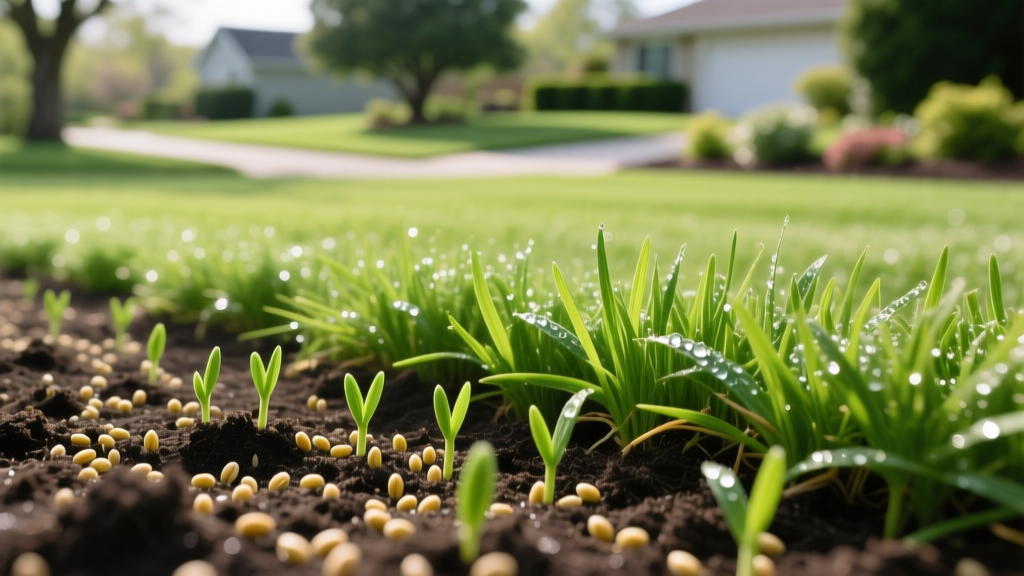
When to Seed Bermuda Grass: Regional Calendars & Soil Temps
Determining exactly when to seed bermuda grass depends entirely on soil thermodynamics, not the calendar. While many homeowners arbitrarily scatter seed on the first warm weekend of spring, premature seeding leads to seed rot, while late seeding invites aggressive summer weed competition and winter-kill vulnerability. According to Texas A&M AggieTurf, bermuda grass (Cynodon dactylon) requires consistent warmth at the root zone to trigger enzymatic germination processes.
This guide provides a precise, data-driven framework for timing your bermuda grass seeding, adjusting for your specific USDA hardiness zone, soil temperature thresholds, and pre-emergent herbicide residual windows.
The Golden Rule: Soil Temperature Over Calendar Dates
Calendar dates are merely estimates; soil temperature is the biological trigger. Bermuda grass seed will remain dormant or rot in cold, damp soil. You must measure the soil temperature at a depth of 2 to 3 inches using a digital soil probe thermometer. Take the reading in the early morning (around 8:00 AM) to get the baseline daily low.
The Germination Sweet Spot
Minimum Soil Temp: 65°F | Optimal Soil Temp: 68°F - 70°F | Daytime Air Temp: 80°F+
Do not seed if nighttime air temperatures are still consistently dropping below 60°F, as this will rapidly cool the topsoil and stall germination. According to NC State TurfFiles, waiting until the soil consistently holds 68°F at a 2-inch depth ensures germination within 7 to 14 days, whereas seeding at 60°F can stretch germination to 21+ days, leaving the seed vulnerable to fungal pathogens like Pythium blight.
Regional Seeding Calendars for Bermuda Grass
Because the transition zone and the deep south experience vastly different spring warming curves, your seeding window shifts based on your geography. Use the table below as a baseline, but always verify with your soil thermometer.
| Region / Zone | Primary States | Optimal Seeding Window | Latest Safe Seed Date |
|---|---|---|---|
| Deep South (Zones 8b-10) | FL, Gulf Coast TX, Southern LA/MS | April 1 - May 15 | August 1 |
| Lower Transition (Zone 8a) | AR, Northern LA, Central GA, SC | May 1 - June 15 | July 15 |
| Upper Transition (Zone 7b) | NC, TN, Northern GA, OK | May 15 - June 30 | July 1 |
| Southwest Arid (Zones 9-10) | AZ, Southern CA, Southern NV | April 15 - June 1 | August 15 |
The "Latest Safe Seed Date" Rule: Bermuda grass seedlings require a minimum of 60 to 90 days of active growth to develop a root system deep enough to survive winter dormancy. Seeding after the "Latest Safe Date" results in immature stolons that will freeze and die during the first hard frost.
Step-by-Step Seedbed Preparation Timeline
Knowing when to seed bermuda grass is only half the battle; the preparation must begin weeks before the soil hits 65°F. Follow this reverse-engineered timeline to ensure your seedbed is ready exactly when the temperature window opens.
- 60 Days Before Seeding: If you have existing weeds or undesirable grass, apply a 41% glyphosate solution. Wait 14 days for complete kill, then scalp the dead vegetation to the soil line.
- 30 Days Before Seeding: Conduct a soil test. Bermuda thrives at a pH of 6.0 to 6.5. If your pH is below 5.8, apply pelletized lime at the rate recommended by your local extension office (typically 20-40 lbs per 1,000 sq ft).
- 14 Days Before Seeding: Till the top 2 inches of soil to break up compaction. Rake the area completely smooth, removing all rocks and debris larger than a marble.
- Day of Seeding: Apply a starter fertilizer high in phosphorus (e.g., 10-18-10) at a rate of 1 lb of nitrogen per 1,000 sq ft to fuel early root development.
Critical Pre-Emergent Herbicide Warning
If you applied a pre-emergent herbicide (such as Prodiamine or Dithiopyr) in early spring to stop crabgrass, you cannot seed bermuda grass. These chemicals create a chemical barrier that prevents all seeds from germinating. You must wait a minimum of 60 to 90 days after application before seeding, or the bermuda seed will fail to sprout. If you missed the pre-emergent window, rely on post-emergent quinclorac applications once the bermuda has been mowed three times.
Seed Selection & Seeding Rates by Cultivar
Not all bermuda grass seed is created equal. Improved seeded cultivars offer density and color that rival vegetative (sprigged) hybrids. Furthermore, you must choose between hulled and unhulled seed. Hulled seed has the outer husk mechanically removed, resulting in faster germination and lower seeding rates, but it costs more per pound. Unhulled seed is cheaper but requires higher application rates.
| Cultivar | Key Traits | Hulled Rate (per 1k sq ft) | Unhulled Rate (per 1k sq ft) |
|---|---|---|---|
| Yukon | Exceptional cold tolerance, dark green, fine texture | 2 - 3 lbs | 3 - 4 lbs |
| Princess 77 | High traffic tolerance, dense canopy, drought resistant | 2 - 3 lbs | 3 - 4 lbs |
| Arden 15 | Deep blue-green color, early spring green-up | 2 - 3 lbs | 3 - 4 lbs |
| Common Bermuda | Coarse texture, light green, highly variable genetics | 3 - 4 lbs | 5 - 6 lbs |
Note: As of 2026, premium hulled cultivars like Yukon and Princess 77 typically retail between $14 and $22 per pound, while generic unhulled common bermuda ranges from $6 to $9 per pound.
Post-Seeding Watering & Germination Schedule
Once the seed is broadcast and lightly rolled into the top 1/8 inch of soil, your watering protocol must be flawless. Bermuda seed will die if it germinates and then dries out, but it will rot if left in standing water.
- Days 1-14 (Germination Phase): Water 3 to 4 times per day for 5 to 8 minutes per zone. The goal is to keep the top 1/2 inch of soil constantly moist, not soggy. Use a fine mist nozzle to prevent washing the tiny seeds away.
- Days 15-28 (Seedling Establishment): Reduce frequency to once per day, but increase the duration to 15-20 minutes. This encourages the young taproots to stretch deeper into the soil profile.
- Days 29+ (Maturation): Transition to the standard deep-and-infrequent bermuda watering schedule: 1 inch of water per week, applied in 1 or 2 heavy sessions.
The First Mow
According to Clemson University HGIC, you should perform the first mowing when the seedlings reach 1.5 inches in height. Set your mower deck to 1 inch. Crucially, bag the clippings during the first three mows. Leaving clippings on a newly seeded lawn will smother the delicate seedlings and block the sunlight required for photosynthesis.
Frequently Asked Questions
Can I seed bermuda grass in the fall?
No. Fall seeding is a guaranteed failure for bermuda grass. Even if the seed germinates during a warm October spell, the seedlings will not have the root mass required to survive winter dormancy. The first frost will kill the immature plants. Always seed in late spring or early summer.
Should I cover the seed with straw or peat moss?
A very light topdressing of screened compost or peat moss (no more than 1/8 inch thick) can help retain moisture. However, avoid straw. Straw often contains weed seeds (like wheat or ryegrass) that will introduce aggressive competition to your new bermuda seedlings. If you must use a cover, opt for certified weed-free straw or a specialized hydromulch.
How long does it take for a seeded bermuda lawn to fully fill in?
With optimal soil temperatures (70°F+), adequate nitrogen, and proper watering, seeded bermuda grass will typically achieve 100% lateral coverage via stolons and rhizomes within 60 to 90 days after germination. Applying a balanced fertilizer (like 16-4-8) every 4 weeks during the establishment phase will accelerate this lateral spread.