
Grass Types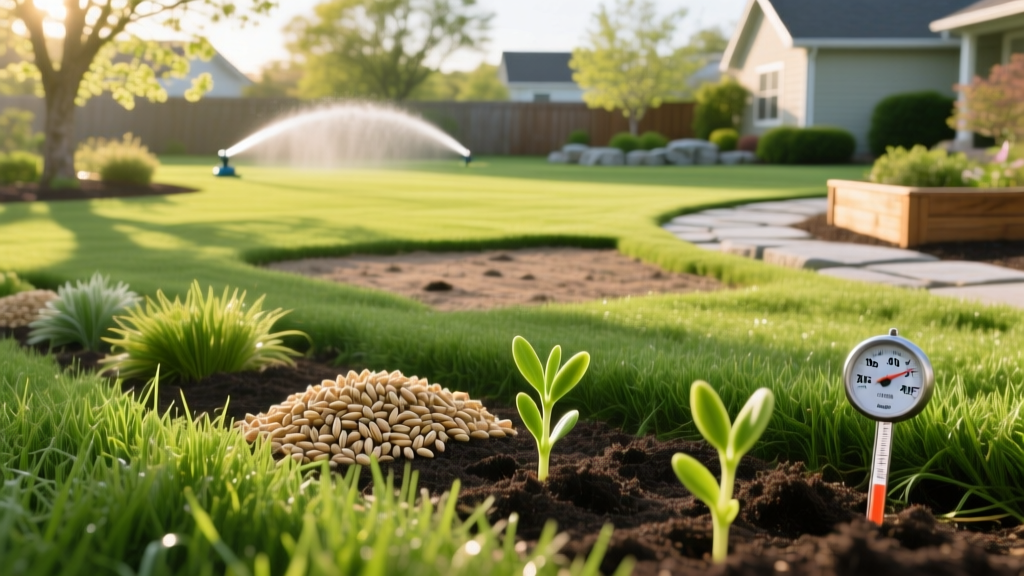
When to Seed Bermuda: Regional Calendars and Soil Temperature Guide
Planting Bermuda grass (Cynodon dactylon) is an exercise in thermal timing. Unlike cool-season grasses that rely on autumn moisture, Bermuda is a warm-season species that demands intense heat and specific soil temperatures to trigger germination and sustain early root development. Seeding too early results in rot; seeding too late leaves seedlings vulnerable to early autumn frosts before they can establish a resilient root system.
The short answer for when to seed Bermuda is late spring to early summer, specifically when nighttime air temperatures consistently stay above 65°F and soil temperatures at a 2-inch depth reach 65°F to 70°F. However, because the United States spans multiple climate zones, the exact calendar window shifts dramatically depending on your latitude. Below is a comprehensive, region-specific guide to timing your Bermuda seeding for maximum establishment success.
The Science of Soil Temperature: The Real Trigger
Amateur landscapers often rely on air temperature to dictate planting schedules, but Bermuda seed germination is governed entirely by soil temperature. The seed must absorb moisture and warmth from the soil profile to activate enzymes that break down the endosperm.
Target Metrics for Bermuda Germination:
- Minimum Soil Temp: 65°F at a 2-inch depth.
- Optimal Soil Temp: 70°F to 85°F (yields 7-10 day germination).
- Minimum Air Temp: Consistent daytime highs of 80°F+ and nighttime lows above 65°F.
To measure this accurately, use a dedicated soil probe thermometer (such as the ThermoPro TP19 or a standard 4-inch stainless steel soil dial). Insert the probe 2 inches into the soil at 8:00 AM to get a baseline reading that isn't artificially inflated by afternoon sun exposure. According to Texas A&M AgriLife Extension, attempting to seed when soil temperatures are below 60°F will result in seed dormancy and eventual decay due to prolonged moisture exposure.
Regional Planting Calendars for Bermuda Grass
The transition zone and the deep south operate on entirely different timelines. Use the matrix below to identify your specific planting window and the absolute deadline for sowing.
| Region | Ideal Seeding Window | Last Safe Date | Primary Risk Factor |
|---|---|---|---|
| Deep South (FL, South GA, Gulf Coast TX) | April 15 – May 30 | August 15 | Summer drought stress during establishment |
| Mid-South (Central TX, LA, MS, AL, South GA) | May 1 – June 15 | July 30 | Late planting leading to winter kill |
| Transition Zone (North TX, AR, TN, NC, VA) | May 20 – July 1 | July 15 | Insufficient time to build rhizomes before first frost |
Note: If you are in the Transition Zone, you must plant cold-tolerant cultivars like Yukon. Planting standard Bermuda in late July in Tennessee or Virginia guarantees the seedlings will not develop the rhizome mass necessary to survive winter dormancy.
Cultivar-Specific Seeding Rates and Timelines
Not all Bermuda seed is created equal. The market divides seed into hulled (outer casing removed, faster germination, higher cost) and unhulled (cheaper, slower germination, higher seeding rate required). Premium hulled seed typically costs between $18 and $28 per pound in 2026, while unhulled ranges from $8 to $12 per pound.
Top Seeded Cultivars Comparison Matrix
| Cultivar | Type | Rate (lbs/1,000 sq ft) | Germination Days | Best Suited For |
|---|---|---|---|---|
| Yukon | Hulled | 1.5 – 2.0 | 10 – 14 | Transition Zone, high cold tolerance |
| Princess 77 | Hulled | 1.0 – 1.5 | 7 – 10 | High traffic, fine texture, Deep South |
| Arden 15 | Hulled | 1.5 – 2.0 | 10 – 14 | Dark green color, dense canopy |
| Blackjack | Unhulled | 3.0 – 4.0 | 14 – 21 | Budget lawns, erosion control |
⚠️ CRITICAL WARNING: The Pre-Emergent Trap
Never apply pre-emergent herbicides containing mesotrione (e.g., Tenacity) or prodiamine before or during Bermuda seeding. While mesotrione is safe for cool-season fescue seedlings, it is highly toxic to Bermuda grass and will bleach and kill your emerging seedlings. For weed control during Bermuda establishment, rely on frequent, light watering to outcompete weeds, and wait until the new Bermuda has been mowed at least 3 to 4 times before applying post-emergent herbicides like Quinclorac.
Step-by-Step Seedbed Prep and Sowing Timeline
Proper timing extends beyond the day you drop the seed. Follow this reverse-engineered timeline to ensure your soil is biologically and physically ready for the seed.
- T-Minus 30 Days (Soil Testing & Amendment): Pull core samples and send them to a local university extension lab. Bermuda thrives at a pH of 6.0 to 6.5. If your pH is below 5.8, apply pelletized lime immediately at a rate of 50 lbs per 1,000 sq ft; it takes weeks to alter soil chemistry.
- T-Minus 14 Days (Tillage & Grading): Rototill the top 4 inches of soil. Rake out debris and grade the lawn to ensure a 1% slope away from foundations. Bermuda seed is tiny and will wash away in pooling water.
- T-Minus 3 Days (Fertilizer Application): Apply a high-phosphorus starter fertilizer (e.g., Scotts Starter 24-25-4 or a local equivalent with a 1:2:1 N-P-K ratio) at a rate of 1 lb of nitrogen per 1,000 sq ft. Phosphorus is critical for early root node development.
- Day 0 (Seeding): Use a rotary spreader. Split your total seed volume in half. Walk horizontally across the lawn spreading the first half, then walk vertically spreading the second half. This cross-hatching prevents striping and bare spots. Lightly drag a piece of chain-link fence or a lawn broom over the soil to cover the seed with 1/8 inch of dirt. Never bury Bermuda seed deeper than 1/4 inch, or it will fail to emerge.
- Days 1 to 21 (The Moisture Protocol): Water 3 to 4 times daily for 5 minutes per zone. The goal is to keep the top 1 inch of soil consistently moist, not soggy. Once seedlings reach 1 inch tall, taper watering to once daily, encouraging roots to chase moisture deeper into the profile.
Frequently Asked Questions
Can I seed Bermuda in the fall?
No. Fall seeding is a guaranteed failure for Bermuda. Even if the seed germinates during an unseasonably warm October spell, the seedlings will not have the carbohydrate reserves or rhizome structure to survive the first hard freeze. Stick strictly to late spring and early summer.
Should I use pelleted or raw seed?
Pelleted seed (coated in clay or polymers) is easier to spread evenly with a rotary spreader and retains moisture slightly better. However, it costs 20-30% more. If you are seeding a small, bare patch, pelleted is worth the premium. For whole-lawns over 5,000 sq ft, raw hulled seed is more cost-effective.
How long until I can mow new Bermuda seed?
According to Clemson University Extension, wait until the grass reaches 2.5 to 3 inches tall before the first mow. Set your mower deck to 1.5 inches and ensure the blades are razor-sharp; dull blades will rip young Bermuda seedlings out of the shallow soil by the roots.

