
Grass Types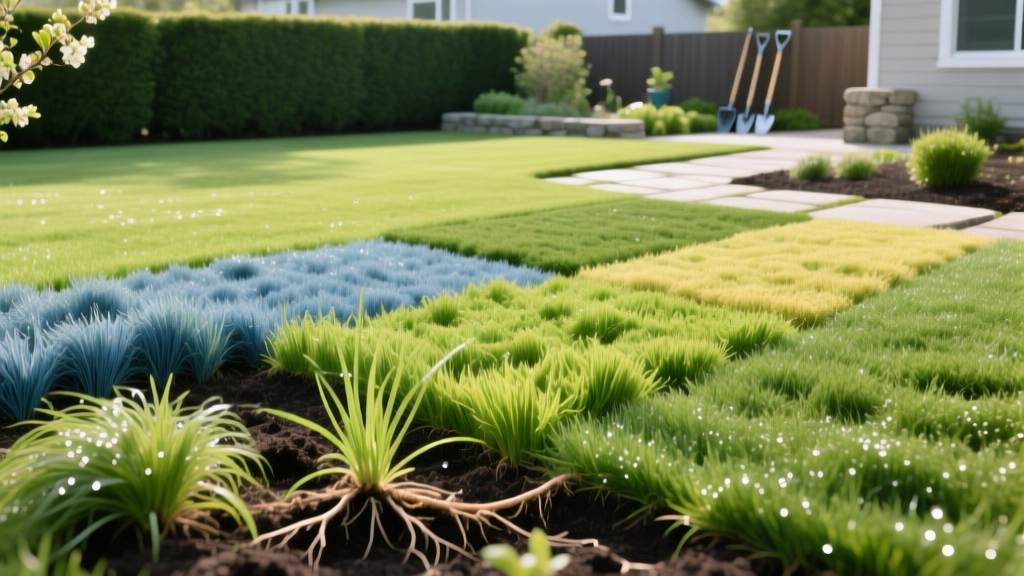
When Can You Walk on New Turf? A Week-by-Week Rooting Guide
The Science of Sod Rooting: Why Patience is Non-Negotiable
When you unroll fresh sod, you are looking at a mature grass canopy attached to a severed, shallow root system. Commercial sod is typically harvested with a root mat no deeper than 0.5 inches. To survive, the grass must push entirely new root hairs through that thin mat and across the soil interface into your native topsoil. This biological bridge is fragile. If you apply foot traffic before these new roots anchor into the underlying earth, you cause micro-tears in the developing root hairs, effectively resetting the rooting clock and inviting fungal pathogens like Pythium blight into the damaged tissue.
⚠️ Critical Warning: Walking on new turf before the roots cross the soil interface doesn't just compress the grass blades; it creates air pockets beneath the sod. These air gaps dry out the shallow roots and cause 'sod ring' failure, where the edges of the sod roll up, turn brown, and die within 48 hours.
Week-by-Week Timeline: When Can You Walk on New Turf?
The exact answer to when you can walk on new turf depends on the biological establishment phase. While marketing materials often claim sod is 'instant,' true structural anchoring follows a strict timeline. Below is the precise biological schedule for standard cool-season and warm-season turfgrasses under optimal conditions.
| Timeframe | Root Depth | Traffic Allowance | Irrigation Protocol |
|---|---|---|---|
| Week 1 (Days 1-7) | 0.5 inches | Zero traffic. Keep pets and children off entirely. | 2x daily for 15 mins (keep top 1 inch saturated). |
| Week 2 (Days 8-14) | 1.0 - 1.5 inches | Zero traffic. No mowing yet. | 1x daily for 20 mins (encourage deeper reaching). |
| Week 3 (Days 15-21) | 2.0 inches | Light maintenance only (mowing). No play or heavy equipment. | 1x every other day for 30 mins. |
| Week 4+ (Days 28+) | 3.0+ inches | Normal foot traffic resumes. Avoid concentrated heavy loads. | 2x weekly, deep soak (0.5 to 1 inch per session). |
The 'Tug Test': Your Definitive Anchor Check
Never guess if your sod is ready for foot traffic based purely on the calendar. Soil temperatures, grass species, and initial soil prep can shift the timeline by several days. Instead, perform the industry-standard tug test to verify physical anchoring.
Step-by-Step Tug Test Procedure
- Select a Test Zone: Choose an area near the center of the lawn, avoiding the edges where sod dries out faster and roots establish unevenly.
- Pinch the Canopy: Using your thumb and forefinger, gently pinch a small cluster of grass blades close to the soil line.
- Pull Vertically: Apply steady, moderate upward pressure. Do not yank aggressively.
- Evaluate the Result: If the entire square of sod lifts easily and you see white roots clinging only to the bottom of the sod mat, the turf is not ready. Wait another 4 to 5 days. If the grass blades tear or snap off in your fingers while the sod mat remains firmly pinned to the earth, the roots have successfully bridged the interface. You can begin light foot traffic.
Variables That Accelerate or Delay Rooting
The 28-day benchmark assumes optimal conditions. In reality, several environmental and mechanical factors dictate exactly when you can walk on new turf.
- Soil Temperature: Warm-season grasses like Bermuda and Zoysia root aggressively when soil temperatures exceed 75°F, often anchoring in 10 to 14 days. Cool-season grasses like Kentucky Bluegrass and Tall Fescue prefer soil temperatures between 55°F and 65°F, requiring the full 21 to 28 days. According to the University of Minnesota Extension, laying cool-season sod during peak summer heat (soil temps above 80°F) can induce dormancy and delay rooting by weeks.
- Soil Interface Preparation: The most common cause of delayed rooting is a compacted soil interface. If you lay sod directly over hard, untilled clay, roots will circle horizontally rather than penetrating downward. Tilling the native soil to a depth of 4 inches and raking it level before installation cuts rooting time by up to 30%.
- Rolling the Sod: Failing to use a lawn roller after installation leaves microscopic air gaps between the sod and the soil. Rent a water-filled roller and fill it to 1/3 capacity (approximately 150 lbs). Rolling the sod immediately after laying ensures physical contact, which is mandatory for root hairs to detect the moisture gradient in the native soil.
💡 Pro-Tip on Starter Fertilizers: Apply a high-phosphorus starter fertilizer (such as a 10-18-10 NPK ratio) immediately before laying the sod. Phosphorus is immobile in soil and is the primary driver of early root development. Avoid high-nitrogen fertilizers in the first 30 days, as they force the grass to push top-growth at the expense of the root system, leaving the turf top-heavy and poorly anchored.
First Mowing and Early Traffic Protocols
Once the tug test confirms anchoring, your first mechanical interaction with the turf will be mowing. This is a high-risk moment for new sod. Wait until the grass reaches roughly 3.5 inches in height. Set your mower deck to 2.5 inches, ensuring you never remove more than one-third of the grass blade in a single pass.
Crucially, your mower blades must be freshly sharpened. A dull blade will grab and tug at the grass canopy. In established lawns, this merely causes cosmetic fraying. In three-week-old sod, a dull blade can literally rip the newly established root mat right out of the topsoil. Furthermore, avoid sharp, pivoting turns with the mower wheels during the first two cuts, as the lateral sheer force can still tear shallow root networks. For the first month of normal foot traffic, distribute walking patterns across the lawn to prevent soil compaction in high-traffic corridors before the deep taproots have fully matured.