Grass Types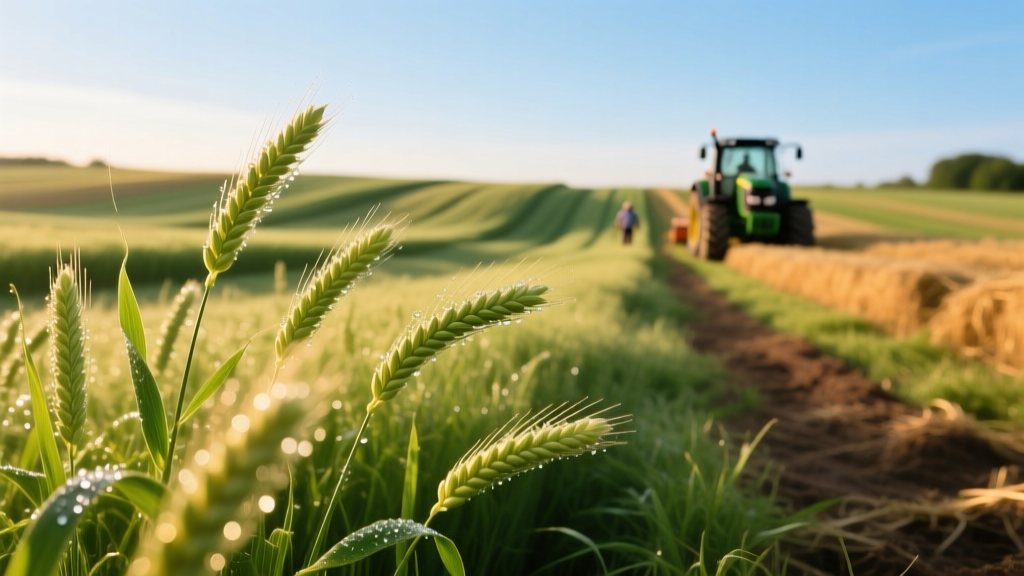
Where Do Grass Seeds Come From? The Seed Farm to Lawn Guide
Most homeowners scatter turfgrass seed over their soil without a second thought about its origin. Yet, the journey of a single grass seed from a botanical structure to the blue-tagged bag in your garden center involves complex plant biology, multi-year university breeding programs, and specialized agricultural harvesting. Understanding where grass seeds come from is not just an exercise in botany; it is the foundational knowledge required to avoid cheap, weed-laden seed blends and establish a dense, disease-resistant lawn.
The Botanical Origin: How Turfgrass Produces Seed
At a biological level, grass seed originates from the inflorescence, the flowering structure of the grass plant. Unlike broadleaf plants that produce showy petals to attract insect pollinators, turfgrasses are primarily wind-pollinated. The inflorescence emerges from the sheath of the flag leaf and takes one of three primary forms depending on the species:
- Panicle: A branched, pyramidal structure common in Kentucky Bluegrass (Poa pratensis) and Tall Fescue (Festuca arundinacea).
- Spike: An unbranched structure where spikelets attach directly to the main axis, typical of wheatgrasses and ryegrasses.
- Raceme: Spikes arranged along a central axis, frequently seen in warm-season grasses like Bermudagrass (Cynodon dactylon).
Apomixis vs. Sexual Reproduction
A critical distinction in grass seed origin is the reproductive method. While Tall Fescue and Ryegrass reproduce sexually (requiring pollen transfer to create genetically unique seeds), Kentucky Bluegrass primarily reproduces via apomixis. This means the seed is produced asexually, resulting in an embryo that is an exact genetic clone of the mother plant. This biological quirk is why you can buy a specific KBG cultivar like 'Midnight' from seed and guarantee its exact genetic traits, whereas sexual grasses require strict isolation during farming to prevent cross-pollination.
For a grass plant to transition from vegetative growth (producing leaves) to reproductive growth (producing seed heads), most cool-season grasses require vernalization—a prolonged period of cold temperatures. This is why commercial seed production for cool-season grasses is heavily concentrated in regions with distinct, cold winters and dry summers, such as the Willamette Valley in Oregon, which produces roughly two-thirds of the world's cool-season turfgrass seed.
The Commercial Supply Chain: Cultivar Breeding and Certification
Commercial grass seed does not come from random fields; it comes from highly regulated agricultural operations growing specific, patented cultivars. The development of a new turfgrass cultivar takes 10 to 15 years. Breeders at institutions evaluated by the National Turfgrass Evaluation Program (NTEP) cross-pollinate parent plants to isolate traits like drought tolerance, rhizomatous growth, and resistance to pathogens like Rhizoctonia solani (brown patch).
Once a new cultivar is stabilized, it enters the seed certification pipeline managed by agencies like the Association of Official Seed Certifying Agencies (AOSCA). This pipeline ensures genetic purity through strict generational classes:
| Seed Class | Tag Color | Generation | Purpose & Handling |
|---|---|---|---|
| Breeder Seed | White | Parent | Controlled directly by the originating breeder or university. Never sold to consumers. |
| Foundation Seed | White | First | Grown from Breeder seed under strict isolation to maintain genetic identity. Sold to seed companies. |
| Registered Seed | Purple | Second | Grown from Foundation seed. Often used to produce the final certified class. |
| Certified Seed | Blue | Third/Final | The commercial seed sold to homeowners and landscapers. Guarantees genetic purity and cultivar identity. |
Warning: The VNS Trap
Cheap grass seed sold in unbranded bulk bags is often labeled VNS (Variety Not Stated). VNS seed is not part of the certification pipeline. It is typically harvested from older, obsolete fields or mixed generic strains that lack the disease resistance and deep-rooting capabilities of modern NTEP-tested cultivars. Always look for the specific cultivar name (e.g., 'Rhambler', 'Titan Ultra') and the blue certification tag.
Harvesting and Processing: How Seed Reaches the Bag
Grass seed does not ripen uniformly on the stalk. If a farmer waits for the top seeds to fully mature, the bottom seeds will have already shattered and fallen to the soil, resulting in massive yield loss. To solve this, commercial farms use a technique called swathing.
- Swathing: A specialized mower cuts the grass stalks near the base and lays them in continuous rows called windrows. The seeds continue to cure and dry on the cut stalk using residual plant moisture.
- Combining: Once the moisture content drops to an optimal level, a combine harvester equipped with a pickup header sweeps the windrows into the machine, threshing the seed from the chaff.
- Drying: Freshly harvested seed often contains 20% to 30% moisture. It is immediately transferred to forced-air batch dryers to reduce moisture to 10%–12%. Failure to dry the seed rapidly results in fungal embryo rot and total viability loss.
- Conditioning: The seed passes through a series of air-screen cleaners, indented cylinder separators, and sometimes gravity tables to remove weed seeds, soil, and inert chaff based on size, weight, and aerodynamic properties.
How to Read a Seed Tag: The PLS Framework
Knowing where the seed comes from commercially means knowing how to verify its quality upon purchase. Every bag of certified turfgrass seed features a state-mandated seed tag. The most critical metric for homeowners to calculate is Pure Live Seed (PLS), which tells you exactly how much of the bag's weight consists of viable, target grass seed.
The PLS Formula:
(% Pure Seed × % Germination Rate) ÷ 100 = % PLS
Real-World Calculation Example
Imagine you are comparing two 50-pound bags of Tall Fescue:
- Bag A (Premium Certified): 98.5% Pure Seed, 90% Germination.
PLS = (98.5 × 90) / 100 = 88.6% PLS. You get 44.3 lbs of live, target seed. - Bag B (Big-Box Store Coated): 75% Pure Seed (due to heavy clay/polymer coating), 80% Germination.
PLS = (75 × 80) / 100 = 60% PLS. You get only 30 lbs of live, target seed, paying for 20 lbs of coating and inert matter.
Always check the "Weed Seed" percentage on the tag. By law, this must be listed. High-quality certified seed will list weed seed at 0.0% or 0.1%. If a tag lists weed seed at 0.5% or higher in a 50lb bag, you are actively planting thousands of weed seeds directly into your prepared soil bed.
Frequently Asked Questions
Can I let my lawn go to seed and harvest it myself to save money?
No. Modern turfgrass lawns are typically composed of hybrid blends or specific apomictic cultivars that require precise agricultural conditioning to separate the seed from the chaff. Furthermore, home lawns are heavily contaminated with weed seeds (like Poa annua or crabgrass). Harvesting seed from your own lawn guarantees you will plant a dense crop of weeds alongside your turfgrass. Additionally, many modern grasses require specific vernalization triggers that may not occur uniformly in a residential setting.
Why is Kentucky Bluegrass seed significantly more expensive than Tall Fescue?
Kentucky Bluegrass seed is lighter, yields less per acre, and requires a much longer establishment period in the seed farm (often taking a full year before the first viable harvest). The seeds are also incredibly small and difficult to clean and process without damaging the embryo, requiring slower, more meticulous conditioning equipment compared to the larger, hardier Tall Fescue seeds.
"The quality of a lawn is permanently capped by the genetic ceiling of the seed planted. No amount of fertilizer or irrigation can elevate a generic, VNS grass cultivar to the performance level of a modern, university-bred, blue-tag certified variety."