
Grass Types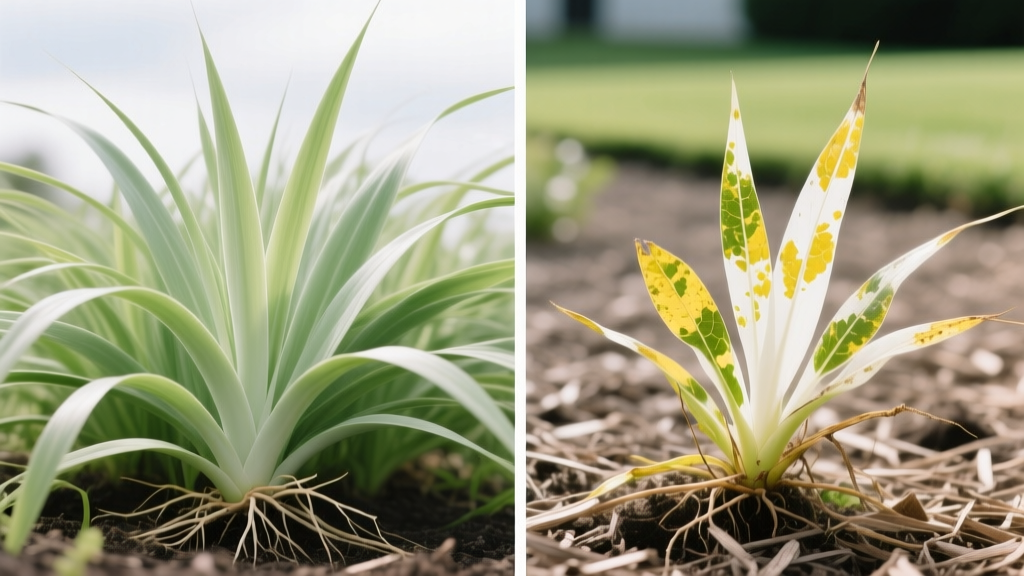
White Centipede Grass: Identifying Pale Cultivars vs. Severe Chlorosis
The 'White Centipede' Phenomenon: Genetics vs. Pathology
When homeowners search for solutions regarding a 'white centipede' lawn, they are typically confronting one of two very different scenarios. Centipedegrass (Eremochloa ophiuroides) is a warm-season turf naturally characterized by a pale, apple-green hue rather than the deep emerald of Kentucky bluegrass or Bermuda. However, when the grass blades or stolons turn stark white, bleached yellow, or translucent, you are no longer looking at natural genetics—you are looking at a severe physiological or pathological failure.
According to the Clemson University Home and Garden Information Center, centipedegrass is highly sensitive to soil pH, over-fertilization, and specific fungal pathogens. Misdiagnosing a naturally pale cultivar as a diseased lawn can lead to fatal over-application of nitrogen, triggering Centipede Decline. Conversely, ignoring true pathological bleaching will result in total turf loss within a single growing season. This guide provides a definitive framework for identifying your grass's status and executing precise, chemical-specific remediation.
Natural Pale Cultivars and White Stolons
Before applying treatments, verify your cultivar. Improved varieties like 'TifBlair', 'Santee', and 'Covington' were bred for cold tolerance and wider leaf blades, but they retain the species' naturally light-green pigmentation. Furthermore, centipedegrass spreads via above-ground stolons (runners). In mature lawns, the lower portions of these stolons—especially where they are shaded by the canopy or resting on sandy, low-organic soil—frequently appear stark white or pale ivory. This stolon coloration is a normal anatomical trait, not a sign of necrosis, provided the terminal leaves remain firm and apple-green.
Warning: The Nitrogen Trap
Never attempt to 'green up' a naturally pale centipede lawn with high-nitrogen fertilizers. Centipedegrass requires a maximum of 1 to 2 pounds of nitrogen per 1,000 square feet annually. Exceeding this threshold causes rapid, weak cellular growth, massive thatch accumulation, and invites Centipede Decline—a fatal physiological collapse.
Diagnostic Matrix: Why is Your Centipede Turning White?
If the terminal leaf blades are turning white, yellow-white, or bleached, use this diagnostic matrix to identify the root cause. The NC State University TurfFiles database highlights that soil chemistry imbalances are the primary culprit for bleaching in warm-season turf.
| Symptom Presentation | Primary Cause | Secondary Trigger | Immediate Corrective Action |
|---|---|---|---|
| Interveinal chlorosis (white/yellow leaves with green veins) | Iron Deficiency | Soil pH above 6.5 locking up iron | Apply chelated liquid iron; lower pH with elemental sulfur |
| Uniform bleaching of entire leaf blade, starting at tips | Take-All Root Rot (TARR) | High soil moisture, pH above 6.0 | Apply Azoxystrobin fungicide; reduce irrigation frequency |
| Patchy white/yellow dieback, blackened stolons | Centipede Decline | Excessive nitrogen, heavy thatch layer | Halt nitrogen; dethatch; apply potassium-rich fertilizer |
| Stark white, paper-like leaf tips post-application | Herbicide Burn | Applying 2,4-D or Dicamba in heat >85°F | Water deeply to dilute; apply seaweed extract for stress relief |
Step-by-Step Remediation for Pathological Bleaching
Once you have identified that your white centipede lawn is suffering from a chemical or biological failure, execute the following remediation protocol. Do not skip the soil testing phase; guessing your soil pH will render subsequent chemical applications useless.
Step 1: Soil Testing and pH Correction
Centipedegrass thrives in acidic soil with a pH between 5.0 and 6.0. If your soil pH creeps above 6.5, iron and manganese become chemically locked in the soil matrix, completely unavailable to the grass roots. Submit a soil sample to your local university extension office. If your pH is high, apply elemental sulfur at a rate of 1 to 2 pounds per 1,000 square feet to gradually lower the pH. Note that sulfur takes 3 to 6 months to fully react, so this is a long-term correction, not an overnight fix.
Step 2: Chelated Iron Application for Chlorosis
While waiting for sulfur to lower the pH, you must bypass the soil lock to restore the lawn's green pigmentation. Use a chelated liquid iron product, such as Southern Ag Chelated Liquid Iron or Feature Industries 6-0-0 Fe. Mix 1 to 2 ounces of liquid chelated iron per gallon of water and apply it via a pump sprayer directly to the foliage. The chelation process keeps the iron soluble, allowing the leaves to absorb it within 24 to 48 hours. Expect a visible color shift from white/yellow back to apple-green within 3 days.
Step 3: Eradicating Take-All Root Rot (TARR)
If your soil test reveals a pH between 5.0 and 6.0, but the grass is still bleaching and the roots appear black and rotted, you are likely dealing with TARR (Gaeumannomyces graminis var. graminis). This soil-borne fungus destroys the root system, preventing water and nutrient uptake, which manifests as white, bleached foliage above ground. Treat the lawn with a preventative and curative fungicide containing Azoxystrobin (e.g., Scotts DiseaseEx or Heritage G). Apply at a rate of 2 to 4 pounds per 1,000 square feet, watering it in immediately with 0.25 inches of irrigation to move the active ingredient into the root zone.
2026 Cost Breakdown for Lawn Rehabilitation
Rehabilitating a severely chlorotic or diseased centipede lawn requires specific inputs. Below is the estimated cost structure for a 5,000-square-foot lawn undergoing a full chemical and biological reset.
| Input / Service | Recommended Product Type | Quantity for 5,000 sq ft | Estimated Cost (2026) |
|---|---|---|---|
| Comprehensive Soil Test | University Extension Mail-In Kit | 1 Kit | $15.00 - $25.00 |
| pH Lowering Agent | Elemental Sulfur (90% S) | 5 - 10 lbs | $20.00 - $35.00 |
| Foliar Iron Supplement | Chelated Liquid Iron (10% Fe) | 16 oz bottle | $18.00 - $28.00 |
| Fungicide (If TARR present) | Azoxystrobin Granular (0.31%) | 10 - 20 lbs | $45.00 - $75.00 |
| Stress Recovery Biostimulant | Kelp/Seaweed Extract Liquid | 32 oz bottle | $22.00 - $35.00 |
| Total Estimated Rehabilitation Cost | $120.00 - $198.00 | ||
Long-Term Cultural Practices to Prevent Recurrence
Once the white bleaching is resolved, maintaining the structural integrity of centipedegrass requires strict adherence to low-input cultural practices. Centipedegrass is often marketed as a 'lazy man's grass,' but it actually demands precise, restrained management.
- Mowing Height: Maintain a strict mowing height of 1.5 to 2.0 inches. Scalping centipedegrass below 1.0 inch removes the photosynthetic canopy, exposing the white stolons to UV damage and inviting weed invasion.
- Fertilizer Selection: Use a high-potassium, low-phosphorus, low-nitrogen fertilizer. A formulation like Lesco 15-0-15 with micronutrients is ideal. Apply only once in late spring (May) and optionally once in late summer (August), never exceeding 1 lb of actual nitrogen per 1,000 sq ft per application.
- Irrigation: Centipedegrass has a shallow root system. Water deeply but infrequently—apply 0.5 to 0.75 inches of water only when the leaf blades begin to fold and show a blue-gray tint. Frequent, shallow watering promotes TARR and shallow root dieback.
- Thatch Management: If the thatch layer exceeds 0.5 inches, core aerate in early June. Avoid aggressive power-raking, which will tear the fragile white stolons and severely set back turf recovery.
By understanding the fine line between the natural pale genetics of Eremochloa ophiuroides and the warning signs of iron chlorosis or fungal pathogens, you can maintain a dense, resilient, and perfectly apple-green lawn without falling victim to the destructive cycle of over-maintenance.

