
Grass Types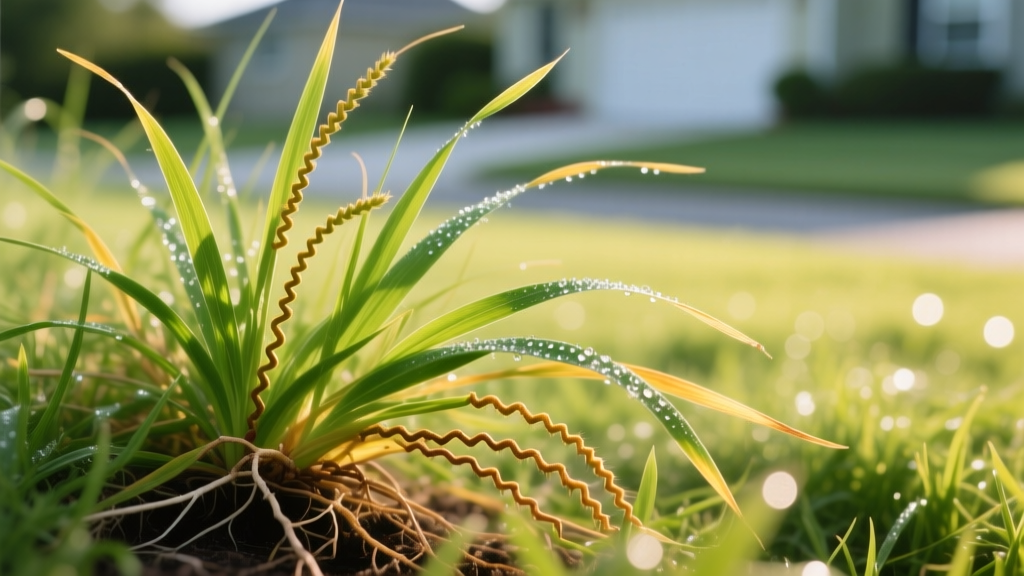
Wild Bermuda Grass Pictures: Visual Identification and Control
Homeowners searching for wild bermuda grass pictures typically face a specific landscaping challenge: an aggressive, coarse-textured weed invading a prized cool-season lawn or a delicate warm-season hybrid. Common bermudagrass (Cynodon dactylon), often referred to as wiregrass or wild bermuda, is a botanical survivor. While it is deliberately planted in pastures and low-maintenance athletic fields, it becomes a severe nuisance when it infiltrates Tall Fescue, Kentucky Bluegrass, or high-end Zoysia lawns.
Accurate identification is the prerequisite for effective eradication. Misidentifying wild bermuda for crabgrass or nimblewill leads to failed herbicide applications and wasted money. This guide decodes the visual markers found in wild bermuda grass pictures and provides exact, science-backed eradication protocols.
Visual Identification: What to Look for in Wild Bermuda Grass Pictures
When examining your lawn against reference photos, focus on three distinct morphological features that separate Cynodon dactylon from other common turf weeds. According to the NC State Extension TurfFiles, these traits remain consistent across most regional biotypes.
1. The Hairy Ligule and Collar
Pull a single blade of grass and examine the collar region (where the leaf blade meets the stem). Wild bermuda features a distinct ligule consisting of a dense fringe of white hairs, typically 0.2 to 0.3 inches long. Unlike crabgrass, which has a membranous, non-hairy ligule, wild bermuda’s collar is unmistakably fuzzy.
2. Above-Ground Stolons and Below-Ground Rhizomes
Wild bermuda spreads via a dual-layered vegetative network. Above ground, you will see stolons (runners) creeping laterally across the soil surface, rooting at nodes. Below ground, it produces scaly, yellowish-brown rhizomes. If you can pull up a patch and see both surface runners and deep, wire-like subsurface roots, you are dealing with common bermudagrass.
3. The Y-Shaped Seed Head
In late summer, wild bermuda produces a terminal inflorescence consisting of three to seven slender spikes that radiate from a central point, resembling a bird’s foot or a Y-shape. These seed heads emerge rapidly after mowing, often within 48 hours of cutting.
Quick ID Checklist:
- Texture: Coarse, stiff, and wiry compared to surrounding turf.
- Growth Habit: Creeping laterally, forming dense, irregular patches.
- Color: Blue-green during active growth; turns straw-brown immediately after the first heavy frost.
- Odor: Foliage emits a faint, sharp, citrus-like scent when crushed.
Wild Bermuda vs. Hybrid Bermuda: A Visual Comparison Matrix
A common point of confusion arises when homeowners attempt to distinguish invasive wild bermuda from intentionally planted hybrid bermuda (such as Tifway 419 or Celebration). Hybrids are sterile, fine-textured, and require meticulous maintenance, whereas wild bermuda is a fertile, coarse opportunist.
| Trait | Wild / Common Bermuda | Hybrid Bermuda (e.g., Tifway 419) |
|---|---|---|
| Leaf Texture | Coarse, wide blades (3-5mm) | Fine, narrow blades (1-2mm) |
| Seed Head Production | Prolific, fertile seeds | Rare, sterile (no viable seeds) |
| Ideal Mowing Height | 1.5 to 2.5 inches | 0.5 to 1.25 inches |
| Dormancy Color | Uneven, patchy straw-brown | Uniform, dormant tan |
| Establishment Method | Seed, sod, or vegetative spread | Sod, sprigs, or plugs only |
Targeted Control Strategies for Invasive Wild Bermuda
Eradicating Cynodon dactylon requires a strategic approach tailored to your desirable turfgrass species. The University of California Integrated Pest Management (UC IPM) program emphasizes that cultural suppression must precede chemical intervention, as wild bermuda exhibits high allelopathic properties, releasing chemicals that inhibit the root growth of competing grasses.
Scenario A: Invasion in Cool-Season Lawns (Tall Fescue, Kentucky Bluegrass)
If wild bermuda is invading a cool-season lawn, you have access to selective post-emergent herbicides that will kill the bermuda without harming the fescue. The active ingredient Fluazifop-P-butyl is the industry standard for this scenario.
- Product Example: Ortho Grass B Gon or Syngenta Fusilade II.
- Application Rate: 0.5 to 0.75 fluid ounces per 1,000 square feet.
- Timing: Apply when the bermuda is actively growing but environmental temperatures are below 85°F. Late spring (May) and early fall (September) are optimal.
- Protocol: Expect to make 2 to 3 applications spaced 14 to 21 days apart. Fluazifop works slowly; the bermuda will turn yellowish-orange and necrotic over a 3-week period.
Scenario B: Invasion in Warm-Season Lawns (Zoysia, Centipede, St. Augustine)
This is the most difficult scenario. There are currently no selective post-emergent herbicides that will safely eradicate common bermuda from a mature Zoysia or St. Augustine lawn without causing severe phytotoxicity to the desirable turf.
- Spot Treatment: Use a non-selective herbicide containing Glyphosate (41% active ingredient). Apply using a wick applicator, a sponge brush, or a highly shielded spray nozzle to paint the herbicide directly onto the wild bermuda leaves.
- Timing: Treat during peak summer growth when the bermuda is aggressively pulling nutrients into its rhizomes, ensuring the glyphosate translocates to the root system.
Warning: Herbicide Temperature Restrictions
Never apply Fluazifop or Glyphosate when daytime temperatures exceed 90°F. High heat causes rapid volatilization, leading to herbicide drift that will scorch your desirable lawn. Furthermore, cool-season grasses under summer heat stress cannot metabolize Fluazifop safely, resulting in temporary fescue stunting.
Step-by-Step Eradication Protocol for Severe Infestations
For lawns where wild bermuda constitutes more than 40% of the total turf cover, spot treatments are inefficient. Follow this total-renovation protocol for complete eradication before replanting.
- Stimulate Growth: In late July, irrigate the lawn heavily and apply a high-nitrogen fertilizer (e.g., 46-0-0 Urea at 1 lb N per 1,000 sq ft). This forces the wild bermuda out of summer dormancy and promotes active translocation.
- Initial Glyphosate Application: Wait 10 days. Apply Glyphosate (2.5 quarts per acre equivalent) evenly across the entire infested zone. Do not mow for 48 hours prior or 7 days post-application.
- Secondary Application: At day 21, inspect the lawn. Any surviving green patches must receive a second targeted application of Glyphosate.
- Soil Solarization (Optional but Recommended):strong> Because wild bermuda rhizomes can survive 18 inches deep in the soil profile, chemical control rarely achieves 100% eradication. Till the soil and cover it with clear 4-mil polyethylene sheeting for 4 to 6 weeks during peak summer heat to cook the remaining rhizomes.
- Re-establishment: By late August, remove the plastic, amend the soil, and seed your desirable turfgrass.
Frequently Asked Questions
Can I smother wild bermuda with black landscape fabric?
No. Wild bermuda rhizomes are highly adapted to low-light environments and will simply grow laterally beneath the fabric, emerging at the edges. Physical barriers must extend at least 24 inches deep into the soil to be effective, which is impractical for most residential lawns.
Does raising my mowing height help suppress it?
Yes, but only in cool-season lawns. Raising your Tall Fescue mowing height to 3.5 or 4.0 inches creates a dense canopy that shades the soil surface. Wild bermuda requires high photosynthetic light levels to maintain its stolon growth; heavy shade will severely reduce its lateral spread, though it will not kill established rhizomes.
Why does the wild bermuda in my pictures look purple?
A purplish or reddish tint on the stolons and lower leaf sheaths is a visual indicator of phosphorus deficiency or environmental stress (such as cold soil temperatures in early spring). This coloration is common in wild biotypes growing in compacted, nutrient-poor clay soils, as noted by Texas A&M AgriLife Extension. It does not indicate a different species.

