
Grass Types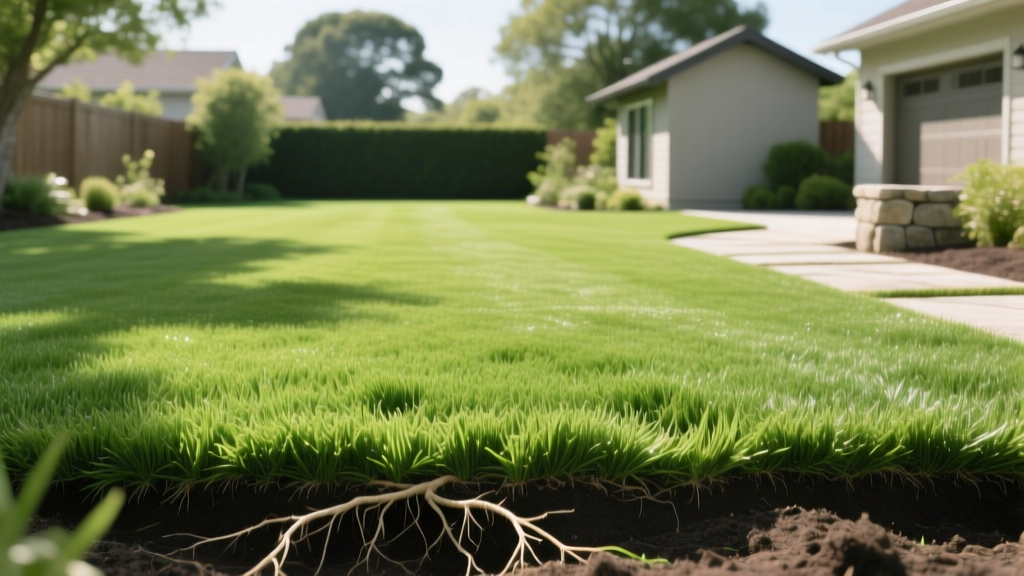
Zenith Zoysia Sod: Complete Installation & Establishment Guide
Why Choose Zenith Zoysia Sod Over Seed?
Zenith Zoysia (Zoysia japonica) is a premier warm-season cultivar celebrated for its exceptional cold hardiness, moderate shade tolerance, and dense, weed-resistant canopy. While Zenith was originally bred specifically for seed propagation, establishing it via sod bypasses the 12-to-18-month maturation window required for seeded lawns. As of 2026, homeowners can expect to pay between $0.50 and $0.75 per square foot for Zenith sod, translating to roughly $250 to $375 per 500-square-foot pallet. This upfront investment yields an instant, erosion-resistant lawn that can withstand light foot traffic within 30 days if rooted correctly.
According to the NC State University TurfFiles, Zoysiagrass species require meticulous soil-to-root contact to thrive. Sodding Zenith eliminates the vulnerability of seed washout and early-stage weed competition, but it introduces the risk of transplant shock and shallow rooting if the establishment protocol is mismanaged.
Pre-Installation Soil Preparation
The most common cause of Zenith Zoysia sod failure is poor subsoil preparation. Zoysia roots struggle to penetrate compacted clay or highly alkaline soils. Follow these exact specifications to prepare your site:
- Vegetation Eradication: Apply a non-selective herbicide (glyphosate) to the existing lawn 14 days prior to installation. Do not skip this step; dormant Bermuda or fescue will compete for water and push through the Zenith canopy later.
- Tilling and Grading: Rototill the soil to a depth of 4 to 6 inches. Rake the area to establish a 1% to 2% slope away from your home's foundation to prevent water pooling, which triggers Rhizoctonia solani (large patch fungus).
- pH Adjustment: Zoysia thrives in a soil pH between 6.0 and 6.5. If a soil test reveals a pH above 7.0, incorporate elemental sulfur at a rate of 10 lbs per 1,000 square feet to lower alkalinity.
- Starter Fertilizer: Apply a high-phosphorus starter fertilizer (such as a 10-18-10 NPK ratio) at a rate that delivers 1 lb of actual phosphorus per 1,000 square feet. This stimulates rapid root hair development.
⚠️ Warning: Harvest-to-Lay Timeframe
Zenith Zoysia sod is highly susceptible to "sweating" and fungal burn if left on the pallet for more than 24 hours after harvest. Schedule your delivery for the exact morning you plan to lay the turf. If temperatures exceed 85°F, lay the sod within 12 hours.
Zenith Zoysia sod is highly susceptible to "sweating" and fungal burn if left on the pallet for more than 24 hours after harvest. Schedule your delivery for the exact morning you plan to lay the turf. If temperatures exceed 85°F, lay the sod within 12 hours.
Step-by-Step Installation Technique
Proper physical installation ensures the sod roots knit into the subsoil without air pockets.
- Stagger the Seams: Lay the sod in a brickwork pattern. Never allow the seams to line up in continuous trenches, as water will channel through these gaps and cause localized desiccation.
- Butt Tightly: Push the edges of the sod rolls tightly together without overlapping. Overlapping edges will rot and create uneven mowing surfaces.
- Roll the Turf: Once laid, run a water-filled lawn roller (weighing approximately 150 to 200 lbs) over the entire area in two perpendicular directions. This forces the sod roots into direct contact with the soil and eliminates air pockets that dry out root tips.
The 30-Day Establishment Watering Matrix
Watering is the most critical variable in Zenith Zoysia establishment. The goal is to keep the root zone moist without saturating the soil, which starves the roots of oxygen and invites disease. The Texas A&M AgriLife Extension recommends adjusting irrigation based on the specific rooting phase.
| Phase | Timeframe | Frequency | Duration per Session | Soil Moisture Target |
|---|---|---|---|---|
| Initial Shock | Days 1–3 | 3x daily | 10–15 mins | Top 1/2 inch constantly moist |
| Root Initiation | Days 4–14 | 2x daily | 15–20 mins | Top 1 inch moist, slight drying between cycles |
| Deep Rooting | Days 15–21 | 1x daily | 30 mins | Top 2 inches moist, deeper water penetration |
| Establishment | Days 22–30 | Every 3rd day | 45 mins | Deep soaking to encourage 4-inch root depth |
💡 Pro Tip: The "Tug Test"
Around day 14, gently grasp a handful of Zenith grass and pull upward. If you feel resistance, the stolons and rhizomes have successfully anchored into the subsoil. If the sod lifts easily, maintain the Phase 2 watering schedule for another week.
Around day 14, gently grasp a handful of Zenith grass and pull upward. If you feel resistance, the stolons and rhizomes have successfully anchored into the subsoil. If the sod lifts easily, maintain the Phase 2 watering schedule for another week.
Mowing and Fertilization Post-Establishment
Zenith Zoysia grows slower than Bermuda or St. Augustine, meaning it requires less frequent mowing but demands precise cutting heights to maintain its dense canopy.
First Mow and Ongoing Maintenance
Do not mow the lawn until the sod has firmly rooted (usually around week 3 or 4). For the first cut, set your mower deck to 2.5 inches. Never remove more than one-third of the leaf blade in a single pass. For ongoing maintenance, maintain a height of 1.5 to 2.0 inches. While rotary mowers with sharp mulching blades are acceptable, a reel mower provides a cleaner scissor-cut that prevents the jagged leaf tips that lead to moisture loss and gray leaf spot.
Nutrient Management
Do not apply high-nitrogen fertilizers during the first 30 days. Once the turf is fully established, apply a balanced slow-release fertilizer (e.g., 16-4-8) at a rate of 1 lb of nitrogen per 1,000 square feet every 6 to 8 weeks during the active summer growing season. Cease all nitrogen applications by mid-August to allow the grass to harden off for winter dormancy.
Common Establishment Failures & Troubleshooting
Even with meticulous preparation, environmental variables can disrupt Zenith Zoysia establishment. Use this diagnostic framework to address issues early.
- Symptom: Sod edges turning brown and brittle.
Cause: Edge desiccation. The exposed edges of sod rolls dry out up to three times faster than the center.
Fix: Hand-water the seams and edges with a hose for an extra 2 minutes during each irrigation cycle until roots anchor. - Symptom: Turf feels spongy and lifts easily after 3 weeks.
Cause: Overwatering and shallow rooting. Constant saturation prevents roots from seeking deeper moisture.
Fix: Immediately transition to the Phase 4 deep-soaking schedule. Allow the top 1/2 inch of soil to dry out completely between waterings. - Symptom: Circular, yellowing patches with dark brown borders.
Cause: Large Patch disease (Rhizoctonia solani), highly common in Zoysia when cool spring soils are kept too wet.
Fix: Reduce irrigation frequency immediately. Apply a preventative or curative fungicide containing azoxystrobin or propiconazole according to label rates. - Symptom: Small, irregular dead spots with visible insect tunneling.
Cause: Hunting billbugs or white grubs feeding on the tender new roots.
Fix: Apply a curative insecticide containing clothianidin or trichlorfon, followed by a deep watering cycle to move the active ingredient into the root zone.
"Zenith Zoysia is incredibly resilient once established, but the first 30 days dictate its long-term viability. Treat the root zone like a delicate nursery environment until the tug test confirms a solid anchor." — Turfgrass Management Best Practices, 2026 Edition
By adhering to strict soil preparation, precise hydration matrices, and proactive disease monitoring, your Zenith Zoysia sod will transition from a vulnerable transplant into a durable, low-maintenance lawn capable of thriving for decades.

