
Grass Types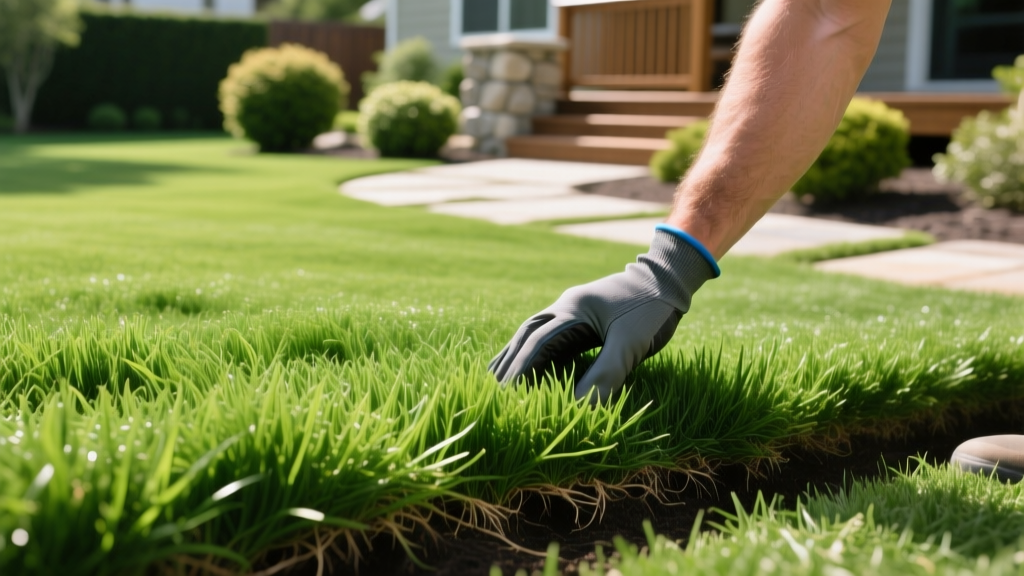
Zorro Zoysia Care Guide: Establishment, Mowing, and Shade Tolerance
The Profile of Zorro Zoysia: Why Landscapers Choose Z. matrella
Zorro zoysia (Zoysia matrella) represents the premium tier of warm-season turfgrasses, prized for its exceptionally fine leaf texture, deep emerald-green color, and superior shade tolerance compared to standard Zoysia japonica cultivars like Meyer or Emerald. Originally developed through cooperative breeding efforts, Zorro has become the standard for high-end residential lawns, commercial landscapes, and golf course tee boxes where a dense, carpet-like appearance is required.
Zorro Zoysia Quick Specs
- Scientific Name: Zoysia matrella
- USDA Hardiness Zones: 7b through 11
- Leaf Texture: Fine to medium-fine (narrower than Z. japonica, wider than Z. tenuifolia)
- Shade Tolerance: High (requires minimum 4–5 hours of filtered or direct sunlight)
- Drought Tolerance: Excellent (deep root system, rolls leaves to conserve moisture)
- Establishment Methods: Sod, plugs, or sprigs (seed is not commercially viable)
According to the National Turfgrass Evaluation Program (NTEP), Z. matrella cultivars consistently rank at the top for overall turf quality, disease resistance, and aesthetic density in southern and transitional zone trials. However, achieving this elite performance requires a strict, scientifically grounded maintenance protocol.
Establishment: Sod vs. Plugs (2026 Cost & Timeline Matrix)
Because Zorro zoysia produces seed heads that are largely sterile or difficult to harvest, vegetative propagation is mandatory. When budgeting for a 2026 installation, homeowners must weigh the immediate impact of sod against the long-term labor of plugs.
| Establishment Method | Estimated Cost (2026) | Time to Full Coverage | Labor & Weed Competition |
|---|---|---|---|
| Full Sod | $0.75 – $1.15 per sq. ft. | Instant (roots in 14-21 days) | Low labor, immediate weed suppression |
| Plugs (12' spacing) | $0.30 – $0.45 per plug | 12 – 18 months | High labor, requires aggressive pre-emergent weed control between plugs |
| Sprigs | $0.15 – $0.25 per sq. ft. (bulk) | 18 – 24 months | Extreme labor, high risk of washout and weed invasion |
Soil Preparation Protocol: Before laying sod or planting plugs, test your soil pH. Zorro thrives in slightly acidic soil (pH 6.0 to 6.5). Till the top 4 inches of soil and incorporate a starter fertilizer high in phosphorus (e.g., a 10-18-10 NPK ratio) at a rate of 1 lb of phosphorus per 1,000 sq. ft. to accelerate root knitting.
Precision Mowing and Thatch Management
The most common failure point for Zorro zoysia is improper mowing. Because it is a fine-bladed grass, it is highly susceptible to scalping if cut too low with the wrong equipment, or it will develop a spongy, disease-prone thatch layer if cut too high.
The Reel Mower Requirement
Zorro zoysia should be maintained at a Height of Cut (HOC) between 0.5 inches and 1.25 inches. At the lower end of this spectrum (0.5' to 0.75'), a walk-behind reel mower is strictly required. Rotary mowers cannot cleanly slice fine blades at half an inch without tearing the tissue, which leads to ragged, brown tips and invites fungal pathogens.
- Peak Season Frequency: Mow every 5 to 7 days during the aggressive growth months of June through August.
- The One-Third Rule: Never remove more than one-third of the leaf blade in a single pass. If the grass reaches 1.5 inches, lower the mower gradually over three consecutive cuts rather than scalping it down to 0.5 inches in one day.
- Clipping Management: Zorro produces dense clippings that decompose slowly. If mowing frequently (every 5 days), you can leave clippings. If mowing every 10+ days, bag the clippings to prevent thatch buildup.
⚠️ Thatch Warning: Zorro zoysia is prone to thatch accumulation due to its high lignin content. If the thatch layer exceeds 0.5 inches, schedule vertical mowing (verticutting) or core aeration in late May when the grass is actively growing. Never dethatch dormant Zorro in early spring; it will not recover before summer heat stress.
Fertilization and Irrigation Protocols
Over-fertilizing Zorro zoysia is a frequent mistake that leads to excessive thatch, increased mowing requirements, and heightened vulnerability to large patch disease. The University of Florida IFAS extension recommends a conservative, targeted approach to nitrogen application.
Annual Nitrogen Budget
Apply 2.0 to 3.0 lbs of Nitrogen per 1,000 sq. ft. annually, split into three applications:
- Spring Green-Up (Mid-May): 1 lb N/1,000 sq. ft. using a quick-release or methylene urea source to push initial lateral spread.
- Peak Summer (Mid-July): 1 lb N/1,000 sq. ft. using a slow-release, coated urea or organic source (like Milorganite) to provide steady feeding without burning the turf during high heat.
- Early Fall (Early September): 0.5 to 1 lb N/1,000 sq. ft. with a high-potassium winterizer (e.g., 15-5-15 NPK) to harden the plant for winter dormancy.
Deep and Infrequent Watering
Zorro zoysia requires approximately 1 inch of water per week during the growing season, including rainfall. Water deeply twice a week (0.5 inches per session) rather than lightly every day. Use a soil moisture probe to check the top 6 inches of soil; if it feels moist, delay irrigation. Deep watering encourages roots to grow downward, vastly improving the turf's drought resilience in late summer.
Troubleshooting: Large Patch and Hunting Billbugs
While Zorro boasts excellent disease resistance compared to St. Augustine or Centipede grass, it is not immune to specific warm-season threats.
Large Patch (Rhizoctonia solani)
Symptoms: Expanding circular patches of blighted, orange-brown grass with dark margins, typically appearing in spring and fall when soil temperatures are between 65°F and 75°F.
Action: Apply a preventative fungicide containing azoxystrobin or pyraclostrobin in early September and again in mid-October. Reduce fall nitrogen applications, which fuel the fungus.
Hunting Billbugs
Symptoms: Irregular brown patches that do not respond to watering. The turf pulls up easily because the larvae have severed the roots and stolons just below the soil surface.
Action: Apply a systemic insecticide containing imidacloprid or chlorantraniliprole in late May to target young larvae before they cause severe root pruning.
Is Zorro Zoysia Right for Your Yard? (Decision Framework)
Before investing in premium Zorro sod, evaluate your property against this practical decision matrix to ensure long-term success.
- Choose Zorro if: Your yard receives 4 to 6 hours of dappled sunlight (under pine or high-canopy oak trees), you desire a manicured, golf-course aesthetic, and you are willing to invest in a reel mower and strict mowing schedule.
- Choose Zorro if: You live in the transitional zone (e.g., North Carolina, Tennessee, Oklahoma) where cold-hardy Z. matrella cultivars outperform St. Augustine and Bermuda grass during winter dormancy transitions.
- Avoid Zorro if: Your yard is heavily shaded by dense, low-branching trees (receiving less than 4 hours of sunlight). No warm-season grass will survive deep shade; consider mulch beds or shade-tolerant groundcovers like creeping jenny instead.
- Avoid Zorro if: You have heavy, poorly draining clay soil and are unwilling to amend it. Zorro requires well-draining soil and will succumb to root rot in perpetually waterlogged conditions.
By adhering to precise mowing heights, managing thatch proactively, and applying targeted fertility, Zorro zoysia will deliver a dense, luxurious lawn that significantly elevates your property's curb appeal for decades.

