
Grass Types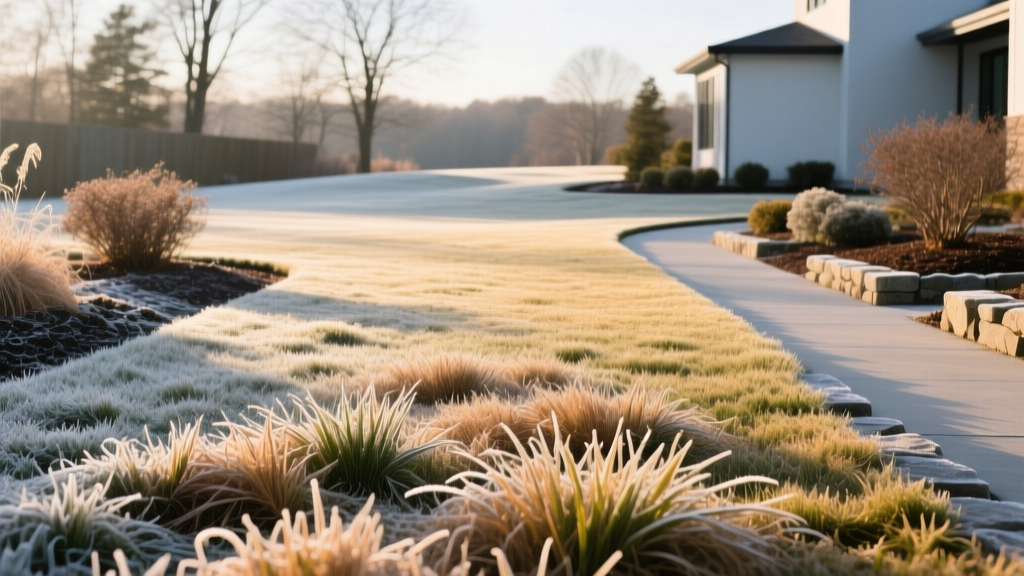
Managing Zoysia in Winter: Regional Dormancy & Care Guide
The Biology of Zoysia Winter Dormancy
Understanding how to manage zoysia in winter requires a fundamental grasp of its physiological dormancy triggers. Unlike cool-season grasses that remain active or semi-active in freezing temperatures, zoysia (Zoysia japonica, Z. matrella, and their hybrids) is a warm-season species that undergoes a hard dormancy when soil temperatures consistently drop below 50°F to 55°F. During this transition, the grass ceases top growth and translocates carbohydrates from the leaf blades down into the rhizomes and stolons. This stored energy is the sole fuel source for spring green-up.
The visual result is a straw-colored or golden-brown lawn. While many homeowners view this dormancy as a defect, it is a vital survival mechanism. Attempting to force zoysia to stay green in winter through excessive nitrogen fertilization or overseeding disrupts this carbohydrate storage process, leading to severe spring dieback and increased susceptibility to crown rot.
The 50°F Soil Temperature Threshold
Do not rely on air temperature to gauge dormancy. Zoysia enters dormancy based on soil temperature at a 2-inch depth. Use a digital soil probe thermometer to track this metric. Once the 10-day average soil temperature drops below 55°F, the dormancy process is irreversible until spring.
Regional Winter Timelines & Dormancy Windows
The duration and intensity of zoysia winter dormancy vary drastically depending on your geographic location. Homeowners must adjust their late-fall and late-winter care calendars based on these regional baselines.
| Region | Average Dormancy Onset | Peak Dormancy Window | Spring Green-Up Trigger | Primary Winter Threat |
|---|---|---|---|---|
| Transition Zone (e.g., Kansas, Missouri, Virginia) | Mid-to-Late October | November – March | Mid-April to May | Winter desiccation, ice damage |
| Upper South (e.g., Tennessee, North Carolina) | Early-to-Mid November | December – February | Late March to April | Large patch disease, Poa annua |
| Deep South / Coastal (e.g., Florida, South Texas) | December (or semi-dormant) | January – February | February to March | Winter annual weeds, nematodes |
Cultivar-Specific Winter Behavior
Not all zoysia behaves identically in winter. The specific cultivar installed in your lawn dictates its cold tolerance, dormancy timing, and spring recovery speed.
- Meyer (Z-52): The industry standard for cold hardiness. Meyer enters dormancy relatively early in the fall but boasts the fastest spring green-up among japonica varieties. It survives transition zone winters with minimal crown damage.
- Zeon: A fine-bladed Z. matrella cultivar. Zeon retains its green color slightly longer into the fall than Meyer but is significantly slower to green up in spring. It requires a longer period of 60°F+ soil temperatures to break dormancy.
- Geo: A newer hybrid with exceptional cold tolerance and deep rooting. Geo exhibits superior winter desiccation resistance, making it ideal for exposed, windy sites in the transition zone.
- Emerald: Highly shade-tolerant but prone to heavy thatch accumulation. If thatch exceeds 0.5 inches before winter, it acts as a sponge, harboring the fungi responsible for Large Patch disease during cool, wet winter months.
The Pre-Winter Zoysia Care Checklist
Proper preparation in the 60 days leading up to dormancy dictates the health of your lawn the following spring. Follow this precise sequence to harden your zoysia for winter.
1. The Potassium Push (Fertilization)
Stop all nitrogen applications by August 15th in the Transition Zone, or September 1st in the Deep South. Late-season nitrogen promotes tender, succulent top growth that is highly vulnerable to early frost kill and Large Patch infection. Instead, apply a high-potassium, zero-nitrogen fertilizer in early October. Look for formulations like 0-0-20 or 5-10-15. Apply at a rate that delivers exactly 1 lb of Potassium (K2O) per 1,000 square feet. Potassium acts as a cellular antifreeze, thickening cell walls and lowering the freezing point of the plant's internal moisture.
2. Final Mowing Adjustments
For the final two mows before dormancy, drop your mowing height by 0.25 to 0.5 inches. If you maintain Meyer at 2.0 inches during summer, lower it to 1.5 inches for winter. This reduces the leaf surface area that can trap snow, ice, and moisture, thereby minimizing the microclimates where fungal pathogens thrive. Exception: Do not scalp Zeon or fine-blended matrella varieties below 1.5 inches, as their crown structures are more delicate.
Winter Weed Defense and Disease Prevention
While the zoysia is dormant, winter annual weeds are actively germinating and competing for space. Furthermore, the most destructive disease of zoysia is most active during the cool, wet shoulder seasons of winter.
Pre-Emergent Herbicide Timing
To control Annual Bluegrass (Poa annua) and Henbit, apply a pre-emergent herbicide when soil temperatures drop to 70°F in the fall (typically late September to early October). Prodiamine (e.g., Barricade) provides a long-residual barrier lasting up to 4 months. For late-fall or early winter applications, Dithiopyr (e.g., Dimension) is superior because it offers early post-emergent control of young Poa annua seedlings that have already sprouted.
Warning: Large Patch (Rhizoctonia solani)
Large Patch is the number one killer of zoysia in the Transition Zone and Upper South. The fungus is highly active when soil temperatures are between 50°F and 70°F, and moisture is trapped in the thatch layer. If your lawn has a history of circular, brown-to-orange lesions in spring, you must apply a preventative fungicide containing Azoxystrobin (e.g., Heritage) or Flutolanil in late September, followed by a second application 28 days later. Treating Large Patch after it becomes visible in spring is largely ineffective; the damage is already done during winter dormancy.
Managing Winter Traffic and Desiccation
Dormant zoysia is not dead, but it is highly vulnerable to physical damage. When the grass is brown, the crowns and rhizomes lack the turgor pressure (water pressure inside cells) that protects them during the active growing season.
Winter Desiccation: In regions with harsh, dry, and windy winters (like the Great Plains or high-elevation Transition Zone), zoysia can suffer from winter desiccation—where wind strips moisture from the dormant crowns faster than the frozen soil can replace it. If you experience a dry winter with no snow cover, apply 0.25 inches of water every three weeks to keep the crowns hydrated.
Traffic Restrictions: Limit foot traffic and pet activity on dormant zoysia. Repeated walking on frozen or semi-frozen dormant crowns causes physical fracturing of the rhizomes, leading to thin, dead patches that will not recover during spring green-up. If you must walk on the lawn, vary your path to distribute the compaction load.
The Overseeding Myth: Why You Should Avoid Ryegrass
Many homeowners ask if they can overseed dormant zoysia with Perennial Ryegrass for winter color. According to turfgrass pathology experts at the Clemson Home & Garden Information Center, this is strongly discouraged. Ryegrass remains highly active in spring, competing aggressively with zoysia for water, nutrients, and sunlight precisely when the zoysia is trying to break dormancy. This competition delays zoysia green-up by weeks and often results in severe thinning. If winter color is absolutely mandatory, use a turf colorant (pigment dye) designed for dormant turf instead of introducing a competing cool-season grass.
Spring Green-Up: Transitioning Out of Winter
As late winter transitions to spring, patience is critical. According to the University of Georgia Extension Turfgrass Calendars, the most common mistake homeowners make is applying high-nitrogen fertilizer too early in an attempt to "force" the grass to turn green.
Wait until soil temperatures consistently read 65°F at a 2-inch depth for at least 10 consecutive days before applying your first spring nitrogen application. Applying nitrogen while the soil is still cool stimulates weed growth and feeds lingering Large Patch fungi, while the zoysia roots remain too inactive to absorb the nutrients. Once the 65°F threshold is met, apply a balanced starter fertilizer (e.g., 16-4-8) at a rate of 0.5 lbs of Nitrogen per 1,000 sq ft to gently wake the root system without shocking the plant.
Frequently Asked Questions: Zoysia in Winter
Q: My zoysia is brown in December, but I live in Florida. Is it dead?
A: No. Even in the Deep South, zoysia will enter a semi-dormant or fully dormant state during cold snaps. Frost events will bleach the leaf blades brown, but the root system remains healthy and will flush new green growth as soon as daytime temperatures stabilize in the 70s.
Q: Should I rake my dormant zoysia to remove dead leaves?
A: Avoid aggressive raking in winter. Raking dormant zoysia can pull up the shallow stolons and damage the crowns. Wait until the grass is at least 30% green in the spring to perform a light dethatching or vigorous raking to remove winter debris.
Q: Can I apply lime to my zoysia during winter dormancy?
A: Yes. Winter is the ideal time to apply pelletized calcitic or dolomitic lime if a soil test indicates a pH below 6.0. The winter freeze-thaw cycles and rainfall will help incorporate the lime into the soil profile, ensuring the pH is corrected by the time the zoysia roots become active in spring.

