
Home & Garden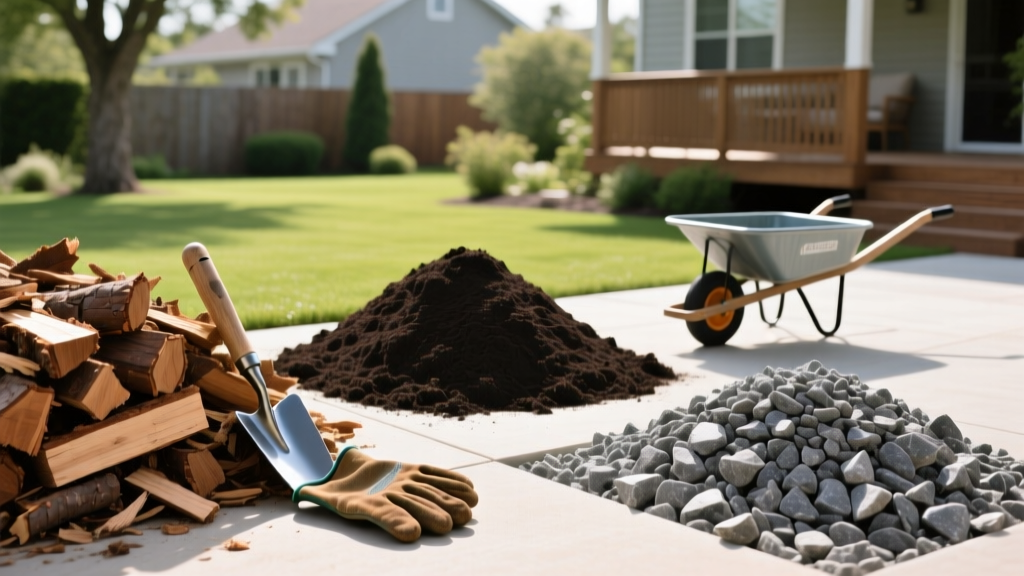
How Much Is 1 Yard of Mulch, Soil & Gravel? 2026 Cost Guide
When homeowners ask, "how much is 1 yard," they are almost always referring to a cubic yard of landscaping material. Whether you are top-dressing a lawn, laying down fresh hardwood mulch, or building a gravel drainage swale, understanding the exact volume, weight, and cost of a cubic yard is critical to avoiding budget overruns and vehicle damage.
In the landscaping industry, a "yard" is shorthand for a cubic yard—a three-dimensional measurement equal to 3 feet long, 3 feet wide, and 3 feet deep. This equals exactly 27 cubic feet. To visualize this, imagine a standard washing machine; one cubic yard is roughly equivalent to the volume of two and a half washing machines. Below is a comprehensive 2026 breakdown of costs, coverage mathematics, and logistical realities for ordering bulk landscape materials.
2026 Material Cost & Weight Matrix
Pricing for bulk landscape materials fluctuates based on regional availability, fuel surcharges, and seasonal demand. The table below outlines the average 2026 pricing per cubic yard for the most common residential landscaping materials, alongside their approximate dry weights.
| Material Type | Avg. Cost Per Cubic Yard (2026) | Approx. Weight (Dry) | Best Application |
|---|---|---|---|
| Shredded Hardwood Mulch | $28 - $42 | 400 - 600 lbs | Garden beds, weed suppression |
| Cedar / Cypress Mulch | $45 - $65 | 350 - 500 lbs | Insect resistance, pathways |
| Screened Topsoil | $35 - $55 | 1,800 - 2,200 lbs | Lawn leveling, raised beds |
| Organic Compost | $40 - $60 | 1,000 - 1,400 lbs | Soil amendment, top-dressing |
| Pea Gravel (3/8 inch) | $45 - $75 | 2,600 - 2,800 lbs | Drainage, decorative hardscape |
| Crushed Limestone (3/4") | $40 - $65 | 2,800 - 3,000 lbs | Driveway bases, patio sub-base |
Pro Tip: Always ask your supplier if the quoted price includes "screening." Unscreended topsoil is cheaper but contains rocks and roots that will ruin lawn leveling projects. For turf installation, only purchase certified screened topsoil with a loam composition.
Coverage Calculations: How Far Will 1 Yard Go?
The square footage covered by a single cubic yard depends entirely on the depth at which you spread the material. According to guidelines from Penn State Extension, organic mulches should be applied at a depth of 2 to 3 inches to effectively retain moisture and suppress weeds without suffocating plant roots. Conversely, gravel bases require 4 inches of depth for structural stability.
Use this quick-reference coverage chart to calculate your needs based on 1 cubic yard (27 cubic feet):
- 1 Inch Deep: Covers 324 square feet (Ideal for light compost top-dressing over existing turf)
- 2 Inches Deep: Covers 162 square feet (Ideal for annual mulch refreshes or garden bed topping)
- 3 Inches Deep: Covers 108 square feet (Ideal for fresh mulch installation over bare soil)
- 4 Inches Deep: Covers 81 square feet (Ideal for gravel pathways and drainage french drains)
- 6 Inches Deep: Covers 54 square feet (Ideal for deep raised garden beds or heavy-duty driveway sub-bases)
The Formula: To calculate exactly how many yards you need, measure your area's Length (ft) x Width (ft) x Desired Depth (inches), then divide that number by 324.
Bulk Delivery vs. Bagged Pallets: The Break-Even Analysis
A common dilemma is whether to order bulk delivery or buy bagged material from a big-box hardware store. Since 1 cubic yard equals 27 cubic feet, you would need exactly nine 3-cubic-foot bags or eighteen 1.5-cubic-foot bags to equal a single bulk yard.
Cost Comparison: Hardwood Mulch
- Bulk Yard: $35 for the material + $65 delivery fee = $100 total ($3.70 per cubic foot)
- Bagged (18 x 1.5 cu ft bags): $4.50 per bag x 18 = $81 total ($3.00 per cubic foot)
The Verdict: If you only need 1 or 2 cubic yards, bagged material is often cheaper because it bypasses the $50-$150 flat-rate delivery fee charged by landscape supply yards. However, once your project requires 3 cubic yards or more, bulk delivery becomes significantly more cost-effective and saves you from the physical toll of moving dozens of 40-pound plastic bags.
The Half-Ton Truck Trap: Weight Limits & Failure Modes
One of the most expensive mistakes homeowners make is assuming they can pick up 1 yard of any material in a standard half-ton pickup truck (e.g., Ford F-150, Chevy Silverado 1500, Ram 1500). While these trucks have large bed volumes, their payload capacities are strictly limited by the suspension and axle ratings.
Most half-ton trucks have a maximum payload capacity between 1,500 and 2,000 pounds (including the weight of the driver and passengers). According to aggregate weight data published by the United States Geological Survey (USGS), sand and gravel weigh roughly 2,800 to 3,000 pounds per cubic yard. Wet topsoil can easily exceed 2,400 pounds.
WARNING: Vehicle Damage Risk
Loading 1 cubic yard of wet topsoil or gravel into a half-ton pickup will exceed the vehicle's Gross Vehicle Weight Rating (GVWR). This causes severe rear suspension sag, compromises braking distance, and can permanently bend the truck's leaf springs or frame. Rule of thumb: Half-ton trucks should only transport 1 to 1.5 yards of lightweight mulch. For soil and gravel, you must hire a delivery truck or rent a 3/4-ton to 1-ton heavy-duty vehicle.
Loading 1 cubic yard of wet topsoil or gravel into a half-ton pickup will exceed the vehicle's Gross Vehicle Weight Rating (GVWR). This causes severe rear suspension sag, compromises braking distance, and can permanently bend the truck's leaf springs or frame. Rule of thumb: Half-ton trucks should only transport 1 to 1.5 yards of lightweight mulch. For soil and gravel, you must hire a delivery truck or rent a 3/4-ton to 1-ton heavy-duty vehicle.
Logistics, Hidden Fees, and Driveway Protection
When scheduling a bulk delivery, the quoted price per yard rarely tells the whole story. Landscape supply companies operate on tight margins and utilize specific fee structures to cover their logistics. Factor these variables into your 2026 budget:
- Delivery Radius Fees: Most yards offer free or flat-rate delivery within a 10 to 15-mile radius. If your home falls outside this zone, expect a per-mile surcharge of $2.50 to $4.00 per mile.
- Minimum Order Requirements: Many suppliers will not dispatch a dump truck for a single cubic yard. The industry standard minimum delivery is often 3 to 5 cubic yards. If you only need 1 yard, you may be forced to pay a "short load" penalty fee of $50 to $75.
- Driveway Dumping vs. Street Drop: Dump trucks carry immense weight. If you request the driver to drive onto your residential concrete or asphalt driveway, the point-load weight of the rear dual axles can crack the pavement, especially in hot summer months. Always instruct the driver to dump the material on the street apron or a designated dirt area, and have heavy-duty tarps ready to protect the surface.
- Fuel and Environmental Surcharges: Expect a 5% to 8% environmental or fuel recovery fee added to the final invoice, which fluctuates with local diesel prices.
By understanding the true dimensions, weight constraints, and financial break-even points of a cubic yard, you can accurately estimate your project needs and avoid the costly logistical errors that frequently derail residential landscaping renovations.

