
Home & Garden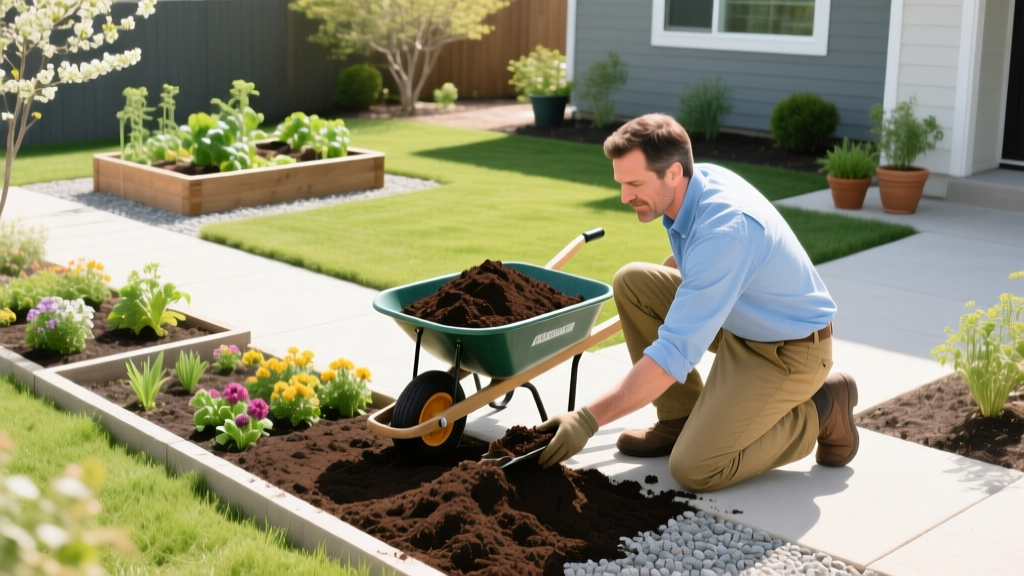
What Does 1 Yard of Dirt Cover? A Beginner's Garden Guide
The most common mistake beginner gardeners make when ordering soil is confusing a linear yard with a cubic yard. When a landscape supplier quotes you for "1 yard of dirt," they are referring to one cubic yard—a three-dimensional measurement of volume, not a flat square on the ground. Miscalculating this volume leads to two universal beginner failures: ordering far too little soil to fill a raised bed, or ordering a bulk drop that crushes a residential driveway because the weight was never factored in.
This guide breaks down the exact dimensions, weight limits, coverage area, and true costs of 1 yard of dirt so you can plan your landscaping project with precision.
The Dimensions: Visualizing the Volume
One cubic yard is a perfect cube measuring 3 feet wide by 3 feet long by 3 feet high. In total, this equals 27 cubic feet of material. To visualize this in your yard, imagine a standard wooden shipping pallet, but stacked three feet high with soil.
While the volume is fixed, the physical footprint it takes up when dumped changes based on how it settles. When dumped from a truck, 1 yard of dirt typically forms a mound roughly 4 feet in diameter and 2.5 feet tall at its peak. You will need a minimum clearance of a 5x5 foot flat surface to accommodate the pile without it spilling onto surrounding grass or garden beds.
⚠️ Critical Weight Warning for Pickup Trucks
Beginners often attempt to pick up 1 yard of dirt in a standard half-ton pickup truck (like a Ford F-150 or Chevy Silverado 1500). Do not do this. Dry, screened topsoil weighs approximately 2,000 pounds (1 ton) per cubic yard. If the soil is damp or saturated from recent rain, that same yard can weigh up to 3,000 pounds. A half-ton truck's maximum payload capacity is typically between 1,500 and 2,200 pounds. Loading a full yard of wet dirt will blow out your rear suspension, severely damage your leaf springs, and create a dangerous braking hazard. Always opt for delivery or use a 3/4-ton or 1-ton heavy-duty truck.
Coverage Calculator: How Far Does It Go?
The square footage that 1 yard of dirt covers is entirely dependent on the depth at which you spread it. Whether you are top-dressing a lawn, filling a low spot, or building a raised vegetable bed, use the matrix below to calculate your exact needs.
| Target Depth | Square Footage Covered | Common Use Case |
|---|---|---|
| 1 Inch | 324 sq. ft. | Light lawn top-dressing |
| 2 Inches | 162 sq. ft. | Heavy lawn leveling / overseeding prep |
| 3 Inches | 108 sq. ft. | Filling shallow garden beds |
| 4 Inches | 81 sq. ft. | Standard raised bed base layer |
| 6 Inches | 54 sq. ft. | Deep root vegetable beds |
| 12 Inches | 27 sq. ft. | Tall planter boxes / retaining walls |
Pro Calculation Tip: To find out how many cubic yards you need for a specific area, multiply your Length (ft) x Width (ft) x Depth (ft), then divide that total by 27.
Soil Types: Topsoil vs. Fill Dirt vs. Garden Mix
Not all dirt is created equal. Ordering the wrong type of soil is an expensive mistake that can stunt plant growth or cause drainage failures. According to soil health guidelines from the USDA Natural Resources Conservation Service, the organic matter content and particle size dictate how soil performs. Here is how to choose the right material for your project:
1. Fill Dirt (The Structural Base)
- Composition: Subsoil consisting mostly of clay, sand, and small rocks. Contains almost zero organic matter.
- Best For: Filling deep holes, changing the grade of a yard, or building the base layer under a patio. It does not settle or decompose over time.
- Never Use For: Growing plants. The lack of organics and poor drainage will suffocate roots.
2. Screened Topsoil (The Lawn Standard)
- Composition: The top 2-8 inches of earth, mechanically screened through a 3/4-inch mesh to remove rocks and debris. Contains 2% to 10% organic matter.
- Best For: Top-dressing lawns, patching bare spots, and establishing a base for sod or grass seed. University extensions, such as the University of Minnesota Extension, recommend screened topsoil for turfgrass establishment due to its balanced mineral profile.
- Never Use For: Filling raised vegetable beds on its own. It is too dense and will compact heavily in a confined wooden or metal box, restricting root growth.
3. Garden Mix / Planting Mix (The Raised Bed Solution)
- Composition: A blended mixture of topsoil, composted bark, peat moss or coco coir, and sometimes perlite or sand.
- Best For: Raised beds, container gardening, and planting new shrubs. The added organics provide nutrients, while the coarse materials ensure the soil remains loose and well-draining.
The True Cost: Bulk Delivery vs. Bagged Soil
When you only need 1 yard of dirt, you are at the exact tipping point where you must decide between buying bulk or buying bagged. Here is the exact financial and labor breakdown.
Option A: Bagged Soil
Volume: Standard bags are 1 cubic foot.
Math: 27 bags = 1 cubic yard.
Cost: At an average of $3.98 per bag, 27 bags cost $107.46 (plus tax).
Labor: You must load 27 heavy bags into your vehicle, drive them home, slice open 27 plastic bags, and dispose of the plastic waste.
Option B: Bulk Delivery
Volume: 1 cubic yard dumped from a truck.
Math: Material + Delivery Fee.
Cost: Topsoil averages $35/yard + a $75 local delivery fee = $110.00 total.
Labor: The driver dumps it exactly where you point. You only move it once with a wheelbarrow.
The Verdict: If you need exactly 1 yard and have a safe place for a truck to dump it (like a driveway), bulk delivery is the superior choice. The cost is nearly identical, but you save hours of labor and eliminate plastic waste. Only choose bagged soil if you lack driveway access, live in an HOA that restricts bulk drops, or need to carry the soil through a narrow side-gate where a wheelbarrow cannot fit.
Step-by-Step: Preparing for a Bulk Drop
A dump truck carrying 1 yard of dirt is still a 10,000-pound commercial vehicle. Failing to prep your drop zone can result in cracked concrete or dead grass.
- Measure the Drop Zone: Ensure you have a 10x10 foot clear area. Overhanging tree branches must be at least 14 feet high to allow the truck's hydraulic bed to fully elevate.
- Lay a Heavy-Duty Tarp: Never dump dirt directly onto a concrete driveway. The moisture and acidic compounds in topsoil will stain the concrete permanently. Buy an 8x10 foot, 10-mil thick poly tarp (costing about $25) and lay it flat. Thin 5-mil painter's tarps will tear under the impact of the falling soil.
- Protect the Lawn: If the truck must drive onto your grass, the tires will leave deep ruts, especially if the soil is moist. Lay down sheets of 3/4-inch plywood to distribute the axle weight across a wider surface area.
- Move it Efficiently: A standard 6-cubic-foot contractor wheelbarrow holds roughly 0.22 cubic yards. Expect to make 4.5 to 5 full wheelbarrow trips to move the entire pile. Do not overload the wheelbarrow; soil is dense, and a tipped wheelbarrow will strain your lower back and spill soil onto your lawn.
The "Shrinkage" Factor: All bulk soil contains air pockets. Once you move the dirt, water it, and let it settle, 1 yard of loose soil will compact down by roughly 10% to 15%. If you are filling a raised bed exactly to the top lip, order 1.2 yards to account for the inevitable settling that occurs over the first three weeks of watering.
Frequently Asked Questions
Can I put 1 yard of dirt in the back of a standard SUV or minivan?
No. One cubic yard of dirt weighs a minimum of 2,000 pounds. The payload capacity of most mid-size SUVs (like a Toyota Highlander or Honda Pilot) is between 900 and 1,200 pounds. Loading a full yard into the cargo area will destroy the rear struts and void your powertrain warranty. Limit SUV transport to 10-15 bagged cubic feet (roughly 600 lbs) at a time.
How long can 1 yard of dirt sit on my driveway before I move it?
If it is sitting on a protective tarp, it can stay there indefinitely. However, if left exposed, heavy rain will turn the outer layer into a slick, heavy mud that is difficult to shovel. If left on bare grass without a tarp, the soil will smother and kill the underlying turf within 7 to 10 days due to light deprivation and moisture trapping.
Does 1 yard of dirt fit in a standard trailer?
Yes, in terms of physical volume. A standard 4x8 foot utility trailer with 1-foot sidewalls holds exactly 1.18 cubic yards when filled to the brim. However, you must check your trailer's Gross Vehicle Weight Rating (GVWR). Ensure your trailer is rated to carry at least 2,500 pounds of payload to safely transport a full yard of damp soil.