Home & Garden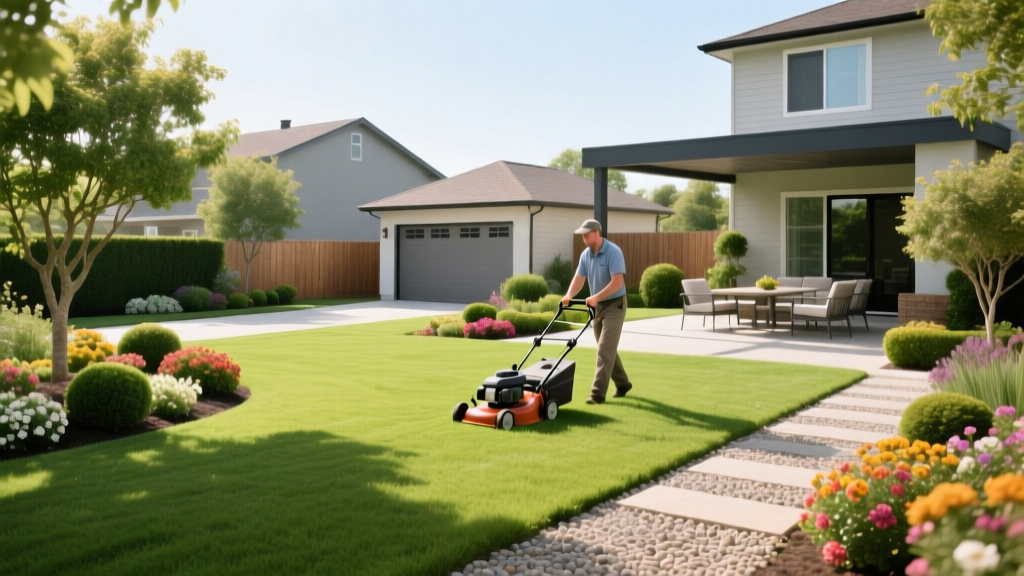
How Big Is a Yard on Average? Sizing & Landscaping Guide
The Raw Data: Average Lot vs. Usable Yard Size
When beginners ask, "how big is a yard," they are usually conflating two distinct real estate metrics: total lot size and usable yard space. According to data from the U.S. Census Bureau's American Housing Survey, the median lot size for new single-family homes in the United States hovers around 8,500 square feet (roughly 0.19 acres). However, your actual usable yard space is significantly smaller once you subtract the physical footprint of your home, driveway, and municipal setbacks.
Understanding this distinction is the first step in effective landscape planning. A quarter-acre lot (10,890 square feet) might sound massive, but if the house and hardscaping consume 4,500 square feet, you are left with roughly 6,390 square feet of workable soil and turf.
| Region | Median Lot Size (Sq Ft) | Approximate Acreage | Typical Usable Yard Space |
|---|---|---|---|
| Northeast | 11,400 | 0.26 acres | 6,500 - 7,500 sq ft |
| Midwest | 9,600 | 0.22 acres | 5,500 - 6,500 sq ft |
| South | 8,200 | 0.18 acres | 4,500 - 5,500 sq ft |
| West | 6,900 | 0.15 acres | 3,500 - 4,500 sq ft |
The "Setback" Reality: Calculating Your Actual Usable Space
Before purchasing bulk soil or mapping out a patio, you must calculate your true usable yard area. Municipal zoning laws dictate "setbacks"—the minimum distance your house, fences, and permanent structures must be from the property line. In many suburban zones, the front setback is 20 to 25 feet, while side setbacks are 5 to 10 feet.
The Usable Yard Formula:
Total Lot Area - (House Footprint + Driveway/Walkways + Front Setback Area + Utility Easements) = Usable Yard Space
Example: On an 8,000 sq ft lot, a 2,000 sq ft house, 500 sq ft driveway, and a 1,500 sq ft front setback leaves you with exactly 4,000 sq ft of usable backyard and side-yard space for landscaping.
Total Lot Area - (House Footprint + Driveway/Walkways + Front Setback Area + Utility Easements) = Usable Yard Space
Example: On an 8,000 sq ft lot, a 2,000 sq ft house, 500 sq ft driveway, and a 1,500 sq ft front setback leaves you with exactly 4,000 sq ft of usable backyard and side-yard space for landscaping.
Always check your local property plat map for utility easements. Building a raised garden bed or planting a deep-rooted tree over a buried sewer line or gas easement can result in costly municipal fines and destroyed landscaping.
Landscaping Strategies by Yard Size Tier
How big is a yard in your specific context? The answer dictates your design strategy. Here is how to approach the three primary yard size tiers.
Small Yards (Under 3,000 Sq Ft)
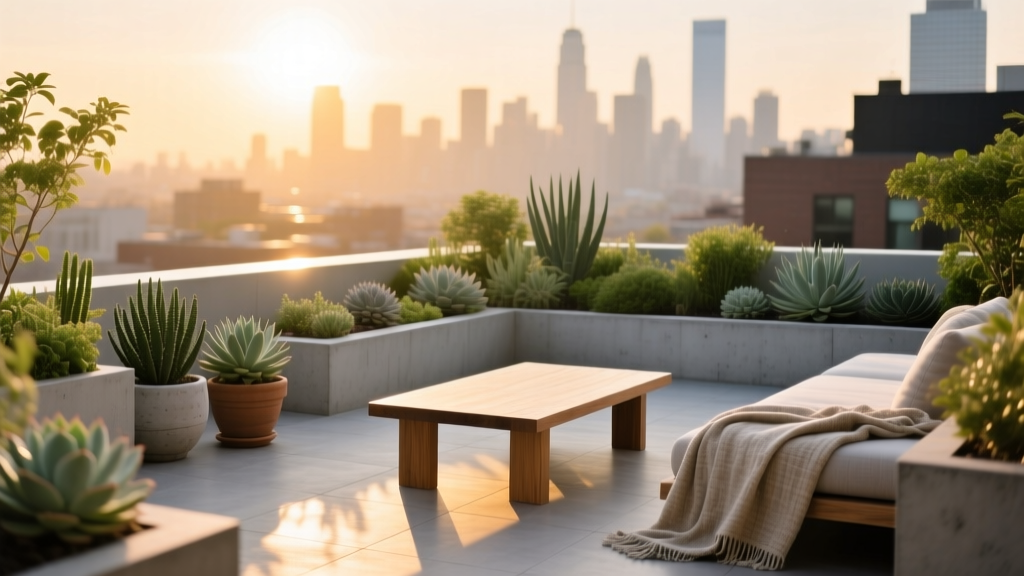
Common in urban townhomes and modern infill developments. The goal here is multi-functionality and verticality.
- Turf Choice: Skip traditional high-maintenance Kentucky Bluegrass. Opt for dwarf fescue blends or micro-clover, which require 50% less mowing and thrive in smaller, often partially shaded spaces.
- Hardscaping: Use permeable pavers rather than poured concrete to manage drainage in tight spaces and reduce runoff.
- Planting: Utilize espaliered fruit trees (trained to grow flat against fences) and vertical trellis systems for crops like pole beans and cucumbers.
Medium Yards (3,000 to 8,000 Sq Ft)
The standard suburban backyard. This size allows for distinct "zones" without feeling cluttered.
- Zoning: Divide the space into three zones: an active recreation area (open turf), a relaxation zone (patio with fire pit), and a perimeter border (native shrubs and pollinator gardens).
- Irrigation: This is the threshold where an in-ground sprinkler system becomes cost-effective. Expect to pay between $3,500 and $5,500 for a professional multi-zone irrigation install on a 5,000 sq ft usable area.
- Soil Amendment: Medium yards often suffer from construction compaction. Plan to core aerate and top-dress with 1/4 inch of compost annually, requiring roughly 1.5 cubic yards of compost per 5,000 sq ft.
Large Yards (8,000 to 20,000+ Sq Ft)
Rural properties or older suburban estates. The primary challenge here is maintenance fatigue and water management.
- Meadow Conversion: Convert the outer 40% of your yard into a native meadow. According to Penn State Extension, reducing turfgrass area significantly lowers water usage, fertilizer needs, and weekly mowing time.
- Equipment: Standard 21-inch push mowers are insufficient. You will need a zero-turn mower with at least a 42-inch deck (e.g., Toro TimeCutter series) or a riding tractor to manage large acreages efficiently.
- Tree Placement: Plant large-canopy shade trees (like Red Maples or White Oaks) at least 20 feet from the home's foundation to prevent root intrusion into basement walls and to allow adequate solar access for the roof.
The True Cost of Yard Size: Maintenance Budgets
The larger the yard, the higher the ongoing operational costs. When calculating how big is a yard you can comfortably maintain, factor in these 2026 average pricing benchmarks for professional services and DIY materials.
| Maintenance Task | Small Yard (<3k sq ft) | Medium Yard (3k-8k sq ft) | Large Yard (8k+ sq ft) |
|---|---|---|---|
| Professional Mowing (Per Visit) | $45 - $65 | $65 - $110 | $120 - $200+ |
| Annual Fertilizer/Weed Control | $150 - $250 | $300 - $600 | $700 - $1,200 |
| Spring Mulching (Material + Labor) | $200 - $400 | $500 - $1,000 | $1,200 - $2,500 |
| Automated Irrigation Water Cost | $30 - $50 / month | $60 - $120 / month | $150 - $300 / month |
Your 4-Step Yard Measurement and Planning Protocol
Do not rely on Zillow's lot size estimate or your county tax assessor's rough drawing. Accurate landscaping requires precise, on-the-ground measurements.
- Acquire the Right Tools: Ditch the standard 25-foot metal tape measure. Purchase a 100-foot fiberglass measuring tape (like the Komelon Self Lock, ~$25) for long boundary runs, and a laser distance measurer (like the Bosch GLM50C, ~$119) for calculating the square footage of patios and garden beds with millimeter accuracy.
- Map the Sun and Shade: Download a solar tracking app like Sun Surveyor. Walk your yard at 9:00 AM, 12:00 PM, and 3:00 PM to map out full sun (6+ hours), partial shade (3-6 hours), and full shade (<3 hours) zones. This dictates exactly where you can plant sun-loving vegetables versus shade-tolerant hostas.
- Identify Microclimates: Notice where water pools after a heavy rain (low spots) and where the soil dries out first (often near south-facing walls or under large tree canopies). These microclimates require distinct soil amendments and plant selections.
- Draft a Base Map: Use graph paper (1 square = 10 square feet) or free software like SketchUp to draw your property lines, house footprint, and existing trees. This base map is your master document for all future landscape design overlays.
Warning: Property Line Encroachments
Never assume an existing fence marks the exact property line. Fences are frequently built a few feet inside the actual boundary to avoid shared maintenance disputes. If you plan to build a retaining wall, plant a privacy hedge, or install a shed, hire a licensed land surveyor to mark your iron pins. The $400-$800 cost of a survey is vastly cheaper than the legal fees and demolition costs of removing an encroaching structure.
Never assume an existing fence marks the exact property line. Fences are frequently built a few feet inside the actual boundary to avoid shared maintenance disputes. If you plan to build a retaining wall, plant a privacy hedge, or install a shed, hire a licensed land surveyor to mark your iron pins. The $400-$800 cost of a survey is vastly cheaper than the legal fees and demolition costs of removing an encroaching structure.
Frequently Asked Questions About Yard Dimensions
Is a quarter-acre yard considered big?
A quarter-acre equals 10,890 square feet. In a suburban context, this is considered a medium-to-large yard. It provides ample space for a home, a two-car driveway, a spacious backyard patio, and roughly 5,000 to 6,000 square feet of open lawn or garden beds. However, in rural areas, a quarter-acre is considered quite small.
How do I calculate the volume of soil needed for my yard?
To calculate cubic yards of soil or mulch, use this formula: (Length in feet × Width in feet × Depth in inches) ÷ 324 = Cubic Yards. For example, to cover a 500 sq ft garden bed with 3 inches of topsoil: (500 × 3) ÷ 324 = 4.6 cubic yards. Always order 10% extra to account for soil settling and uneven terrain.
What is the most low-maintenance yard size?
For homeowners seeking minimal weekend chores, a usable yard size between 2,000 and 3,500 square feet is ideal. This size is large enough to host a small gathering and grow a modest vegetable garden, but small enough to maintain entirely with a standard push mower, a single bag of fertilizer, and a basic garden hose setup, keeping annual maintenance costs under $500 if done DIY.