
Home & Garden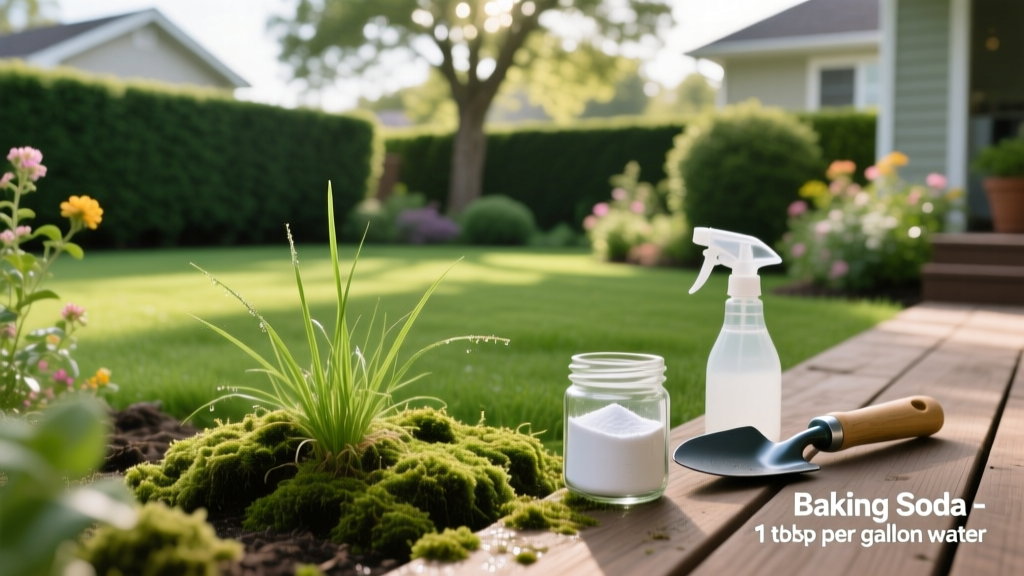
Does Baking Soda Kill Moss? Application Rates, Soil Safety, and Alternatives
The Short Answer: Yes, But With Major Caveats
When homeowners ask, does baking soda kill moss, the short answer is yes. Sodium bicarbonate (baking soda) is a highly effective contact desiccant that will rapidly dry out and kill moss on contact. However, treating it as a universal cure-all is one of the most common mistakes in lawn care. While it works exceptionally well on hardscapes, roofs, and shaded patios, applying baking soda directly to your lawn can trigger severe, long-term soil degradation that ultimately creates the exact conditions moss needs to thrive.
This guide breaks down the cellular science of how sodium bicarbonate affects bryophytes, provides exact mixing ratios for safe application on non-turf surfaces, and explains the hidden soil chemistry risks you must avoid if you want a healthy, moss-free lawn.
Quick Action Summary
- Does it kill moss? Yes, via osmotic desiccation (cellular dehydration).
- Is it systemic? No. It only kills the surface tissue it touches.
- Best application: Flagstone patios, asphalt shingles, concrete driveways, and wooden decks.
- Worst application: Turfgrass lawns, garden beds, and areas with heavy clay soil.
The Science: How Sodium Bicarbonate Affects Moss
To understand why baking soda works, you have to look at moss biology. Unlike turfgrass, mosses (Bryophyta) lack a true vascular system and a waxy cuticle to retain moisture. They absorb water and nutrients directly through their single-cell-thick leaves.
Osmotic Stress and Cellular Collapse
When a concentrated baking soda solution lands on moss, it creates a hypertonic environment. The high concentration of sodium and bicarbonate ions outside the moss cells forces water to rush out of the plant tissue via osmosis. This rapid dehydration causes cellular collapse, turning the vibrant green moss into a brittle, blackened crust within 24 to 48 hours.
According to plant pathology principles outlined by the Royal Horticultural Society, while contact salts are effective at burning down surface growth, they do not alter the underlying environmental drivers of moss, such as soil compaction, low pH, or dense shade.
Step-by-Step Application Guide for Hardscapes and Roofs
Baking soda is an excellent, eco-friendly alternative to harsh chemical herbicides like glyphosate or bleach when treating moss on non-living surfaces. Here is the exact protocol for maximum efficacy without damaging your masonry or roofing.
- Wait for a Dry Window: Check your local forecast. You need at least 48 hours of dry weather. Rain will dilute the sodium bicarbonate before it can penetrate the moss tissue.
- Mix the Solution: Combine 1 cup of standard baking soda (sodium bicarbonate) with 1 gallon of water. Add 1 teaspoon of liquid dish soap. The soap acts as a non-ionic surfactant, breaking the surface tension of the water so the solution clings to the moss rather than beading up and rolling off.
- Agitate and Apply: Stir until the powder is completely dissolved. Transfer to a pump-action garden sprayer. Saturate the moss thoroughly until it is dripping.
- Let it Desiccate: Allow the treated area to sit for 2 to 3 days. The moss will turn dark brown or black.
- Mechanical Removal: Once brittle, use a stiff-bristled push broom or a plastic putty knife to scrape the dead moss away. Rinse the hardscape with a low-pressure hose to clear the debris and residual sodium.
Why Baking Soda Fails on Lawns (The Soil Chemistry Problem)
If you apply baking soda to your lawn to kill moss, you are trading a short-term cosmetic fix for a long-term agronomic disaster. The issue is not the bicarbonate (which breaks down relatively quickly); the issue is the sodium (Na+).
Sodium Buildup and Clay Dispersion
Healthy soil relies on calcium (Ca2+) and magnesium (Mg2+) to bind clay particles together into stable aggregates—a process called flocculation. This creates pore spaces for air, water, and grassroots. Sodium ions, however, carry a single positive charge. When introduced to the soil in high volumes via baking soda, sodium displaces calcium and magnesium on the soil's cation exchange capacity (CEC).
As detailed in soil salinity research from Michigan State University Extension, when sodium dominates the soil profile, clay particles repel each other and break apart (deflocculation). The result is a hard, crusty, impermeable layer known as hardpan. Water pools on the surface, drainage plummets, and the soil becomes heavily compacted. Ironically, these are the exact conditions that cause moss to germinate in the first place.
Treatment Comparison Matrix: Baking Soda vs. Professional Alternatives
Choosing the right treatment depends entirely on the surface you are treating and your long-term soil health goals. Use this decision matrix to select the correct protocol.
| Treatment Method | Best Use Case | Est. Cost per 1,000 sq ft | Soil & Turf Impact |
|---|---|---|---|
| Baking Soda | Patios, Roofs, Driveways | $0.50 - $1.00 | Burns grass; causes severe clay dispersion and hardpan. |
| Ferrous Sulfate (Iron) | Turfgrass Lawns | $2.50 - $4.00 | Kills moss rapidly; provides micronutrients to grass; lowers soil pH. |
| Potassium Soap Salts | Garden Beds, Delicate Stone | $5.00 - $7.00 | Safe for most ornamentals; breaks down quickly without salt buildup. |
| Core Aeration + Lime | Long-term Lawn Prevention | $15.00 - $25.00 (Contractor) | Fixes compaction and pH; starves moss of its preferred environment. |
Better Alternatives for Permanent Lawn Moss Eradication
If your moss problem is on your lawn, skip the pantry and use agronomic solutions that kill moss while feeding the turf.
- Ferrous Sulfate (20% Iron): This is the gold standard for lawn moss control. Apply at a rate of 3 to 5 ounces per 1,000 square feet, dissolved in water. The iron causes rapid necrosis in moss (turning it black within hours) while simultaneously greening up your turfgrass. Note: Iron can stain concrete, so keep it strictly on the grass.
- Correcting Soil pH with Calcitic Lime: Moss thrives in acidic soils (pH below 5.5). Turfgrass prefers a pH between 6.2 and 7.0. Conduct a soil test and apply pelletized calcitic lime at the recommended rate (usually 20-40 lbs per 1,000 sq ft) in the fall to outcompete the moss.
- Mechanical Dethatching: Moss often takes root in thick layers of dead organic matter (thatch). Use a gas-powered dethatcher or a manual thatch rake in early autumn to physically rip out the moss and expose the soil to grass seed.
Frequently Asked Questions
Will baking soda kill my grass if it blows onto the lawn?
Yes. High concentrations of sodium bicarbonate will cause severe leaf burn and desiccation in turfgrass. If you are treating a patio bordering a lawn, use a physical shield (like a piece of cardboard) to block overspray, and lightly rinse any adjacent grass blades with a hose immediately after application.
Does baking soda permanently change soil pH?
No. While baking soda is alkaline and will cause a temporary spike in surface pH, its buffering capacity is low. The real danger is not the pH shift, but the residual sodium ions left behind, which physically destroy soil structure by dispersing clay particles.
How often can I apply baking soda to my roof shingles?
You can safely apply a baking soda solution to asphalt or cedar shingles once every 6 to 12 months. Unlike chlorine bleach, which dries out the petroleum binders in asphalt shingles and strips the protective granules, sodium bicarbonate is gentle on roofing materials while remaining lethal to moss and algae spores.