
Home & Garden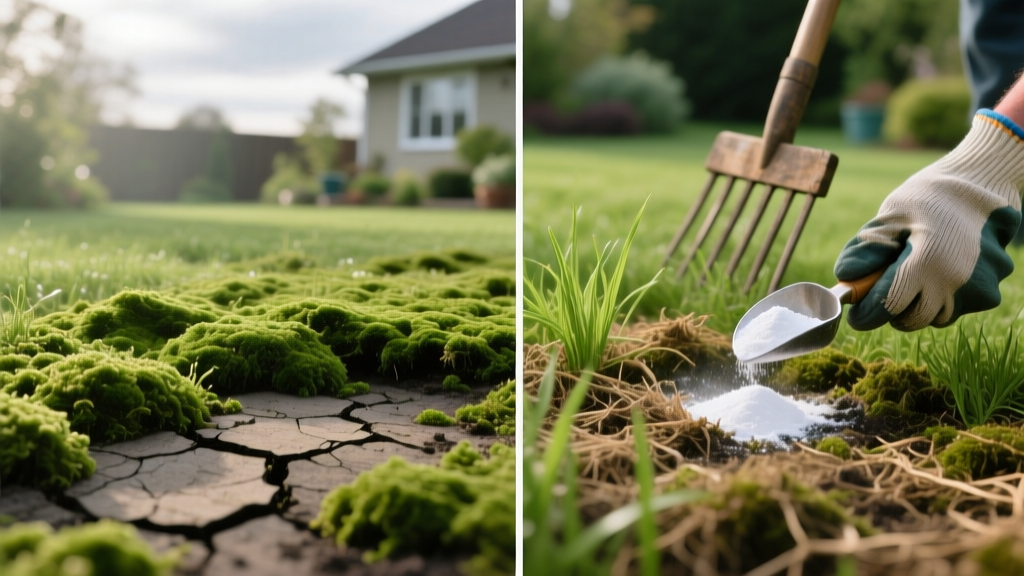
Baking Soda Moss Killer: Does This Organic Remedy Work?
The Reality of Using Baking Soda for Moss Control
When homeowners seek organic and chemical-free controls for turf and hardscape moss, sodium bicarbonate—commonly known as baking soda—frequently tops the list of DIY remedies. But does a baking soda moss killer actually work, or is it just a gardening myth? The short answer is yes, but with significant caveats regarding application method, surface type, and long-term soil health.
Baking soda acts as a contact desiccant and a localized pH alterant. Moss thrives in acidic, compacted, and consistently moist environments (typically pH 5.0 to 5.5). Because sodium bicarbonate is highly alkaline (pH 8.3), applying it directly to moss foliage rapidly draws out cellular moisture, causing the moss to desiccate, turn black, and die within 24 to 48 hours. However, it does not possess systemic properties; it will not kill moss spores deep in the soil profile, nor will it permanently alter the underlying conditions that allowed the moss to colonize in the first place.
'While household remedies like baking soda can provide temporary top-growth suppression of moss, they do not address the ecological imbalances—such as soil compaction, poor drainage, and heavy shade—that favor moss over turfgrass.' — Penn State Extension
The Science and Risks: Sodium Toxicity in Turf
Before broadcasting baking soda across your lawn, you must understand the risk of sodium toxicity. Unlike potassium or calcium, sodium is not a beneficial nutrient for turfgrass. Repeated or heavy applications of sodium bicarbonate introduce high levels of sodium ions into the soil matrix. This causes soil particles to disperse, destroying soil structure, reducing water infiltration, and creating a hardpan crust.
⚠️ Warning: Turfgrass Damage
Applying more than 1/2 cup of baking soda per square yard can cause severe tip burn and root desiccation in sensitive cool-season grasses like Kentucky Bluegrass and Fine Fescue. If you are treating a lawn, liquid applications are vastly safer than dry broadcasting, as the water dilutes the sodium concentration before it reaches the root zone.
Step-by-Step Liquid Application Guide for Lawns
For lawn applications, a liquid spray ensures even distribution and minimizes the risk of localized sodium buildup. Follow this exact protocol for optimal results in early spring or fall when moss is actively holding moisture.
- Mow and Scarify: Lower your mower deck to 1.5 inches. Use a thatching rake or mechanical scarifier to physically tear the moss canopy. This exposes the lower stems to the treatment.
- Mix the Solution: Dissolve 1/2 cup (approx. 120g) of standard sodium bicarbonate into 1 gallon (3.8L) of warm water. Add 1 teaspoon of mild liquid castile soap (like Dr. Bronner's) as a surfactant to break the surface tension of the water, allowing the solution to coat the moss fronds rather than beading off.
- Calibrate and Spray: Use a pump-action garden sprayer. Apply the mixture evenly over the moss patches until the foliage is thoroughly wet, but avoid heavy runoff into the soil. One gallon covers approximately 250 square feet.
- Wait for Desiccation: Allow 48 hours of dry weather. The moss will transition from green to yellow, and finally to a brittle dark brown or black.
- Rake and Remove: Vigorously rake out the dead moss. Leaving dead organic matter on the soil surface will invite fungal pathogens and block sunlight from reaching the underlying grass.
Dry vs. Liquid Application: Comparison Matrix
Choosing between a dry powder application and a liquid spray depends entirely on the surface you are treating. Use the matrix below to select the correct methodology for your specific outdoor space.
| Feature | Dry Powder Broadcast | Liquid Spray Solution |
|---|---|---|
| Mixing Ratio | 1/2 cup per 9 sq ft (1 sq yd) | 1/2 cup per 1 gallon water |
| Best Use Case | Hardscapes, roofs, isolated driveway cracks | Lawns, turfgrass, delicate garden beds |
| Efficacy Speed | 12–24 hours (rapid desiccation) | 24–48 hours (gradual burn) |
| Risk to Turfgrass | High (severe sodium toxicity & burn) | Low to Moderate (if properly diluted) |
| Residue Issues | Leaves white crust on dark pavers/brick | Minimal, washes away with next rainfall |
Cost Analysis: Baking Soda vs. Commercial Iron Sulfate
A common misconception in organic gardening circles is that DIY baking soda treatments are vastly cheaper than commercial chemical alternatives. As of 2026, a standard 4-pound box of Arm & Hammer baking soda retails for approximately $6.00. Using the dry application rate (1/2 cup per square yard), a 4-pound box will treat roughly 150 square feet. This equates to $4.00 per 100 square feet.
By contrast, a 10-pound bag of commercial Iron Sulfate (such as Lilly Miller Moss Out), which retails for about $20.00, treats up to 5,000 square feet. This equates to $0.40 per 100 square feet. Therefore, baking soda is actually ten times more expensive per square foot than bulk iron sulfate. Homeowners should choose baking soda strictly for its non-toxic, pet-safe profile and its lack of rust-staining on concrete, not for budget savings.
Using Baking Soda on Roofs, Patios, and Driveways
Where baking soda truly shines as a moss killer is on hardscapes and roofing. Iron sulfate and copper-based chemical moss killers will leave permanent, rust-colored stains on concrete pavers, asphalt driveways, and wooden decks. Baking soda leaves no such stains.
- Asphalt & Concrete Driveways: Apply the dry powder directly into moss-filled cracks immediately after a light rain. The residual moisture will activate the sodium bicarbonate. Sweep away the dead moss and white residue with a stiff-bristle push broom after 24 hours.
- Wooden Decks: Use the liquid spray method. High concentrations of dry baking soda can trap moisture against wood grains if not swept thoroughly, potentially accelerating localized rot. Always rinse the deck with a hose 48 hours after the moss has died.
- Roof Shingles: Do not use baking soda on asphalt shingle roofs. While it will kill the moss, the high sodium content can degrade the limestone filler used in modern asphalt shingles over time, and the granular residue can clog gutter downspouts. For roofs, utilize zinc sulfate strips or specialized potassium salts of fatty acids.
Why Moss Returns (And How to Fix the Root Cause)
Killing the existing moss is only 10% of the battle. If you do not alter the microclimate, moss spores will germinate and recolonize the area within 6 to 8 weeks. According to University of Wisconsin-Madison Extension, moss is a symptom of poor turfgrass vigor, not the cause of it. Implement these structural fixes:
1. Alleviate Soil Compaction
Moss thrives in anaerobic, compacted soils where turfgrass roots suffocate. Perform core aeration in the fall using a gas-powered plug aerator, extracting soil cores at least 3 inches deep on a 2-inch grid pattern. Top-dress the holes with coarse masonry sand to maintain permanent drainage channels.
2. Correct the Soil pH
While baking soda temporarily spikes surface pH, it does not buffer the soil long-term. Test your soil using a digital meter or a lab mail-in kit. If the pH is below 6.0, apply pelletized calcitic lime at a rate of 40 pounds per 1,000 square feet to permanently raise the pH into the 6.5–7.0 range preferred by turfgrass.
3. Manage Canopy Shade
Turfgrass requires a minimum of 4 to 6 hours of direct, unfiltered sunlight daily. If tree canopies are blocking light, hire an arborist to perform selective crown thinning. Alternatively, transition heavily shaded zones away from turf entirely, replacing them with shade-tolerant groundcovers like Pachysandra or Creeping Jenny, which naturally outcompete moss.
Frequently Asked Questions
Is baking soda safe for pets and wildlife?
Yes. Sodium bicarbonate is generally recognized as safe (GRAS) and is non-toxic to dogs, cats, and local bird populations. However, avoid letting pets ingest large, concentrated piles of the dry powder, as it can cause temporary gastrointestinal upset or vomiting.
Can I mix baking soda with white vinegar for a stronger kill?
No. Mixing sodium bicarbonate (a base) with acetic acid (vinegar) creates a volatile acid-base reaction that produces carbon dioxide gas and water. You will neutralize both ingredients, leaving behind a harmless saltwater solution that has zero desiccating power against moss.
Will baking soda kill my desirable garden plants?
Direct contact with the liquid spray will cause foliar burn on broadleaf plants, perennials, and vegetable crops due to the alkaline pH and sodium content. Use a cardboard shield or a targeted spray wand with a narrow nozzle when treating moss near the edges of garden beds.