
Home & Garden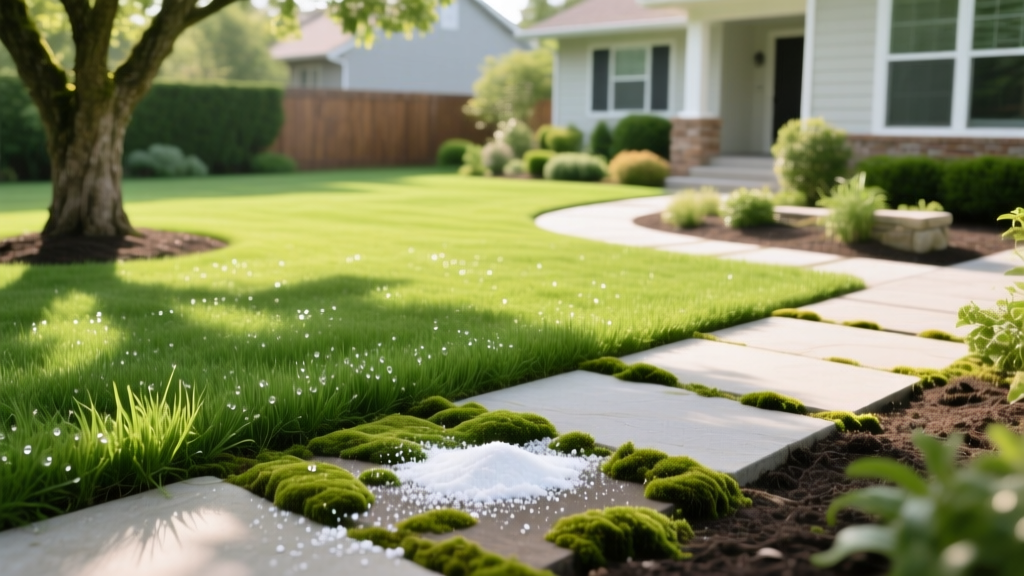
Baking Soda for Moss Removal: Organic Hardscape & Lawn Guide
The Chemistry of Desiccation: How Sodium Bicarbonate Kills Moss
Using baking soda for moss removal is a popular organic gardening tactic, but its efficacy relies on a specific chemical mechanism rather than simple pH alteration. Baking soda, chemically known as sodium bicarbonate (NaHCO3), kills bryophytes (mosses) primarily through osmotic stress and rapid desiccation. When applied to moss, the high concentration of soluble salts draws water out of the plant’s cellular structure, causing the foliage to dehydrate, turn brown, and die within 24 to 48 hours.
While many home gardeners assume baking soda works by making the soil too alkaline for acid-loving moss, this is a misconception. Moss can tolerate a surprisingly wide pH range (from 4.5 to 7.5). The true lethal factor is the sodium ion (Na+), which is highly toxic to moss tissue in concentrated doses. According to the Environmental Protection Agency (EPA), sodium bicarbonate is classified as a minimum-risk active ingredient for pesticide use, making it an appealing choice for those seeking chemical-free controls. However, its environmental safety profile changes drastically depending on where it is applied.
Expert Insight: Baking soda is a contact desiccant, not a systemic herbicide. It will kill the surface growth of moss but does not penetrate the rhizoids to kill the underlying holdfasts in porous surfaces. Repeat applications or physical scrubbing are often required for complete eradication on rough concrete or timber.
Application Matrix: Where Baking Soda Succeeds and Fails
Because of the sodium content, baking soda is not a universal moss killer. Applying it indiscriminately across your property can lead to severe soil degradation. Use the decision matrix below to determine if sodium bicarbonate is the correct tool for your specific moss problem.
| Application Zone | Efficacy | Soil & Environmental Risk | Expert Verdict |
|---|---|---|---|
| Patios & Flagstone | High | Low (Runoff easily managed) | Recommended. Ideal for tight crevices where scraping is difficult. |
| Concrete Driveways | Medium | Low | Recommended. Works well on surface moss; requires scrubbing for deep pores. |
| Asphalt Shingle Roofs | Low | High (Sodium corrodes metal flashings) | Avoid. Use zinc sulfate or copper-based organic treatments instead. |
| Turfgrass Lawns | Medium | Severe (Sodium destroys soil structure) | Never Use. Will kill moss but also damages grass and ruins soil tilth. |
| Garden Beds & Mulch | Low | High (Sodium toxicity to ornamental roots) | Avoid. Hand-pulling or horticultural vinegar is safer for beds. |
Step-by-Step Hardscape Treatment Protocol
For patios, walkways, and retaining walls, baking soda is a highly effective, low-cost organic control. Follow this exact protocol to maximize desiccation while minimizing runoff.
- Timing the Application: Check your local forecast. You need a minimum 48-hour window of completely dry weather. Rain will wash the sodium bicarbonate away before it can penetrate the moss cuticle, rendering the treatment useless and potentially introducing unwanted sodium into adjacent garden beds.
- Dry Application (For Thick Moss Mats): For moss thicker than 1/4 inch, use a dry application. Broadcast standard culinary baking soda directly over the dry moss at a rate of approximately 1/2 cup per square yard. Ensure the moss is damp from morning dew, which helps the powder adhere and dissolve into the plant tissue.
- Wet Application (For Thin Films and Algae): For thin moss or slippery algae films on smooth concrete, mix a liquid solution. Dissolve 3 tablespoons of baking soda per 1 gallon of warm water. Add 1 teaspoon of non-toxic liquid castile soap (like Dr. Bronner’s) as a surfactant to break the surface tension of the water.
- Spraying Technique: Apply the liquid solution using a pump sprayer until the moss is thoroughly saturated but not dripping. Apply during the cooler hours of the early morning to prevent rapid evaporation of the water carrier before the salts can be absorbed.
- Post-Treatment Removal: Wait 48 hours. The moss will turn a distinct rust-brown color. Use a stiff-bristled push broom or a pressure washer on a low setting (1500 PSI) to sweep the dead organic matter out of the hardscape joints.
The Hidden Danger: Sodium Toxicity and Soil Dispersion
The most critical mistake homeowners make when researching organic moss control is assuming that what is safe for a patio is safe for a lawn. Applying baking soda to turfgrass to kill moss is a catastrophic error for your soil health. To understand why, we must look at soil chemistry, specifically the Cation Exchange Capacity (CEC) and soil flocculation.
⚠️ WARNING: Clay Soil Destruction
If you have heavy clay soil, applying sodium bicarbonate will cause sodicity. Sodium ions (Na+) have a large hydrated radius and a single positive charge. When they bind to negatively charged clay particles, they push the particles apart in a process called dispersion. This destroys soil aggregates, collapsing the pore space. The result is a hard, impermeable crust that repels water, suffocates grass roots, and creates the exact compacted, poorly drained conditions that cause moss to thrive in the first place.
According to soil science principles detailed by the University of Minnesota Extension, moss in lawns is a symptom of poor drainage, compaction, and low fertility. Killing the moss with sodium bicarbonate does not fix the underlying issue; the sodium actually worsens the compaction and drainage problems, guaranteeing a more severe moss infestation the following spring.
Superior Organic Alternatives for Turfgrass
If you need to eradicate moss from your lawn without resorting to synthetic herbicides like glyphosate or quinclorac, you must use compounds that kill moss without harming soil structure or turfgrass roots.
- Potassium Bicarbonate (KHCO3): This is the direct, soil-safe alternative to baking soda. It provides the exact same osmotic desiccation effect on moss, but instead of leaving behind toxic sodium, it leaves behind potassium (K+), a primary macronutrient that actively fertilizes your turfgrass. Mix 2 tablespoons per gallon of water and spray directly on lawn moss.
- Ferrous Sulfate (Iron): The gold standard for organic lawn moss control. Iron causes rapid necrosis in moss tissue (turning it black within hours) while simultaneously greening up the surrounding grass. Apply liquid chelated iron or granular ferrous sulfate at a rate of 3 to 5 ounces per 1,000 square feet. Note that iron can stain concrete, so keep it strictly on the grass.
- Cryptocidal Soap (Fatty Acids): Commercially available as moss-killing soaps (e.g., Safer Brand Moss & Algae Killer), these potassium salts of fatty acids destroy the cell membranes of moss on contact. They are entirely biodegradable and leave no harmful soil residue.
For long-term prevention, the Royal Horticultural Society (RHS) emphasizes that cultural controls are the only permanent organic solution. This includes core aeration to relieve compaction, top-dressing with compost to improve drainage, and overseeding with shade-tolerant grass cultivars (like fine fescues) to outcompete moss for sunlight and nutrients.
Frequently Asked Questions
Will baking soda permanently prevent moss from returning to my patio?
No. Baking soda is strictly a contact killer; it has no residual pre-emergent activity. Once the powder is washed away by rain, the surface is immediately susceptible to new moss spores. To prevent return, alter the environment by trimming overhead tree canopy to increase UV exposure, or apply a residual organic treatment like a diluted white vinegar solution (which temporarily lowers surface pH, deterring spore germination).
Can I mix baking soda with white vinegar for a stronger moss killer?
Mixing sodium bicarbonate (a base) with acetic acid (vinegar) creates an acid-base reaction that produces water, sodium acetate, and carbon dioxide gas. The fizzing action looks impressive, but the two compounds effectively neutralize each other. The resulting solution is significantly less effective at killing moss than using either ingredient alone. Apply them separately, with a 24-hour gap between treatments, if you wish to use both.
Is baking soda safe for pets and wildlife after it dries?
Once the baking soda has dissolved and dried into the hardscape, it poses minimal risk to pets or local wildlife. However, during the wet application phase, ingestion of concentrated sodium bicarbonate can cause gastrointestinal upset, electrolyte imbalances, and vomiting in dogs and cats. Keep pets off treated patios until the surface is completely dry and the residue has been swept or washed away.
Why did the moss turn green again after I applied baking soda?
If the moss rehydrates and turns green after browning, the initial application was likely too weak, or rain washed the salts away before complete cellular desiccation occurred. Mosses are incredibly resilient poikilohydric organisms; they can enter a state of suspended animation (cryptobiosis) when dry and revive upon rehydration. If it revives, you must apply a heavier, dry concentration of baking soda and ensure 48 hours of uninterrupted dry weather.