
Home & Garden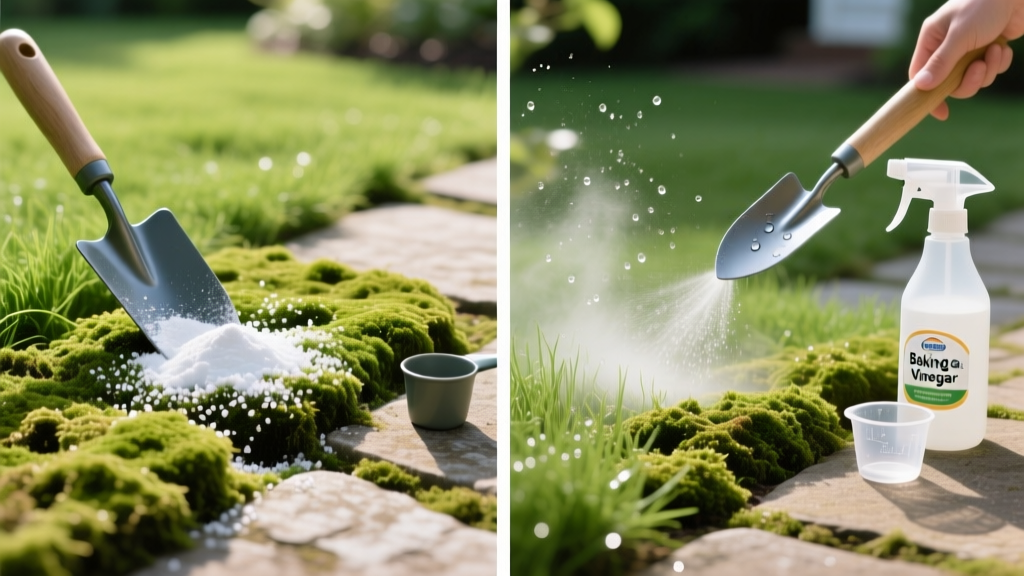
The Best Home Remedy for Moss Removal: Baking Soda vs. Vinegar
The Science Behind Organic Moss Eradication
Moss (Bryophyta) is not a fungus or a traditional weed; it is a non-vascular plant that lacks true roots. Because it draws moisture and nutrients directly through its leaves, it is highly susceptible to desiccation and surface pH alterations. While chemical treatments like iron sulfate (ferrous sulfate) are common, they permanently stain concrete, lower soil pH over time, and pose toxicity risks to aquatic ecosystems and pets. For homeowners committed to organic lawn care, a targeted home remedy for moss removal relies on disrupting the moss’s cellular structure without introducing persistent synthetic toxins.
Before selecting a treatment, understand that moss is a symptom of underlying environmental stress—typically soil compaction, poor drainage, heavy shade, or a pH below 5.5. Treating the moss without addressing the soil environment guarantees its return. However, to reclaim your hardscapes and turf in the short term, three organic household staples prove highly effective when applied with precision.
Top 3 Organic Home Remedies for Moss Removal
1. Baking Soda (Sodium Bicarbonate)
Baking soda works by rapidly increasing the surface pH and drawing moisture out of the moss cells, causing them to desiccate and turn black within 24 to 48 hours. It is the safest home remedy for moss removal on lawns because, in diluted concentrations, it will not cause severe salt burn to established turfgrass.
- Mixing Ratio for Lawns: 2 tablespoons of Arm & Hammer Pure Baking Soda per 1 gallon of water.
- Mixing Ratio for Hardscapes (Pavers/Roofs): ½ cup per 1 gallon of water.
- Application Window: Apply when temperatures are between 60°F and 75°F, and no rain is forecasted for at least 48 hours.
- Cost: Approximately $0.40 per 1,000 square feet.
2. White Vinegar (Acetic Acid)
Household white vinegar contains 5% acetic acid, which acts as a non-selective contact herbicide. It destroys the cell membranes of the moss upon contact, causing rapid wilting and necrosis. While highly effective on patios and driveways, it requires careful handling around desirable plants.
⚠️ Critical Warning: Vinegar is Non-Selective
While 5% white vinegar is an excellent home remedy for moss removal on hardscapes, it will scorch and kill your turfgrass (including Kentucky Bluegrass, Tall Fescue, and Bermudagrass) just as quickly as it kills the moss. Reserve vinegar strictly for driveways, patios, fence lines, and roof shingles. Never use 20% horticultural vinegar without full PPE, as it can cause severe corneal and skin damage.
- Mixing Ratio: 1 part 5% white vinegar to 1 part water, plus 1 teaspoon of dish soap (as a surfactant to break surface tension).
- Cost: Approximately $1.50 per 1,000 square feet.
3. Liquid Dish Soap (Fatty Acid Salts)
Dish soap contains potassium salts of fatty acids, which disrupt the waxy cuticle of the moss, leading to rapid water loss. This is the active ingredient in many commercial "organic" moss killers sold at garden centers, but you can mix it at home for a fraction of the price.
- Mixing Ratio: 4 tablespoons of Dawn Ultra Dish Soap per 1 gallon of water.
- Best Use: Safe for spot-treating moss in shaded garden beds and lightly infested turf areas.
- Cost: Approximately $0.50 per 1,000 square feet.
Organic Remedy Comparison Matrix
| Remedy | Active Compound | Mixing Ratio (per Gallon) | Best Application Surface | Turf Safety |
|---|---|---|---|---|
| Baking Soda | Sodium Bicarbonate | 2 tbsp (turf) / ½ cup (pavers) | Lawns, Pavers, Roofs | High (if diluted) |
| White Vinegar | Acetic Acid (5%) | 1:1 ratio with water + 1 tsp soap | Hardscapes, Roofs, Fences | None (Will kill grass) |
| Dish Soap | Fatty Acid Salts | 4 tbsp per gallon | Lawns, Shaded Garden Beds | Moderate |
Step-by-Step Application Protocol
To maximize the efficacy of your chosen home remedy for moss removal, follow this exact sequence. Skipping the physical disruption step reduces the kill rate by up to 40%.
- Physical Disruption: Use a stiff-tined thatch rake or a wire brush to aggressively scarify the moss mat. This breaks the surface tension and exposes the lower rhizoids to your organic solution.
- Mix and Agitate: Combine your ingredients in a 1-gallon or 2-gallon pump sprayer (such as the Chapin 1-Gallon Pump Sprayer). Shake vigorously to ensure the baking soda or soap is fully suspended.
- Saturate the Foliage: Spray the moss until it is uniformly wet and dripping. Do not spray to the point of heavy runoff, which wastes the solution and risks altering the underlying soil chemistry.
- The Waiting Period: Allow 24 to 48 hours for the desiccation process. The moss will transition from bright green to yellow, and finally to a crispy black or dark brown.
- Removal and Disposal: Rake out the dead moss. Do not leave it on the soil surface, as it can form a hydrophobic mat that blocks water from reaching your turf roots. Add the dead moss to a hot compost pile.
Long-Term Organic Prevention: Curing the Soil
According to turf specialists at the University of Wisconsin-Madison Extension, moss is an opportunistic plant that fills voids where turfgrass fails to thrive. Killing the moss is only 10% of the battle; the remaining 90% involves altering the microclimate.
"Moss does not invade a healthy, dense turf. Its presence indicates that the soil environment is hostile to grass roots but favorable to bryophytes. Focus on soil structure first."
Core Aeration and Top-Dressing
Compacted soil lacks the oxygen necessary for turfgrass roots but holds the surface moisture moss craves. Rent a core aerator in early fall to pull 3-inch plugs from the lawn. Immediately follow this with a top-dressing of ¼ inch of screened organic compost. The compost introduces beneficial microbes that break down thatch and improve drainage.
Correcting Soil pH
Moss tolerates acidic soils (pH 4.5 - 5.5) far better than most turfgrasses. Test your soil using a mail-in lab (like the UMass Soil and Plant Tissue Testing Laboratory). If your pH is below 6.0, apply pelletized calcitic limestone at a rate of 50 lbs per 1,000 square feet to gradually raise the pH to the optimal 6.5 - 7.0 range.
Frequently Asked Questions
Will baking soda harm my soil microbiome?
In the short term, heavy applications of sodium bicarbonate can increase soil salinity, which suppresses microbial activity. However, the 2-tablespoon-per-gallon dilution used for turf application breaks down rapidly with rainfall and poses no long-term threat to the soil food web.
Can I use bleach as a home remedy for moss removal?
While sodium hypochlorite (bleach) will kill moss, it is not an organic or environmentally safe control method. Bleach destroys beneficial soil bacteria, leaches toxic chlorides into groundwater, and poses severe respiratory and dermal risks to pets and wildlife. Stick to vinegar, soap, or baking soda.
Why did the moss return three months after treatment?
Organic remedies are contact treatments, not systemic soil correctors. If the underlying shade canopy was not pruned to allow 4-6 hours of dappled sunlight, or if the soil compaction was not addressed via core aeration, moss spores already present in the environment will immediately recolonize the bare soil.
For further reading on cultural moss management, the Royal Horticultural Society (RHS) provides extensive guidelines on shade-tolerant grass seed selection and seasonal lawn scarification techniques to maintain a moss-free landscape organically.