
Home & Garden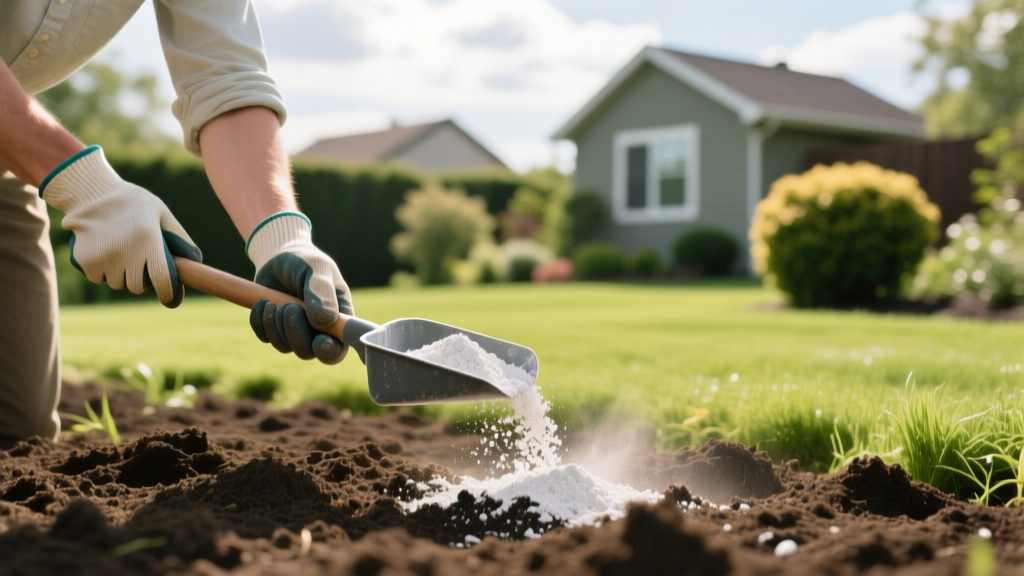
How to Apply Limestone for Yard Soil: A Beginner's Guide
Why Your Yard Needs Limestone (The Science of Soil pH)
Many beginners focus heavily on grass seed varieties and nitrogen-heavy fertilizers, completely ignoring the chemical foundation of their soil: pH. The pH scale measures how acidic or alkaline your soil is on a logarithmic scale from 0 to 14. Most common turfgrasses, including Kentucky Bluegrass, Tall Fescue, and Bermuda, thrive in a slightly acidic to neutral range between 6.0 and 7.0.
When soil pH drops below 5.5, a phenomenon known as 'nutrient lockout' occurs. Essential macronutrients like phosphorus and potassium bind with aluminum and iron, becoming completely unavailable to grassroots. Furthermore, aluminum toxicity begins to stunt root growth. Applying limestone for yard soil introduces calcium carbonate, which neutralizes excess hydrogen ions, raises the pH, and unlocks trapped nutrients. According to Penn State Extension, liming is often the single most cost-effective improvement you can make to an acidic lawn.
Data Highlight: Optimal pH Ranges for Common Grasses
- Kentucky Bluegrass: 6.0 - 7.0
- Tall Fescue: 5.5 - 6.5
- Bermuda Grass: 6.0 - 7.0
- Centipede Grass: 5.0 - 6.0 (Do NOT lime above 6.0)
Calcitic vs. Dolomitic Limestone: Which Should You Buy?
Walk into any garden center, and you will see two primary types of agricultural lime. Choosing the wrong one can lead to secondary nutrient deficiencies. Here is how they compare:
| Feature | Calcitic Limestone | Dolomitic Limestone |
|---|---|---|
| Primary Composition | Calcium Carbonate (CaCO3) | Calcium-Magnesium Carbonate |
| Magnesium Content | Low (1-5%) | High (10-20%) |
| Best Used When | Soil tests show adequate/high magnesium levels. | Soil tests show a specific magnesium deficiency. |
| Common Brand Example | Pennington Fast Acting Lime | Jonathan Green MAG-I-CAL |
Beginner Tip: Never default to dolomitic lime just because it has 'more nutrients.' Excess magnesium can cause soil compaction by displacing calcium, leading to poor drainage and hardpan formation.
How to Test Your Soil Before Applying Limestone
Applying limestone for yard soil without a soil test is like prescribing medication without a diagnosis. Over-liming (pushing pH above 7.5) causes iron chlorosis, turning your grass yellow and stunting growth. Follow these steps for accurate testing:
- Extract Core Samples: Use a clean soil probe or spade to pull 5 to 10 core samples from the top 3 to 4 inches of soil across different zones of your yard.
- Mix and Dry: Combine the samples in a clean plastic bucket (never use galvanized metal, which can skew zinc readings). Let the soil air-dry on a newspaper for 24 hours.
- Mail to a Lab: Skip the cheap liquid dye kits from hardware stores—they are notoriously inaccurate. Mail a 1-cup sample to your local university extension office or a private lab like University of Minnesota Extension or UMass Soil Testing. The cost is typically $15 to $25 and provides exact lime requirements in tons per acre or lbs per 1,000 sq ft.
Calculating the Right Application Rate
Your soil's Cation Exchange Capacity (CEC) and texture dictate how much lime is required to shift the pH. Clay soils have high buffering capacity and resist pH changes, requiring significantly more lime than sandy soils. Below is a baseline matrix for raising soil pH by 0.5 points based on soil texture:
⚠️ Warning: The 50 lb Limit
Never apply more than 50 lbs of standard limestone per 1,000 square feet in a single application. Excess lime will sit on the surface, wash away into storm drains, and waste your money. If your soil test recommends 100 lbs per 1,000 sq ft, split the application into two treatments spaced 6 months apart (e.g., Fall and Spring).
Never apply more than 50 lbs of standard limestone per 1,000 square feet in a single application. Excess lime will sit on the surface, wash away into storm drains, and waste your money. If your soil test recommends 100 lbs per 1,000 sq ft, split the application into two treatments spaced 6 months apart (e.g., Fall and Spring).
| Soil Texture | Lime Needed (per 1,000 sq ft to raise pH 0.5) |
|---|---|
| Sandy Loam | 20 - 25 lbs |
| Medium Loam | 35 - 45 lbs |
| Heavy Clay | 50 - 70 lbs |
Step-by-Step Application Process for Beginners
For residential lawns, always purchase pelletized limestone rather than pulverized (powdered) lime. Pulverized lime creates massive dust clouds, coats your shoes and siding, and blows away in light winds. Pelletized lime costs slightly more (roughly $18 to $24 per 30-lb bag in 2026) but is vastly superior for DIY application.
1. Calibrate Your Spreader
Use a rotary broadcast spreader for even coverage. Check the lime packaging for the exact spreader setting. For example, if using a Scotts Turf Builder EdgeGuard Mini with Pennington Fast Acting Pelletized Lime, the recommended setting is typically 5.5. Always start with a lower setting and make two perpendicular passes (a crisscross pattern) to avoid visible striping.
2. Time the Application Correctly
The best time to apply limestone for yard soil is in the late fall. Freezing and thawing cycles over the winter help break down the pellets and incorporate the calcium into the soil profile before the aggressive spring growing season. Avoid applying lime to dormant, frozen grass or during drought conditions.
3. Water It In
Limestone requires moisture to begin the chemical neutralization process. After spreading, irrigate your lawn with roughly 0.25 to 0.5 inches of water. This washes the dust off the grass blades (preventing foliar burn) and activates the pellets in the soil.
Common Beginner Mistakes to Avoid
- Mixing Lime and Nitrogen Fertilizer: Never apply limestone and ammonium-based fertilizers (like Urea or Ammonium Sulfate) on the same day. The high pH of the lime reacts with the ammonium, converting it into ammonia gas that volatilizes into the air. Wait at least 3 weeks between applications.
- Liming Acid-Loving Plants: Keep limestone away from landscaped beds containing azaleas, rhododendrons, blueberries, and hydrangeas (if you want blue flowers). These plants require acidic soil (pH 4.5-5.5) and will suffer severe iron chlorosis if limed.
- Expecting Instant Results: Agricultural limestone is not a quick fix. It takes 2 to 3 months for standard pelletized lime to fully react with the soil, and up to 6 months for pulverized lime to show a complete pH shift on a soil test.
Frequently Asked Questions
Can I use hydrated lime from the hardware store?
No. Hydrated lime (calcium hydroxide) is highly caustic, acts too quickly, and will severely burn grassroots and harm soil microbes. Always use agricultural limestone (calcium carbonate).
Will limestone kill weeds or moss?
Limestone does not directly kill weeds. However, moss thrives in highly acidic, compacted soil. By raising the pH and improving soil structure, limestone creates an environment where thick turfgrass can outcompete and naturally choke out moss.

