
Home & Garden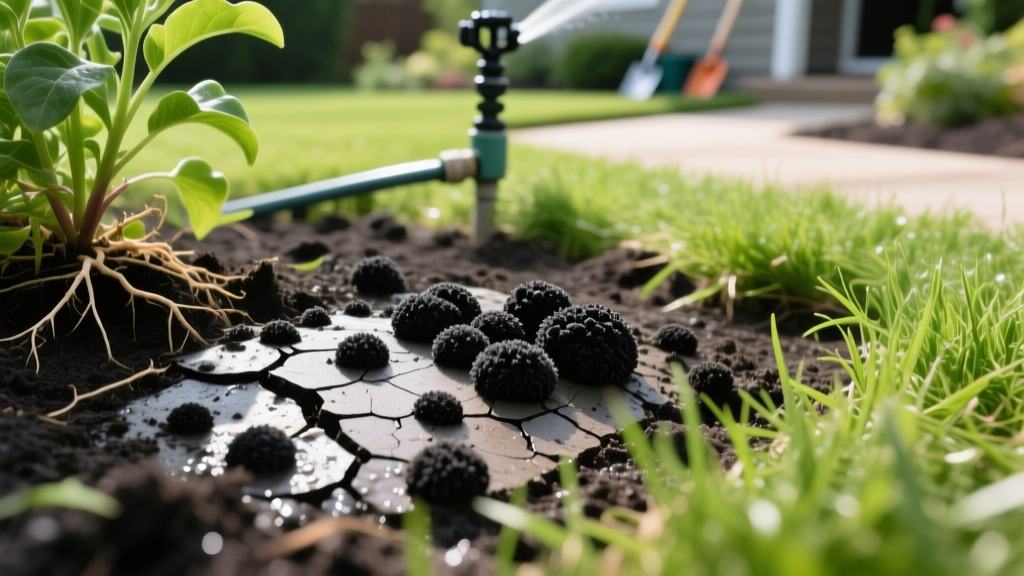
Black Mold on Dirt in Yard: Diagnosis and Rescue Fixes
The 'Black Mold' Myth: What Is Actually Growing in Your Yard?
When homeowners spot dark, fuzzy, or slimy black patches spreading across their soil, the immediate assumption is often toxic black mold. However, true black mold (Stachybotrys chartarum) is an indoor pathogen that thrives on water-damaged cellulose materials like drywall and wallpaper. It does not grow on outdoor dirt. What you are witnessing is a misidentified outdoor organism. Identifying the exact culprit is the first critical step in symptom diagnosis, as applying the wrong treatment will waste time and money while the underlying soil issue worsens.
⚠️ Toxicity Warning: While outdoor soil fungi are rarely toxic to humans through casual contact, inhaling large quantities of disturbed spores can trigger respiratory irritation in sensitive individuals. Always wear an N95 mask and nitrile gloves when aggressively raking or tilling dark fungal mats.
Diagnostic Matrix: Identifying the Dark Invader
Before purchasing any fungicides, use this diagnostic matrix to match the visual and tactile symptoms of the growth on your soil to the actual biological culprit.
| Visual Symptom | Texture & Smell | Actual Culprit | Primary Cause |
|---|---|---|---|
| Dark gray/black fuzzy or powdery mat on soil surface | Dry, powdery; smells earthy or like damp basement | Saprophytic Fungi / Dark Mycelium | Excess thatch, high carbon-to-nitrogen ratio, poor drainage |
| Black, gelatinous slime that swells after rain | Slimy, jelly-like when wet; crusty and brittle when dry | Nostoc Cyanobacteria (Black Algae) | Severe soil compaction, constant surface moisture |
| Black soot-like powder on soil and lower plant stems | Wipes off easily like chimney soot; no distinct odor | Sooty Mold | Honeydew excretions from aphids or scale insects above |
Rescue Fix 1: Saprophytic Fungi & Dark Mycelium
Saprophytic fungi are nature's recyclers. They appear as dark, web-like mycelium or black spore masses when breaking down high-carbon organic matter (like wood mulch or thick thatch) in damp, shaded environments. While beneficial in small amounts, aggressive overgrowth indicates your soil's carbon-to-nitrogen (C:N) ratio is severely imbalanced and moisture is trapped.
The Biological Treatment Protocol
Chemical fungicides are largely ineffective and ecologically damaging for saprophytic fungi. As of 2026, the industry standard for rescue treatment is the application of competitive biological bacteria.
- Product Selection: Use an OMRI-listed Bacillus subtilis formulation, such as Serenade Garden Disease Control (typically $18-$22 for a 32 oz ready-to-spray bottle).
- Application Rate: Apply at a rate of 2 to 4 fluid ounces per gallon of water, saturating the top 1 inch of the soil profile.
- Soil Amendment: The fungi are starving for nitrogen. Apply a fast-acting nitrogen source like blood meal (12-0-0 NPK) at a rate of 2 lbs per 1,000 square feet to accelerate the decomposition of the carbon matter the fungi are feeding on.
- Physical Disruption: Use a steel thatch rake to physically break up the mycelial mat, exposing it to UV light, which naturally degrades the dark spore structures.
Rescue Fix 2: Nostoc Cyanobacteria (Black Jelly Algae)
Often mistaken for a fungal mold, Nostoc is a terrestrial cyanobacterium. It lies dormant as a thin, black crust on compacted soil and rapidly absorbs water during rainfall, swelling into a thick, slippery black jelly. It thrives in soils with a bulk density greater than 1.4 g/cm³, where water cannot percolate downward.
Mechanical and Chemical Remediation
- Deep Core Aeration: Rent a gas-powered core aerator (approx. $85-$100 per day in 2026). Extract 3-inch deep soil plugs on a 2-inch grid across the affected area. This physically breaks the compaction layer and allows the Nostoc to dry out.
- Sand Topdressing: Immediately after aerating, topdress the area with 1/4 inch of coarse #2 silica sand (not play sand, which compacts). The sand fills the aeration holes, creating permanent drainage channels.
- Targeted Copper Application: If the infestation is severe, apply a copper-based algaecide/fungicide like Bonide Copper Fungicide. Caution: Copper is toxic to aquatic life and earthworms. Apply only as a spot treatment at 1 tablespoon per gallon of water, and never use near storm drains or koi ponds.
Rescue Fix 3: Sooty Mold Drip
If the black mold on your dirt is directly beneath the drip line of a tree, shrub, or fence, you are likely dealing with sooty mold. This fungus does not feed on the soil; it feeds on the sugary honeydew excreted by sap-sucking insects (aphids, whiteflies, or scale) in the canopy above, which drips onto the dirt below.
'Treating the soil for sooty mold is a waste of resources. The soil is merely the canvas; the canopy is the source. You must break the insect life cycle above to starve the fungus below.' — Penn State Extension
Canopy and Soil Surface Rescue
Spray the overhanging foliage with a 70% clarified hydrophobic extract of neem oil (such as Monterey Neem Oil) at a rate of 2 tablespoons per gallon. Apply at dusk to avoid leaf burn and protect foraging bees. Once the insect population is controlled, the sooty mold on the dirt will lose its food source. You can then wash the soil surface with a mild solution of insecticidal soap and water to lift the black residue, allowing sunlight to reach the grass or groundcover beneath.
The 48-Hour Soil Rescue Action Plan
Follow this sequential framework to remediate dark soil growth without harming your surrounding turf or garden beds.
💡 Cost & Time Breakdown
- Day 1 (Diagnosis & Dry): Stop all automated irrigation. Rake the surface to break the crust. Cost: $0 (Labor only).
- Day 2 (Aeration & Amendment): Core aerate compacted zones. Apply nitrogen or sand topdressing based on the diagnostic matrix. Cost: $40 (Sand) to $100 (Aerator Rental).
- Day 3 (Biological Application): Apply Bacillus subtilis or copper spot-treatments in the early morning when soil temperatures are between 60°F and 80°F. Cost: $15-$25.
Frequently Asked Questions
Is it safe for dogs to dig in areas with black soil mold?
While saprophytic fungi and Nostoc are not systemically toxic to dogs, ingesting large amounts of moldy soil or mulch can cause gastrointestinal upset, vomiting, or tremors (a condition known as tremorgenic mycotoxicosis, though rare from simple soil fungi). If your dog is an avid digger, cover the treated area with 1 inch of fresh, dry compost or keep them off the yard for 48 hours after applying biological or copper treatments.
Will this black mold kill my grass?
The organisms themselves do not parasitize or kill grass roots. However, the thick black mats block sunlight and create a hydrophobic barrier that prevents water and oxygen from reaching the turf's root zone. According to the University of California IPM, the grass dies from suffocation and light deprivation, not from a direct pathogenic attack. Breaking up the physical crust is usually enough to save the underlying turf.
Does soil pH affect black mold growth?
Yes. Most saprophytic fungi and cyanobacteria thrive in slightly acidic to neutral soils (pH 5.5 to 7.0) that remain constantly wet. If a soil test reveals a pH below 5.5, applying pelletized calcitic lime at 50 lbs per 1,000 square feet will raise the pH, making the environment less hospitable for fungal overgrowth while simultaneously improving soil flocculation and drainage.

