Home & Garden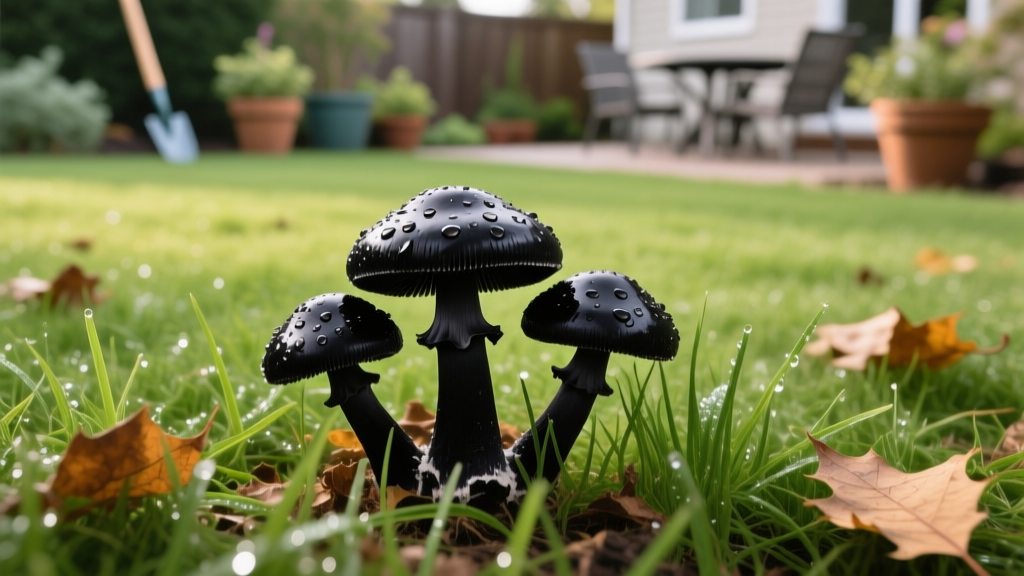
Black Mushrooms in Yard: Identification, Risks, and Removal Guide
The Sudden Appearance of Black Mushrooms in Your Yard
Waking up to find black mushrooms in your yard can be alarming, especially if you have pets or small children who play on the grass. Unlike the familiar white button mushrooms found in grocery stores, dark-capped lawn fungi often emerge overnight after heavy rainfall or prolonged irrigation. These fungi are not actually the problem itself; rather, they are the fruiting bodies of a vast, underground mycelial network breaking down organic matter in your soil.
While most dark lawn mushrooms are harmless decomposers playing a vital role in soil ecology, their presence indicates specific environmental conditions—usually excessive thatch, buried decaying wood, or chronic overwatering. Understanding the exact species, the soil chemistry driving their growth, and the mechanical steps required to starve the mycelium is the only way to permanently reclaim your turf.
Identifying Common Dark and Black Lawn Fungi
Accurate identification is the first step in assessing risk and determining a removal strategy. True black mushrooms are rare; most appear very dark brown, deep purple, or grayish-black, especially when saturated with moisture. Below is a diagnostic matrix of the most common dark fungi found in residential turfgrass.
| Common Name | Scientific Name | Cap Appearance | Pet Toxicity | Primary Habitat Trigger |
|---|---|---|---|---|
| Inky Cap | Coprinopsis atramentaria | Bell-shaped, dark gray/black, melts into black ink | Moderate (if alcohol consumed) | Buried wood, decaying tree roots |
| Brownie Mushroom | Panaeolus foenisecii | Dark brown to blackish when wet, pale when dry | Mild GI distress | Damp, nitrogen-rich lawns |
| Blackening Brittlestem | Psathyrella species | Thin, fragile, dark brown/black, easily crumbles | Low | Wood chips, heavy thatch layers |
| Dark Fieldcap | Agrocybe species | Smooth, dark chestnut to black, convex shape | Low | Decaying leaf litter, compost edges |
According to turfgrass pathology experts at the University of Minnesota Extension, the vast majority of these mushrooms are saprophytic, meaning they feed exclusively on dead organic matter and do not infect living grass blades or roots.
Why Are Black Mushrooms Growing in My Grass?
Mushrooms require three specific conditions to fruit: high moisture, low light, and abundant decaying organic carbon. If you are seeing black mushrooms in your yard, your lawn is currently providing an all-you-can-eat buffet for mycelium.
1. Excessive Thatch Accumulation
Thatch is the layer of living and dead stems, roots, and crowns located between the soil surface and the green grass blades. A healthy lawn maintains a thatch layer of about 0.25 to 0.5 inches. When thatch exceeds 0.75 inches, it acts like a sponge, trapping moisture and creating a dark, humid incubator for fungal spores.
2. Buried Construction Debris and Dead Roots
If mushrooms are growing in a concentrated cluster or a distinct arc (often called a "fairy ring"), there is likely a buried carbon source beneath the soil. This is frequently a leftover tree stump, discarded lumber from home construction, or a massive decaying root system. The mycelium is actively digesting the lignin and cellulose in this wood.
Expert Insight: The Carbon-to-Nitrogen Ratio
Fungi thrive in high-carbon, low-nitrogen environments. When soil microbes break down carbon-heavy materials like wood or thick thatch, they tie up available nitrogen, starving your grass while feeding the mushrooms. Correcting this C:N ratio is the secret to long-term eradication.
3. Chronic Overwatering and Poor Drainage
Watering your lawn for 15 minutes every single day keeps the top inch of soil perpetually saturated. The University of California Agriculture and Natural Resources (UC ANR) program emphasizes that shallow, frequent irrigation promotes shallow root growth and creates the exact surface-level humidity required for mushroom fruiting.
Are Black Mushrooms Toxic to Dogs and Children?
The primary concern for homeowners is toxicity. As a general rule of mycology: never consume wild lawn mushrooms. While most common dark lawn mushrooms are not fatally toxic, several pose distinct health risks.
- Coprine Toxicity: Inky caps (Coprinopsis atramentaria) contain coprine. While not immediately lethal on their own, if a dog or human ingests them and then consumes alcohol (even trace amounts in certain medications or fermented foods), it causes a severe reaction including rapid heart rate, flushing, nausea, and vomiting.
- Gastrointestinal Distress: Panaeolus foenisecii (the common brownie mushroom) contains mild toxins that cause vomiting and diarrhea in dogs and toddlers who sample them out of curiosity.
- Lookalike Dangers: Deadly species like Galerina marginata (Fatal Skullcap) can occasionally appear in yards near wooded edges and feature dark brown/black caps. They contain amatoxins, which cause irreversible liver failure.
Immediate Action: If you suspect your pet has ingested a black mushroom, do not wait for symptoms to appear. Immediately contact the ASPCA Animal Poison Control Center or your local emergency veterinarian, and bring a sample of the mushroom (including the base/stipe) in a paper bag for identification.
Step-by-Step Eradication and Prevention Protocol
Spraying fungicides on mushrooms is a waste of money. Fungicides only treat the surface; they do not kill the underground mycelium. To permanently eliminate black mushrooms in your yard, you must alter the soil environment so the fungi starve.
Step 1: Manual Removal and Spore Prevention
Put on gardening gloves and twist the mushrooms at the base to pull them out entirely. Place them in a sealed plastic bag and dispose of them in the trash. Do not mow over them. Mowing shreds the caps and spreads millions of spores across the lawn, guaranteeing a larger outbreak next week.
Step 2: Deep Core Aeration and Dethatching
Rent a power dethatcher or use a manual thatch rake to aggressively pull up the dead organic layer. Follow this with core aeration, pulling 3-inch soil plugs to improve oxygen flow to the roots and accelerate the drying of the topsoil.
Step 3: Adjust the Irrigation Schedule
Transition to deep, infrequent watering. Apply 0.5 to 0.75 inches of water twice a week, preferably in the early morning (between 4:00 AM and 6:00 AM). This allows the grass blades to dry quickly in the sun, depriving surface fungi of the humidity they need to fruit.
Step 4: Apply High-Nitrogen Fertilizer
To speed up the decomposition of buried wood and thatch, apply a fast-release, high-nitrogen fertilizer. Look for an N-P-K ratio like 32-0-4 or 30-0-0. Apply at a rate of 1 lb of actual nitrogen per 1,000 square feet. The nitrogen feeds the bacteria that outcompete and break down the fungal food source.
Step 5: Targeted Fungicide Application (Last Resort)
If cultural controls fail after 30 days, you can apply a systemic fungicide containing Propiconazole or Azoxystrobin. The Royal Horticultural Society (RHS) notes that chemical controls should only be used to protect high-value turf, as they can disrupt beneficial soil microbes. Apply at the exact rate specified on the label, usually 2 to 4 oz per 1,000 sq ft, and water it in immediately.
Frequently Asked Questions
Will bleach or vinegar kill black mushrooms?
Pouring bleach or vinegar on the surface will only kill the visible mushroom cap. It will not penetrate the soil deeply enough to kill the mycelial network, and the high acidity or alkalinity will damage your grass roots and alter your soil pH, potentially causing more harm than good.
Do black mushrooms mean my soil is unhealthy?
Not necessarily. Mushrooms indicate that your soil is rich in organic matter and biologically active. However, they also signal that the decomposition process is out of balance due to excess moisture or a lack of available nitrogen to help bacteria break down the carbon efficiently.
How long does it take for mushrooms to disappear after treatment?
If you correct the watering schedule and dethatch the lawn, visible fruiting bodies should stop appearing within 2 to 3 weeks. However, if the food source is a massive buried tree stump, the mycelium may continue to fruit periodically for several years until the wood is entirely consumed.