
Home & Garden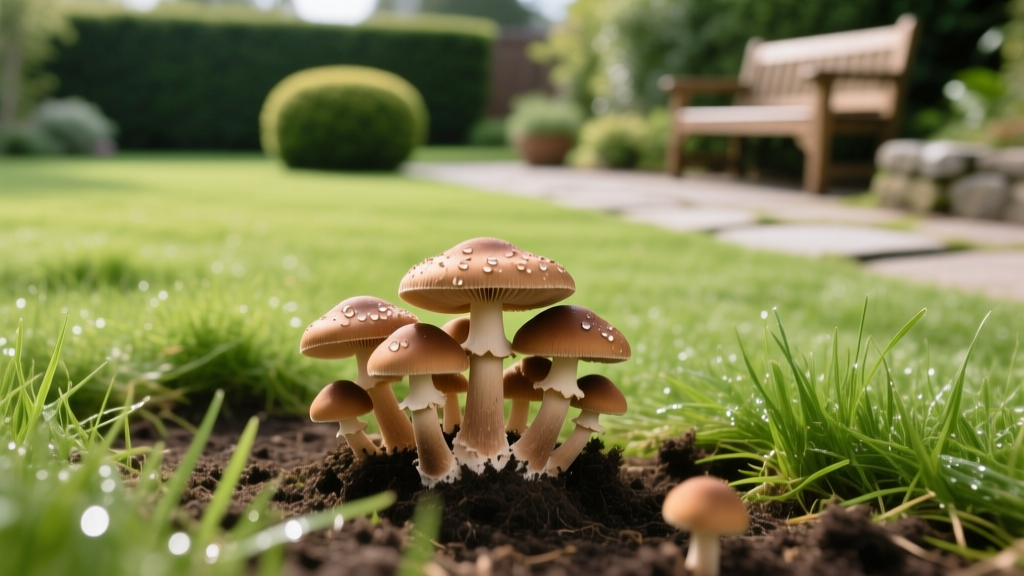
Diagnosing Brown Mushroom Clusters in Yard: Causes & Fixes
Homeowners often experience alarm when brown mushroom clusters in yard spaces appear overnight following heavy rain. While these fungal fruiting bodies are rarely a sign of a dying lawn, they are a definitive biological symptom of specific soil imbalances—namely, excess thatch, high subsurface moisture, and elevated carbon-to-nitrogen ratios. Diagnosing the exact species and understanding the subsurface mycelial network is the first step toward effective eradication.
Symptom Profile: Identifying Common Lawn Mushrooms
Not all brown mushrooms are created equal. Accurate identification dictates whether you are dealing with a harmless saprophyte (decomposer) or a potentially toxic species. Below is a diagnostic matrix of the most frequent culprits found in residential turf.
| Species | Visual Traits | Primary Trigger | Toxicity Risk |
|---|---|---|---|
| Panaeolus foenisecii (Brown Mottlegill) | Small (1-3cm), hygrophanous brown caps that fade to tan as they dry; dark spore print. | Moderate thatch buildup; frequent shallow irrigation. | Mildly toxic (GI distress if ingested). |
| Agaricus campestris (Meadow Mushroom) | Larger (5-10cm), white-to-brown cap, pink gills turning chocolate brown; distinct stem ring. | High organic matter; decaying tree roots underground. | Edible, but easily confused with toxic Agaricus xanthodermus. |
| Conocybe lactea (Milky Cap) | Tiny, fragile, conical tan/brown caps on thread-like white stems; often clusters in wet grass. | Overwatering; poor drainage in low-lying yard zones. | Unknown/Mild; keep away from pets. |
| Fairy Ring Fungi (Chlorophyllum molybites) | Large, scaly brown/white caps forming distinct rings or arcs; causes dark green or dead grass rings. | Decomposing buried construction debris or old stumps. | Severe GI toxicity if ingested. |
The Subsurface Reality: Why Your Yard is Fruiting
The mushrooms you see are merely the reproductive structures (sporocarps) of a much larger, hidden organism. The actual fungus exists as a web of white threads called mycelium, living entirely within your soil and thatch layer. According to University of Minnesota Turf Science, these fungi are saprophytes, meaning they feed on dead organic matter. They are actively breaking down your lawn's thatch, buried wood, or decaying roots.
Expert Insight: The Carbon-to-Nitrogen (C:N) Imbalance
Thatch is heavily carbon-biased, often boasting a C:N ratio of 80:1. Fungi thrive in high-carbon environments. Bacteria, which also decompose thatch, require a much lower C:N ratio (around 24:1). When your yard fruits mushrooms, it indicates a localized carbon surplus that has allowed fungi to outcompete bacteria for decomposition dominance.
Furthermore, soil compaction traps moisture in the upper two inches of the turf profile. Mycelium requires consistent moisture and temperatures between 60°F and 80°F to trigger fruiting. If your soil lacks macropores due to compaction, the surface remains perpetually damp, creating an ideal incubator for brown mushroom clusters.
Rescue Protocol: Step-by-Step Eradication
Eliminating brown mushroom clusters requires altering the soil environment so the mycelium can no longer sustain itself. Follow this four-step rescue protocol to restore your turf.
Step 1: Mechanical Disruption and Removal
Mushrooms release billions of spores from their gills once the caps open. To prevent local spread, remove them before maturity. Wear nitrile gloves, twist the mushroom at the base of the stem to extract the entire fruiting body, and dispose of them in a sealed yard waste bag. Do not compost them, as standard home compost piles rarely reach the 140°F required to kill fungal spores. Follow up by mowing the lawn with a bagging attachment set to 2.5 inches to capture any missed caps and reduce surface shade.
Step 2: Deep Core Aeration
Rent a walk-behind core aerator (approximately $90 for a 4-hour rental in 2026). The machine must pull soil cores that are a minimum of 3 inches deep and 0.5 inches in diameter, spaced no more than 3 inches apart. This physically severs the mycelial mats, disrupts the hydrophobic thatch layer, and introduces oxygen into the soil profile, which favors aerobic bacteria over anaerobic fungi.
Step 3: Nitrogen Loading to Shift the C:N Ratio
To starve the fungi and stimulate bacterial thatch decomposition, you must artificially lower the soil's C:N ratio. Apply a fast-release, high-nitrogen fertilizer with zero phosphorus. Ammonium Sulfate (21-0-0) is the ideal choice, costing roughly $35 for a 50-lb bag. Apply 1 pound of actual nitrogen per 1,000 square feet. This translates to roughly 4.7 lbs of Ammonium Sulfate per 1,000 sq ft. Water it in immediately with 0.25 inches of irrigation to move the nitrogen into the thatch layer where the bacteria can utilize it.
Step 4: Irrigation Recalibration
Fungi fruit when the top inch of soil remains wet for more than 12 hours. Transition your irrigation schedule from frequent, shallow watering to deep, infrequent cycles. Apply 1 inch of water per week, split into two 0.5-inch sessions spaced three days apart. This allows the surface thatch to dry out completely between waterings, halting the fruiting trigger mechanism.
The Fungicide Trap: Why Chemical Sprays Fail
A common mistake homeowners make is reaching for broad-spectrum chemical fungicides like Propiconazole (e.g., Banner Maxx) or Azoxystrobin (e.g., Heritage SC). These products are designed to combat pathogenic turf diseases like Brown Patch or Dollar Spot, which attack living grass tissue. Lawn mushrooms are saprophytic; they are not attacking your grass, they are eating dead carbon. Contact fungicides will not penetrate the dense thatch layer to kill the subterranean mycelial network. Furthermore, applying systemic fungicides can inadvertently harm the beneficial mycorrhizal fungi that your grass roots rely on for nutrient uptake. Save your money and focus entirely on cultural and mechanical corrections.
Pet and Child Safety Matrix
While the vast majority of lawn mushrooms are not lethal, the risk of gastrointestinal distress in foraging pets and toddlers is significant. The ASPCA Animal Poison Control Center frequently fields calls regarding dogs that have ingested yard fungi, leading to severe vomiting and lethargy. If you cannot immediately execute the rescue protocol above, implement temporary physical barriers.
| Safety Scenario | Risk Level | Immediate Mitigation Strategy |
|---|---|---|
| Toddlers playing in grass | Moderate (Choking / Mild GI) | Daily morning inspections and manual plucking before outdoor play. |
| Dogs prone to scavenging | High (Severe GI / Neurological) | Leash-only yard access until aeration and nitrogen protocol is complete. |
| Fairy Rings near play areas | High (Potential Toxicity) | Trench and remove the top 4 inches of soil along the ring perimeter. |
For comprehensive guidance on managing severe fungal rings that cause turf death, refer to the diagnostic resources provided by Penn State Extension. By addressing the thatch, moisture, and nitrogen imbalances, you will naturally suppress the mycelium and eliminate the brown mushroom clusters without relying on ineffective chemicals.

