
Home & Garden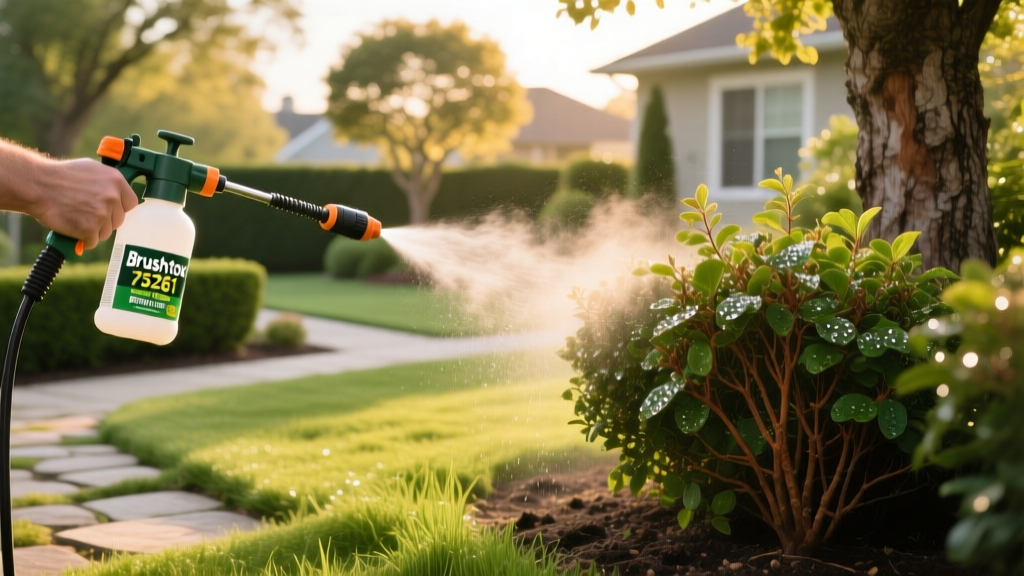
Mastering Brushtox 75261 Brush Killer with Triclopyr for Woody Brush
The Chemical Architecture of Brushtox 75261
Controlling suberized, woody invasive species requires more than standard glyphosate applications. Brushtox 75261 brush killer with triclopyr relies on the butoxyethyl ester (BEE) formulation of triclopyr. Unlike amine-based herbicides that are water-soluble and primarily absorbed through foliage, the ester formulation is highly lipophilic. This chemical property allows the active ingredient to dissolve in waxy cuticles and penetrate thick, corky bark directly into the cambium layer, disrupting auxin pathways and inducing uncontrolled, fatal cellular growth in the target plant.
As of early 2026, a 1-gallon jug of Brushtox 75261 typically retails between $135 and $160, making it a premium but highly cost-effective solution when mixed correctly. Because it contains roughly 4 lbs of active ingredient per gallon (equivalent to a 61.6% concentrate), precision in dilution is critical to prevent phytotoxicity to non-target desirable hardwoods and to avoid unnecessary soil loading.
Target Species and Susceptibility Matrix
Triclopyr is notoriously effective on broadleaf and woody dicots while remaining relatively safe for most monocots (grasses). Below is the efficacy matrix for common yard and woodland edge invaders.
| Target Species | Common Name | Susceptibility | Optimal Application Method |
|---|---|---|---|
| Ailanthus altissima | Tree of Heaven | High | Basal Bark / Cut Stump |
| Toxicodendron radicans | Poison Ivy | Very High | Foliar (Early Summer) |
| Rubus fruticosus | Wild Blackberry | High | Foliar (Late Summer/Fall) |
| Pueraria montana | Kudzu | Moderate-High | Foliar + Cut Stump Combo |
| Lonicera maackii | Amur Honeysuckle | Very High | Basal Bark (Dormant Season) |
Playbook 1: Basal Bark Applications
Basal bark treatment is the premier method for using Brushtox 75261 on standing woody brush with trunks less than 6 inches in diameter. This method eliminates the need for cutting, preventing the immediate resprouting (coppicing) that plagues mechanical removal efforts.
Mixing Ratios and Carrier Oils
Because the BEE formulation is not water-soluble, you must use an oil-based carrier. Standard basal oil, mineral oil, or ultra-low sulfur diesel are required. Never use water for basal bark treatments.
- Standard Mix: 20 to 30 fluid ounces of Brushtox 75261 per 1 gallon of basal oil.
- Application Zone: Spray the lower 12 to 18 inches of the trunk, ensuring complete coverage around the entire circumference. The bark should be thoroughly wetted to the point of runoff, but not pooling on the soil.
- Timing: Late fall through early spring. Sap flow is downward or dormant, pulling the herbicide directly into the root system.
Playbook 2: Cut Stump and Foliar Protocols
When dealing with mature trees over 6 inches in diameter, or sprawling brambles, basal bark is ineffective. You must pivot to cut stump or foliar playbooks.
Cut Stump Treatment (Preventing Resprouting)
Cut the tree as close to the ground as possible. Within 15 minutes of cutting, apply the herbicide to the outer 2 inches of the cambium ring. The center heartwood is dead tissue and will not transport the chemical.
- Water-Based Mix: 16 fluid ounces of Brushtox 75261 per 1 gallon of water. Add a 0.5% non-ionic surfactant to break surface tension.
- Oil-Based Mix: 8 to 12 fluid ounces per 1 gallon of basal oil (preferred for winter applications when water might freeze on the stump).
Foliar Spraying for Brambles and Vines
For poison ivy, blackberries, and kudzu, foliar application is most effective when the plant is actively growing and beginning to senesce (late summer to early fall). During this phase, plants are actively translocating carbohydrates to their roots for winter storage, carrying the triclopyr down with them.
- Mix Ratio: 1.5 to 2 fluid ounces per 1 gallon of water.
- Surfactant: Mandatory. Add 0.5% to 1% non-ionic surfactant (e.g., methylated seed oil or a dedicated agricultural surfactant) to penetrate the waxy leaf cuticle.
⚠ The 85°F Volatility Rule
Triclopyr esters are highly volatile at elevated temperatures. If ambient temperatures exceed 85°F (29°C), the chemical can vaporize and drift off-target, causing severe defoliation to nearby desirable broadleaf trees, shrubs, and gardens. Never apply Brushtox 75261 foliarly or via basal bark when temperatures are above 85°F. Restrict applications to early morning or late evening, or wait for cooler autumn days.
Equipment Calibration and Nozzle Selection
The physical delivery of the herbicide dictates its success. Using the wrong nozzle leads to soil pooling (environmental hazard) or inadequate bark penetration (treatment failure).
- For Basal Bark: Use a flat-fan nozzle (e.g., TeeJet 8002 or 8003) or a specialized basal bark nozzle. Calibrate your sprayer to deliver a coarse droplet size at 20 to 30 PSI. High pressure creates fine mist, increasing inhalation risk and off-target drift.
- For Cut Stump: A standard adjustable cone nozzle set to a solid stream or a dedicated dauber bottle is ideal for precise cambium targeting without wasting chemical.
- For Foliar: Use a hollow-cone nozzle to create a fine, even mist that coats the underside of leaves where stomata are most concentrated.
Environmental Fate and Soil Half-Life
Understanding how Brushtox 75261 interacts with your soil ecosystem is vital for responsible property management. According to the National Pesticide Information Center (NPIC), triclopyr binds moderately to soil particles and is primarily degraded by soil microorganisms.
The average soil half-life ranges from 30 to 90 days, depending on soil moisture, temperature, and microbial activity. Because it degrades relatively quickly compared to soil-residual herbicides like imazapyr, triclopyr is an excellent choice for areas where you plan to replant desirable broadleaf species or shrubs within the same growing season. However, it is highly toxic to aquatic invertebrates and fish. Maintain a strict 50-foot buffer zone from ponds, streams, and wetlands unless using a specifically approved aquatic ester formulation.
Tank Mixing Synergies for Stubborn Infestations
For multi-species brush encroachment, Penn State Extension and other forestry experts often recommend tank-mixing triclopyr with a secondary active ingredient to broaden the spectrum of control and prevent resistance.
- Triclopyr + Imazapyr: Adding a low rate of imazapyr provides long-term soil residual control, preventing new seeds from germinating. Warning: Imazapyr has a soil half-life of up to a year and will kill desirable hardwoods via root uptake. Use only in non-crop areas or industrial rights-of-way.
- Triclopyr + 2,4-D: A classic forestry mix that improves control on herbaceous broadleaves and reduces the overall cost per acre, though it does not significantly enhance woody stem penetration.
Mandatory PPE and Handling Protocols
The ester formulation of triclopyr is a severe eye irritant and can cause localized dermatitis. Furthermore, because it is mixed with oil or diesel carriers, the carrier itself facilitates rapid dermal absorption of the chemical. Standard cotton or leather gardening gloves are entirely useless and dangerous, as they will absorb the oil and hold it against your skin.
Required PPE for 2026 Compliance Standards:
- Gloves: Chemical-resistant nitrile or neoprene gloves (minimum 14 mil thickness).
- Eye Protection: Unvented or indirectly vented chemical splash goggles (safety glasses are insufficient for liquid splashes).
- Apparel: Long-sleeved shirts, long pants, and chemical-resistant aprons when handling the concentrated product during the mixing phase.
- Respiratory: An N95 or organic vapor cartridge respirator is highly recommended when applying basal bark treatments in poorly ventilated, densely wooded areas where vapor can accumulate.
Always triple-rinse empty containers and puncture them before disposal. Never burn Brushtox 75261 containers or leftover oil-based mixtures in burn barrels, as the combustion of triclopyr and diesel releases highly toxic, irritating fumes.