
Home & Garden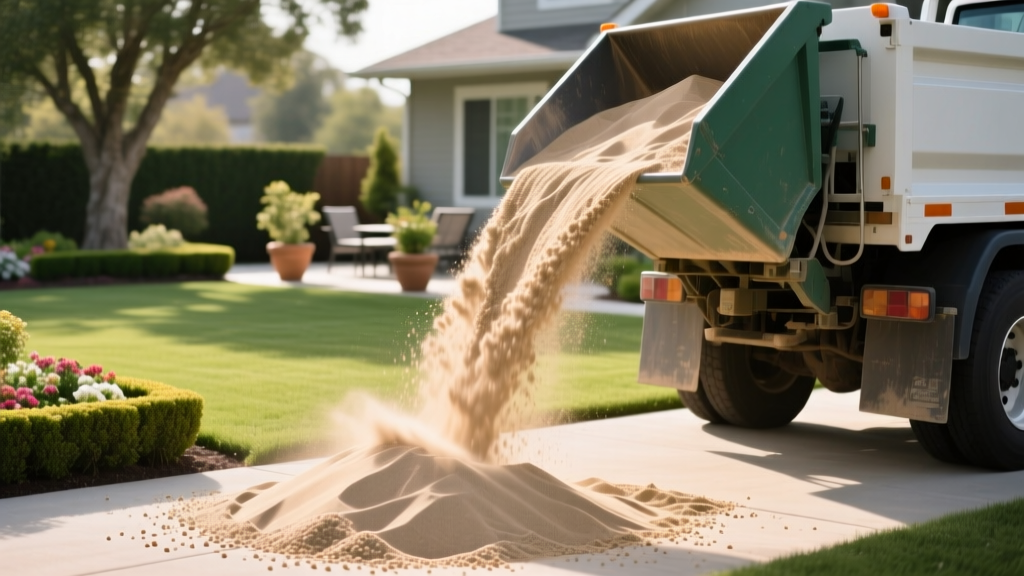
How Many Yards in a Ton of Sand? Coverage & Cost Guide
The Core Math: Converting Tons to Cubic Yards
When ordering bulk landscaping materials, the most common point of confusion is the translation between weight (tons) and volume (cubic yards). The direct answer is that one US short ton (2,000 lbs) of sand equals approximately 0.71 to 0.80 cubic yards. However, this is not a fixed universal constant. The exact conversion depends entirely on the sand's grain size, mineral composition, and, most critically, its moisture content.
A cubic yard is a volumetric measurement equal to 27 cubic feet. Because sand is a granular material with air pockets between the grains, its density fluctuates. According to industry standards tracked by the National Stone, Sand & Gravel Association (NSSGA), dry sand generally weighs between 2,500 and 2,700 pounds per cubic yard. This means a standard 2,000-pound ton will yield roughly 0.74 to 0.80 cubic yards of dry material.
⚠️ The Moisture Trap (Sand Bulking): When sand is damp, surface tension pushes the individual grains apart—a phenomenon known as "bulking." Damp sand can occupy up to 25% more volume than dry sand while weighing the same. Conversely, fully saturated wet sand collapses these air pockets, weighing upwards of 3,000 to 3,200 pounds per cubic yard. If you buy by the cubic yard after a heavy rain, you are paying for water weight and collapsed volume. Always buy sand by the ton for structural projects to guarantee you receive the correct mass of material.
Sand Type Density Matrix
Not all sand is created equal. The United States Geological Survey (USGS) notes that sand composition (quartz, limestone, or coral) and grain shape (angular vs. rounded) dictate how tightly the particles pack together. Below is the conversion matrix for the most common residential landscaping sands.
| Sand Type | Avg. Weight (lbs/yd³) | Tons per Cubic Yard | Cubic Yards per Ton | Primary Use |
|---|---|---|---|---|
| Concrete Sand | 2,700 - 2,800 | 1.35 - 1.40 | 0.71 - 0.74 | Mixing concrete, base layers |
| Mason Sand | 2,600 - 2,700 | 1.30 - 1.35 | 0.74 - 0.77 | Mortar, paver joints, sandboxes |
| Play Sand (Washed) | 2,500 - 2,600 | 1.25 - 1.30 | 0.77 - 0.80 | Children's play areas, volleyball |
| Wet Sand (Saturated) | 3,000 - 3,200 | 1.50 - 1.60 | 0.62 - 0.66 | N/A (Avoid buying in this state) |
Coverage Calculator: Depth vs. Square Footage
To determine how much sand you need, you must calculate the required volume based on your project's square footage and target depth. According to hardscaping guidelines from Penn State Extension, a proper paver base requires specific sand depths to prevent settling and frost heave.
Using Mason Sand (approx. 0.75 cubic yards per ton) as our baseline, here is the exact coverage area one single ton will provide at various depths:
- 1-Inch Depth (Paver Joint Sand / Leveling Bed): 1 ton covers approximately 240 to 250 square feet. This is the standard thickness for the final leveling bed directly beneath interlocking concrete pavers.
- 2-Inch Depth (Standard Base Layer): 1 ton covers approximately 120 to 125 square feet. Used for minor grading corrections or secondary base layers over compacted gravel.
- 4-Inch Depth (Deep Fill / Play Areas): 1 ton covers approximately 60 to 62 square feet. This is the minimum recommended depth for children's sandboxes or beach-entry pool transitions to ensure adequate drainage and cushioning.
- 6-Inch Depth (Heavy Drainage French Drains): 1 ton covers approximately 40 to 42 square feet. Rarely used exclusively with sand, but applicable when backfilling narrow utility trenches.
💡 The Pro-Contractor Formula:
To calculate exactly how many tons you need for any project, use this formula:
Then, multiply the Cubic Yards by 1.35 to get the required Tons. Always add a 10% buffer for compaction and spillage.
To calculate exactly how many tons you need for any project, use this formula:
(Square Footage × Depth in Inches) ÷ 324 = Cubic Yards NeededThen, multiply the Cubic Yards by 1.35 to get the required Tons. Always add a 10% buffer for compaction and spillage.
2026 Pricing Breakdown: Ton vs. Yard
Material pricing fluctuates based on regional quarry availability and diesel fuel costs. As of 2026, bulk sand remains one of the most economical landscaping materials, but the way it is priced at the quarry significantly impacts your final bill.
Material Costs
- Price Per Ton: $15 to $28 per ton. Quarries prefer selling by weight because it is easily measured via truck scales, eliminating moisture-volume disputes.
- Price Per Cubic Yard: $25 to $45 per cubic yard. Retailers and landscape supply yards charge a premium for volume measurements because loading a cubic yard requires specialized bucket equipment and time, and they assume the risk of moisture bulking.
Delivery Logistics and Hidden Fees
The cost of the sand is often secondary to the delivery fee. Understanding dump truck capacities will help you optimize your order to avoid paying for multiple trips.
| Truck Type | Max Sand Capacity | Typical Delivery Fee | Best For |
|---|---|---|---|
| Single-Axle Dump | 5 to 7 Tons | $60 - $95 | Small patios, sandbox fills, tight driveway access |
| Tandem-Axle Dump | 12 to 15 Tons | $90 - $150 | Large paver projects, pool installations, full-yard grading |
| Trailer / Super Dump | 20 to 25 Tons | $150 - $250+ | Commercial jobs, new construction base layers |
"Always verify the route from the quarry to your home. Many municipalities enforce strict weight restrictions on residential roads and bridges during the spring thaw. If a tandem-axle truck cannot legally reach your driveway, the supplier will be forced to use a single-axle truck, which may require multiple trips and double your delivery fees."
Ordering Strategy: Accounting for Compaction
The most frequent mistake homeowners make is ordering the exact mathematical volume required for their project. Sand is a loose aggregate that compresses significantly when subjected to mechanical vibration or heavy loads.
When installing a paver patio, the 1-inch bedding layer of mason sand is screeded loose but will compress by roughly 10% to 15% once the pavers are laid and the plate compactor is run over the surface. If you are using concrete sand as a structural base layer (often 4 to 6 inches thick), mechanical compaction can reduce the volume by up to 20%.
The 15% Buffer Rule: Always multiply your final calculated tonnage by 1.15. If your mathematical formula dictates you need exactly 4.0 tons of mason sand for a 500-square-foot patio base, order 4.6 tons. Running short on sand mid-project delays installation, risks the base curing unevenly if exposed to the elements, and will cost you an additional $75+ delivery fee just to bring a single extra ton to the site.
Storage and Site Preparation
Before the truck arrives, prepare a designated drop zone. Sand should never be dumped directly onto bare soil or grass if it is intended for structural use, as it will mix with the topsoil and compromise its drainage properties. Lay down a heavy-duty 6-mil polyethylene tarp or a layer of geotextile fabric to keep the sand clean, prevent moisture wicking from the ground, and make the final cleanup of stray grains significantly easier.