
Home & Garden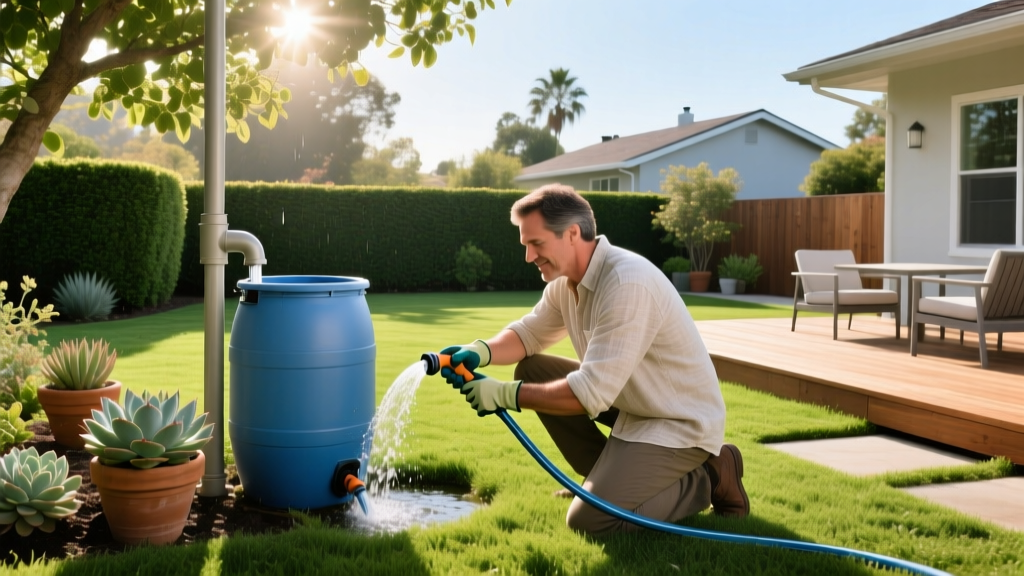
Is It Illegal to Catch Rainwater in California? Homeowner Guide
The Legal Baseline: California Water Code Section 10573
To answer the primary question directly: No, it is not illegal to catch rainwater in California. In fact, the state actively encourages it. The legal framework governing this practice is the Rainwater Capture Act of 2012 (AB 1750), which is codified in California Water Code Section 10573. This legislation explicitly authorizes residential, commercial, and governmental landowners to install, maintain, and operate rain barrel systems to capture rainwater from rooftops for non-potable outdoor use.
Legal Definition of Rainwater Capture: Under state law, the act of collecting rainwater from a roof does not constitute an appropriation of water. Therefore, homeowners do not need a water right permit from the State Water Resources Control Board (SWRCB) to fill a rain barrel for landscape irrigation.
The Potable vs. Non-Potable Boundary
While catching rainwater for your lawn or garden is entirely legal, the legality shifts dramatically if you intend to use the water indoors or for human consumption. Using harvested rainwater for potable purposes (drinking, cooking, bathing, or flushing toilets) requires rigorous filtration, UV treatment, and explicit permits from your local county health department and the SWRCB. For the vast majority of home garden applications—such as drip irrigation, soaker hoses, and manual watering—non-potable capture remains unregulated at the state level.
HOA Restrictions and Civil Code Overrides
A common point of confusion arises when Homeowners Associations (HOAs) attempt to ban rain barrels for aesthetic reasons. California law supersedes local HOA covenants in this scenario. Under California Civil Code Section 4735, an HOA cannot prohibit a homeowner from installing a rain barrel or water capture system on their property. However, the HOA can enforce reasonable aesthetic guidelines, such as requiring the barrel to be painted to match the house, screened by landscaping, or placed in the backyard rather than the front yard. If your HOA issues a fine for a standard rain barrel, cite Civil Code 4735 in your appeal.
Calculating Your Roof Yield and Capture Potential
Before purchasing equipment, calculate your actual capture potential to avoid undersizing your system. The standard hydrological formula for roof runoff is:
Capture (Gallons) = Roof Area (sq ft) × Rainfall (inches) × 0.623
The 0.623 multiplier accounts for the conversion of square-foot-inches to gallons, while also factoring in a standard 10% loss due to evaporation, splash-out, and first-flush diversion. For example, a 1,200-square-foot roof section in Los Angeles receiving 1 inch of rain during a winter storm will yield approximately 747 gallons of harvestable water. If you are using a standard 50-gallon barrel, that single storm will overflow it nearly 15 times, highlighting the need for larger storage or daisy-chained systems.
System Components: Costs and Sizing Matrix
Building a compliant and efficient system requires more than just a plastic drum. Below is a breakdown of standard residential components, specific model recommendations, and current market pricing.
| Component | Recommended Spec / Model | Est. Cost | Purpose & Notes |
|---|---|---|---|
| Primary Storage (Small) | RTS Home Accents 50-Gal HDPE Barrel | $95 - $120 | UV-resistant, food-grade plastic. Best for small urban lots with limited footprint. |
| Primary Storage (Large) | 275-Gallon IBC Tote (e.g., Sure Water) | $280 - $350 | Requires a food-grade liner replacement if buying used. Fits through standard 36" gates. |
| First-Flush Diverter | Rain Harvesting 4-Inch PVC Diverter | $65 - $85 | Diverts the first 5-10 gallons of dirty roof runoff (bird droppings, dust) away from the barrel. |
| Inline Transfer Pump | Wayne PC4 or EcoPlus 390 | $130 - $180 | Required to pressurize water for drip irrigation. Must be plugged into a GFCI outdoor outlet. |
| Vector Control | Summit Mosquito Dunks (BTI) | $8 - $12 | Biological control that kills mosquito larvae without harming plants, pets, or soil biology. |
The Gravity vs. Pressurized Dilemma
Many homeowners assume gravity will push water through their drip irrigation lines. Water generates roughly 0.43 PSI per foot of elevation. Standard drip emitters require 15 to 20 PSI to function correctly. To achieve 15 PSI via gravity alone, your rain barrel would need to be elevated 35 feet above the garden—an engineering impossibility for most residential setups. To solve this, install a shallow-well transfer pump (like the Wayne PC4) connected to a pressure switch, which will automatically draw from the cistern and pressurize the line when a valve is opened.
Mandatory Compliance: Vector Control and Overflow
While the state does not require a permit for small barrels, local health codes strictly enforce vector (mosquito) control. Standing water is a primary breeding ground for Culex and Aedes mosquitoes. According to the UC Statewide Integrated Pest Management Program, homeowners must ensure all rain barrels are completely sealed.
- Inlet Screening: All downspout inlets must be fitted with 1/16-inch stainless steel mesh to prevent adult mosquitoes from entering.
- Biological Larvicide: If a barrel cannot be perfectly sealed, you must use BTI (Bacillus thuringiensis israelensis) dunks. BTI is a naturally occurring bacterium that targets mosquito and black fly larvae. Never use bleach or chemical algaecides in a rain barrel; these will destroy your soil microbiome and harm beneficial mycorrhizal fungi when applied to your garden.
- Overflow Routing: Systems must include a bulkhead overflow fitting near the top of the barrel, routed via a corrugated hose at least 5 feet away from your home’s foundation to prevent soil erosion and basement/crawlspace flooding.
County-Specific Permit Thresholds
While state law protects basic rain barrels, large-scale cisterns trigger local building and grading permits. Always check your specific municipal codes before pouring concrete pads for large tanks.
Los Angeles County: The LA County Department of Public Works allows pre-manufactured rain barrel systems up to 5,000 gallons without a grading or building permit, provided they are placed on level ground and do not require retaining walls. Custom-built cisterns over 5,000 gallons require full structural engineering review.
San Diego County: San Diego is stricter regarding pressurized systems. If your cistern exceeds 1,000 gallons or if you are connecting the harvested water to an automated, pressurized underground irrigation network, you may trigger a plumbing permit and backflow prevention device inspection to ensure rainwater does not cross-contaminate the municipal grid.
San Diego County: San Diego is stricter regarding pressurized systems. If your cistern exceeds 1,000 gallons or if you are connecting the harvested water to an automated, pressurized underground irrigation network, you may trigger a plumbing permit and backflow prevention device inspection to ensure rainwater does not cross-contaminate the municipal grid.
Summary Checklist for California Homeowners
- Verify Roof Material: Avoid capturing water from treated wood shakes, asbestos, or lead-painted surfaces. Asphalt shingles, clay tile, and metal roofs are safe for garden irrigation.
- Install a First-Flush Diverter: This is non-negotiable for maintaining water quality and preventing anaerobic sludge buildup at the bottom of your tank.
- Elevate for Access: Place 50-gallon barrels on a leveled, compacted gravel base or concrete pavers raised 12-18 inches to allow clearance for a standard watering can or hose bib.
- Winterize if Necessary: In freezing microclimates (e.g., Tahoe basin or high desert), drain and bypass the system before the first hard freeze to prevent HDPE plastic from cracking due to ice expansion.

