
Home & Garden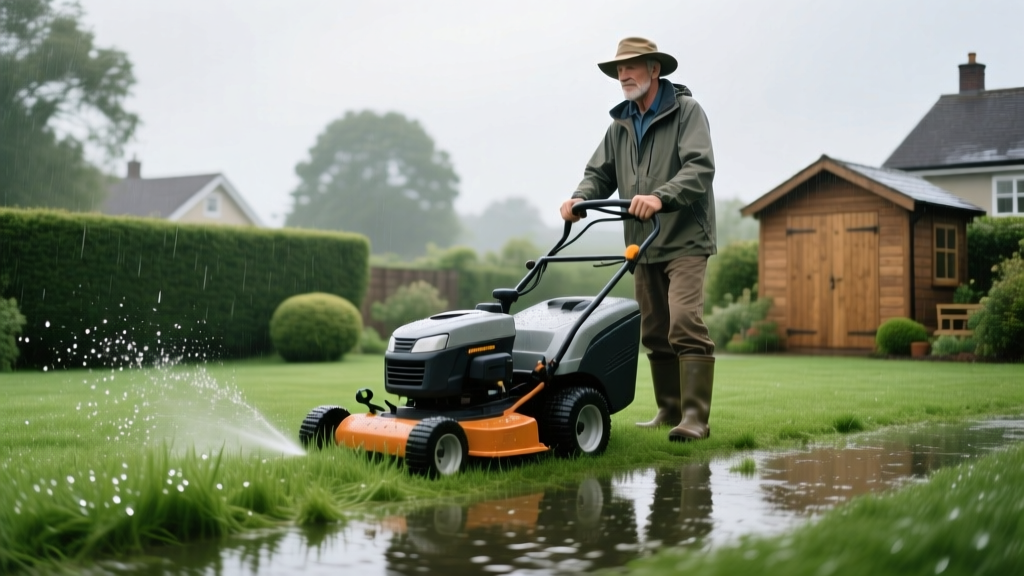
Can You Mow in the Rain? Expert Guide to Wet Grass Cutting
The short answer to whether you can mow in the rain is a conditional yes for gas-powered equipment, but an absolute no for corded electric mowers. However, the more critical question is whether you should. Mowing wet grass introduces severe mechanical, pathological, and safety variables that can permanently damage your turf and your equipment. This guide breaks down the physics of wet cutting, the disease vectors involved, and the exact protocols to follow if weather windows force your hand.
The Physics of Wet Grass: Why Moisture Changes the Cut
When grass blades absorb water, their cellular turgor pressure changes, and surface tension causes them to clump and bend. A standard mower blade rotating at 3,000 RPM relies on the grass blade standing rigid to achieve a clean shear. Wet grass bends away from the blade's leading edge, resulting in a tearing action rather than a slicing action.
This ragged tear increases the leaf surface area exposed to the atmosphere, accelerating moisture loss (transpiration) and causing the tips to turn brown within 24 hours. Furthermore, wet clippings do not disperse. They form heavy, anaerobic clumps that smother the turf canopy beneath them, blocking sunlight and trapping humidity against the soil surface.
⚠️ CRITICAL SAFETY WARNING: Never operate a corded electric mower in the rain or on wet grass. Water is a highly effective conductor, and a compromised extension cord or motor housing seal can result in fatal electrocution. Battery-powered mowers are generally sealed to IPX4 standards (splash resistant), but operating them in active rain voids most manufacturer warranties and risks short-circuiting the battery management system (BMS).
Mower Type Matrix: Performance in Wet Conditions
Not all mowers handle moisture equally. The table below evaluates standard residential mower types across safety, cut quality, and equipment risk when operating on damp to wet turf.
| Mower Type | Safety Rating | Cut Quality | Equipment Risk |
|---|---|---|---|
| Gas Push / Self-Propelled | Moderate (Slip hazard) | Poor (Tearing/Clumping) | High (Deck rust, belt slip) |
| Gas Riding Tractor | Low (Rollover risk on slopes) | Poor | Extreme (Spindle damage, rutting) |
| Battery Push (IPX4+) | Moderate (Slip hazard) | Poor | Moderate (Motor strain) |
| Corded Electric | LETHAL | N/A | N/A |
| Robotic Mower | High (Automated) | Very Poor (Smearing) | High (Wheel slip, sensor errors) |
Lawn Pathology: Fungal Vectors and Soil Compaction
Beyond the mechanical frustrations, mowing in the rain acts as a catalyst for turfgrass diseases. According to NC State Extension plant pathology research, diseases like Pythium blight and Dollar Spot (Clarireedia jacksonii) thrive in high-humidity, wet-canopy environments. When you drive a mower through wet grass, the tires and the deck act as mechanical vectors, picking up fungal spores from infected micro-patches and distributing them evenly across your entire lawn.
Furthermore, soil compaction is a severe secondary effect. Saturated soil loses its structural shear strength. A standard residential riding mower weighs between 400 and 600 pounds. When operated on saturated loam or clay, the tires compress the top 3 to 4 inches of soil, collapsing the macropores required for oxygen exchange and water infiltration. As noted by the University of Minnesota Extension, once these deep ruts and compaction layers form, they require mechanical core aeration or deep-tine slicing to remediate, costing homeowners hundreds of dollars in corrective lawn care.
The 'Is It Too Wet?' Decision Framework
If the rain has stopped and you are trying to decide if the lawn is dry enough to cut, rely on the Footprint Test rather than visual estimation.
- Step firmly onto the turf: Apply your normal body weight to a single footprint.
- Observe the rebound: If the grass blades spring back up within 2 seconds and no water seeps up from the soil around your shoe, the surface is dry enough to mow.
- Check for soil saturation: If your footprint remains visibly matted, or if you hear a 'squelch' indicating water displacement in the rootzone, the soil is too saturated. Delay mowing for at least 12 to 24 hours.
Step-by-Step: How to Mow Damp Grass Safely (If You Must)
If a prolonged weather system forces you to mow damp grass to prevent it from exceeding 5 inches in height (which violates the Penn State Extension one-third rule), follow these exact machine configurations to minimize damage:
- Raise the Deck: Set your cutting height to 3.5 or 4.0 inches. Cutting high reduces the volume of wet tissue entering the deck and prevents scalping on softened, uneven soil.
- Disable Mulching: Remove the mulching plug and install the side-discharge chute. Mulching wet grass guarantees a clogged deck and stalled engine. Side discharging throws the heavy clumps out of the deck's airflow path.
- Reduce Overlap: Normally, you overlap mower passes by 20-30%. On wet grass, reduce overlap to 10% to minimize the amount of already-cut wet clippings being sucked back into the deck.
- Throttle Down: Walk at 50% of your normal pace. This gives the blade more time to generate the vacuum lift required to stand the wet grass up before cutting, and prevents the engine from bogging down.
Post-Mow Maintenance: Preventing Rust and Deck Clogging
Wet grass clippings are highly acidic and retain moisture against bare metal, accelerating oxidation (rust) on your mower deck. If you mow damp grass, immediate post-operation maintenance is non-negotiable.
- Scrape the Deck: Once the engine is off and the spark plug wire is disconnected (or battery removed), use a plastic putty knife to scrape the underside of the deck. Never use a metal scraper, as it will chip the factory powder-coat finish.
- Clear the Chute: Ensure the side discharge chute is completely free of impacted clippings, which can dry into a concrete-like mass and cause dangerous projectile discharge on the next use.
- Apply Hydrophobic Coating: Spray the underside of the clean, dry deck with a dedicated silicone lubricant, such as WD-40 Specialist Water Resistant Silicone Spray. Avoid standard WD-40, which attracts dust. The silicone creates a slick barrier that prevents future wet clippings from adhering to the metal.
- Wash the Tires: Hose off the drive tires to remove mud and fungal spores, preventing the spread of turf pathogens to other zones of your property.
Frequently Asked Questions
Will mowing wet grass dull my mower blade?
Yes. The added weight and tensile strength of water-logged grass blades require significantly more kinetic energy to shear. This increased friction and resistance accelerates the blunting of the blade's cutting edge. You will likely need to sharpen or replace your blade twice as often if you frequently mow wet turf.
Can I mow in light morning dew?
Light dew is generally acceptable for gas-powered mowers, provided the soil itself is not saturated. However, waiting until the sun burns off the dew (usually between 9:00 AM and 10:00 AM) will yield a vastly superior cut, reduce deck clogging, and minimize the spread of early-morning fungal spores.