
Home & Garden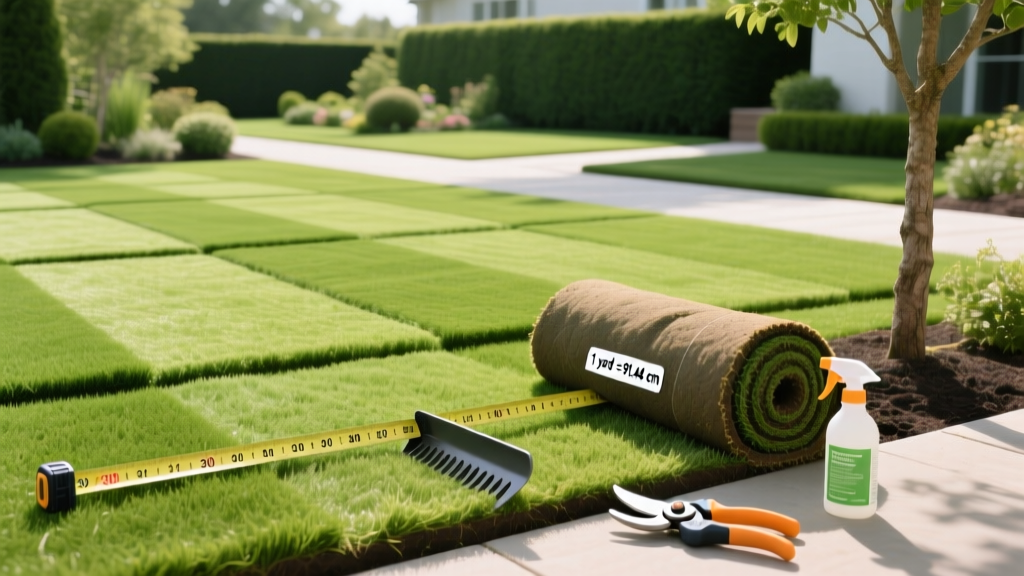
How Many cm in a Yard? Lawn Material Coverage & Cost Guide
When homeowners and landscaping professionals ask how many cm in a yard, they are rarely just looking for a basic math trivia answer. In the context of lawn care and outdoor improvement, this question usually stems from a practical problem: translating metric product labels (like imported grass seed or European-manufactured landscape fabric) into imperial coverage areas, or calculating the exact volume of topsoil needed when bed depths are measured in centimeters but bulk materials are sold by the cubic yard.
The exact linear conversion is 1 yard = 91.44 centimeters. However, applying this to square and cubic measurements for material dosage, coverage, and cost estimation requires a deeper understanding of dimensional math. This guide breaks down the exact conversions, coverage formulas, and 2026 material pricing to ensure you never overbuy or under-order your landscaping supplies.
The Core Math: Linear, Square, and Cubic Conversions
The most common mistake in landscape planning is confusing linear yards with square or cubic yards. A linear yard measures length (like a roll of weed barrier), a square yard measures area (like a patch of sod), and a cubic yard measures volume (like a dump truck load of mulch). According to the National Institute of Standards and Technology (NIST), the metric system relies on base-10 scaling, making conversions straightforward once you lock in the foundational 91.44 cm multiplier.
| Measurement Type | Imperial Unit | Metric Equivalent (Exact) | Common Landscaping Application |
|---|---|---|---|
| Linear | 1 Yard | 91.44 cm (0.9144 m) | Landscape fabric, edging, drip irrigation tubing |
| Area | 1 Square Yard | 8,361.27 sq cm (0.836 sq m) | Sod rolls, synthetic turf, grass seed coverage |
| Volume | 1 Cubic Yard | 764,555 cubic cm (0.764 cubic m) | Mulch, topsoil, compost, gravel |
⚠️ The Cubic Yard Trap: A cubic yard is not simply 91.44 cm cubed in practical terms; it is a 3D space measuring 91.44 cm long × 91.44 cm wide × 91.44 cm high. When calculating bulk soil, you must convert your target depth from centimeters into a fraction of a yard before multiplying by your square yardage.
Calculating Mulch and Topsoil Coverage (Cubic Yards to cm Depth)
Bulk materials like hardwood mulch, screened topsoil, and organic compost are sold by the cubic yard. However, horticultural best practices dictate application depth in centimeters or inches. For example, the University of Minnesota Extension recommends applying 5 to 7.5 cm (2 to 3 inches) of mulch around trees and shrubs to retain moisture without suffocating roots.
To find out how many cubic yards you need when your depth is measured in cm, use this exact formula:
The Coverage Formula
- Calculate Area: Measure your garden bed length and width in yards. Multiply them to get Square Yards.
- Convert Depth: Divide your desired depth in cm by 91.44 to get the depth in yards.
- Calculate Volume: Multiply the Square Yards by the Depth in yards.
Example: You have a garden bed that is 5 yards long and 4 yards wide (20 square yards). You want a 6 cm layer of cedar mulch.
- Depth in yards = 6 cm ÷ 91.44 = 0.0656 yards
- Volume = 20 sq yards × 0.0656 = 1.31 cubic yards
Since bulk suppliers typically sell in half-yard increments, you would order 1.5 cubic yards of mulch.
Sod and Turf Rolls: Linear Yards vs. Square Meters
When ordering Kentucky Bluegrass or Bermuda sod, farms often quote prices per square foot or square yard, but international turfgrass manuals and some modern precision-agriculture tools measure area in square meters.
One square yard equals 0.836 square meters (or 8,361 square cm). A standard roll of sod in the US is typically 2 feet wide by 4.5 feet long, yielding 9 square feet (exactly 1 square yard). If you are following a metric-based landscaping blueprint that calls for 50 square meters of sod, you must divide 50 by 0.836 to determine that you need 59.8 square yards (or roughly 60 standard rolls) to complete the job.
💡 Pro Tip for Sod Ordering: Always add a 5% to 10% waste factor to your final square yard calculation to account for cutting around curves, sprinkler heads, and hardscape edges. For 60 square yards of coverage, order 63 to 66 rolls.
Fertilizer and Seed Dosage: Translating Metric Rates
Premium lawn care products, particularly specialized grass seed blends and slow-release nitrogen fertilizers, frequently list dosage rates in grams per square meter (g/m²). If you are using a standard US broadcast spreader calibrated for pounds per 1,000 square feet, you need to bridge the metric-imperial gap to avoid burning your lawn or under-feeding it.
According to turfgrass research from the University of Minnesota Turfgrass Science program, precise nitrogen application is critical for root development and disease resistance. Here is the conversion matrix for translating metric dosage to imperial spreader settings:
Dosage Conversion Matrix
| Metric Rate (g/m²) | Imperial Equivalent (lbs / 1,000 sq ft) | Typical Product Application |
|---|---|---|
| 10 g/m² | 2.04 lbs | Standard starter fertilizer |
| 15 g/m² | 3.06 lbs | High-nitrogen spring feed |
| 25 g/m² | 5.11 lbs | Heavy grass seed overseeding rate |
| 50 g/m² | 10.22 lbs | Organic compost top-dressing |
The Quick Conversion Rule: To convert any g/m² rate to lbs per 1,000 sq ft, simply multiply the metric number by 0.2048. If your imported organic fertilizer bag recommends 30 g/m², multiply 30 × 0.2048 = 6.14 lbs per 1,000 sq ft. Set your spreader accordingly.
2026 Material Cost Estimator: Metric vs. Imperial Pricing
Understanding how many cm in a yard also helps you spot pricing discrepancies when comparing bulk suppliers who use metric tons versus those who use cubic yards. Below is the average 2026 pricing for common landscaping materials in the US market, standardized to cubic yards for accurate budgeting.
| Material | Avg. Cost per Cubic Yard (2026) | Coverage at 5 cm Depth | Coverage at 10 cm Depth |
|---|---|---|---|
| Shredded Hardwood Mulch | $45 - $65 | 16.2 sq yards | 8.1 sq yards |
| Screened Topsoil | $35 - $55 | 16.2 sq yards | 8.1 sq yards |
| Organic Compost Blend | $50 - $75 | 16.2 sq yards | 8.1 sq yards |
| Pea Gravel (Decorative) | $55 - $80 | 16.2 sq yards | 8.1 sq yards |
Note: Delivery fees typically add $75 to $150 per truckload (up to 10-15 cubic yards), which drastically alters the per-yard cost for small orders. Always calculate total landed cost before comparing suppliers.
Common Measurement Mistakes to Avoid
- Confusing Weight with Volume: A 'yard' of topsoil (volume) weighs roughly 2,000 to 2,200 lbs (1 ton), while a 'yard' of dry mulch weighs only 400 to 800 lbs. Never use weight-based metric tons interchangeably with cubic yards without checking the material's specific density.
- Ignoring Soil Compaction: When ordering topsoil for a raised bed, factor in a 15% to 20% settlement rate. If your math dictates you need exactly 10 cubic yards to reach a 15 cm depth, order 12 cubic yards to account for natural settling after the first heavy rain.
- Miscalculating Slopes: The formulas above assume a flat, level plane. If you are covering a sloped bank with erosion-control mulch, the actual surface area is greater than the footprint. Measure the slope's diagonal length in yards, not the horizontal base, to ensure adequate coverage.
Mastering the translation between centimeters and yards eliminates the guesswork from landscape budgeting. By relying on exact dimensional conversions rather than rough estimates, you ensure optimal material dosage, prevent costly over-ordering, and achieve professional-grade coverage across every square centimeter of your property.

