
Home & Garden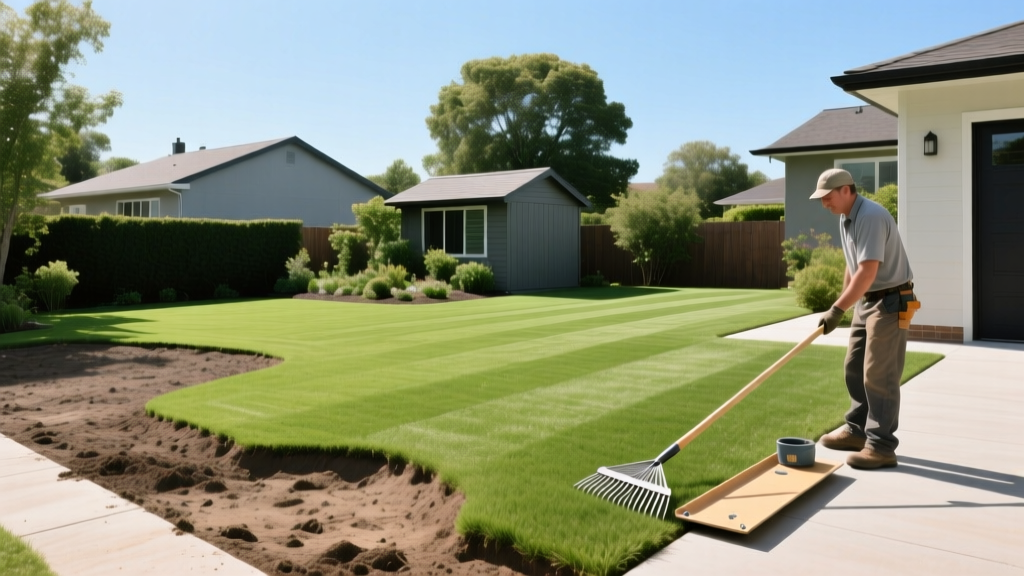
How Much Does It Cost to Level a Yard? 2026 Guide
The True Cost to Level a Yard in 2026
Homeowners researching how much does it cost to level a yard typically encounter a wide variance in quotes. For a standard residential lot (under 5,000 square feet), the national average ranges from $1,200 to $3,500. However, this baseline only applies to moderate slope corrections. Minor topdressing to fix lawn ruts can cost as little as $500, while major regrading involving heavy machinery, retaining walls, and subsurface drainage can easily exceed $10,000.
The final price is dictated by three primary variables: the severity of the existing slope, the accessibility of your backyard for heavy equipment, and the regional cost of fill materials. Understanding these metrics is essential before signing a landscaping contract or renting a skid steer.
Cost Breakdown by Project Severity
Yard leveling is not a one-size-fits-all process. The table below categorizes the three main tiers of grading projects, including the specific techniques and equipment required for each.
| Project Tier | Average Cost Range | Timeline | Primary Methods & Equipment |
|---|---|---|---|
| Minor (Topdressing) | $500 - $1,200 | 1-2 Days | Manual labor, wheelbarrows, mason sand/topsoil mix, lawn leveling drag mat |
| Moderate (Slope Correction) | $1,500 - $3,500 | 2-4 Days | Compact track loader (e.g., Toro Dingo), laser level, 10-20 cubic yards of fill dirt |
| Major (Regrading & Drainage) | $4,000 - $10,000+ | 1-2 Weeks | Mini excavator, French drain installation, retaining walls, soil compaction machinery |
The 5% Rule: Why Foundation Grading Dictates Price
If your yard slopes toward your home, you are not merely 'leveling' the ground; you are performing structural regrading. According to standards outlined by the International Association of Certified Home Inspectors (InterNACHI), the ground must slope away from the foundation at a minimum of 5%. This translates to a 6-inch drop over the first 10 feet extending from the foundation wall.
Failing to meet this 5% threshold leads to hydrostatic pressure against basement walls, foundation cracking, and crawl space mold. Correcting a negative grade requires stripping the existing topsoil, adding engineered fill dirt, and compacting it in 4-inch lifts (layers) to prevent future settling. This structural requirement is why professional grading costs significantly more than simple lawn smoothing.
⚠️ Critical Pre-Dig Warning: Never move or excavate more than 4 inches of soil without calling 811 to have underground utilities marked. Hitting a buried gas line, water main, or fiber-optic cable can result in municipal fines exceeding $10,000 and severe safety hazards.
Material Costs: Fill Dirt vs. Topsoil vs. Sand
The type of dirt you purchase fundamentally changes the project's outcome and budget. A common mistake is using topsoil for deep structural filling, which leads to massive settling issues because topsoil contains organic matter that decomposes over time.
- Fill Dirt ($8 - $15 per cubic yard): Contains clay, sand, and rocks with zero organic matter. Used for the base layers to build up elevation. It compacts tightly and will not decompose or sink.
- Topsoil ($20 - $50 per cubic yard): Rich in organic nutrients. Only used for the top 4 to 6 inches of the grade to support turfgrass root systems.
- Mason Sand ($25 - $40 per cubic yard): Used specifically for leveling paver patios, walkways, or mixing into heavy clay soils to improve percolation rates.
Proper soil composition prevents water pooling and turf disease. The University of Minnesota Extension notes that heavy clay soils require different grading approaches and often necessitate the installation of subsurface drainage tiles or amended soil profiles, which can add $15 to $25 per linear foot to your total material and labor costs.
DIY vs. Professional Grading: Decision Matrix
Deciding whether to rent equipment or hire a landscaping crew depends on your lot's accessibility and your tolerance for physical labor. Use this framework to make your choice:
When to DIY (Budget: $400 - $800)
- Scope: Fixing minor ruts, smoothing out mower scalping bumps, or topdressing an established lawn.
- Equipment Needed: Rent a walk-behind dethatcher, a lawn leveling drag mat ($40 rental), and order 2-3 cubic yards of a 70/30 sand-topsoil mix delivered via dump truck.
- The Catch: You must manually shovel and spread the material. A single cubic yard of dirt weighs approximately 2,000 pounds.
When to Hire a Professional (Budget: $1,500+)
- Scope: Correcting negative drainage, terracing a steep hill, or leveling a yard with heavy clay/rock subsoil.
- Equipment Needed: Professionals use GPS-guided skid steers and rotary laser levels to achieve exact 5% slopes without manual guesswork.
- The Catch: High upfront cost, but includes liability insurance, proper soil compaction, and warranty against settling.
Hidden Costs That Derail Landscaping Budgets
When calculating how much does it cost to level a yard, homeowners frequently overlook site-specific obstacles that inflate the final invoice.
- Gate Clearance and Access: Standard backyard gates are 36 to 48 inches wide. Compact track loaders require at least 42 inches of clearance. If your fence gate is too narrow, the contractor must either remove fence panels (adding $200-$400 for labor and repair) or use manual wheelbarrows, which doubles the labor hours.
- Tree Root Protection: Leveling dirt over the critical root zone of mature trees can suffocate them. Arborists charge $150-$300 to consult on safe grading depths near established oaks or maples.
- Soil Compaction and Shrinkage: Loose fill dirt shrinks by 10% to 15% after natural settling and rain. If you calculate you need exactly 10 cubic yards of dirt, you must order 11.5 cubic yards to account for compaction, otherwise, you will end up with low spots.
- Sod vs. Seed Recovery: After regrading, the soil is bare. Hydroseeding costs $0.10 to $0.15 per square foot, while laying premium sod costs $0.45 to $0.85 per square foot. For a 2,000 sq ft yard, sod installation adds $900 to $1,700 to the final bill.
Frequently Asked Questions
Can I level a yard using a rototiller?
Using a rototiller to level a yard is a critical mistake if you are trying to fix drainage or grading issues. Tilling destroys the soil structure, creates a fluffy, uncompacted base, and guarantees severe uneven settling after the first heavy rain. Rototillers should only be used for preparing seedbeds in already-flat areas, not for moving earth or establishing slopes.
How long does it take for newly leveled dirt to settle?
Even when mechanically compacted with a plate compactor or skid steer tracks, fill dirt requires 3 to 6 months of natural rain cycles to fully settle. Professionals typically overfill the grade by 1 to 2 inches to account for this inevitable shrinkage.
Does leveling a yard increase property value?
Yes, but indirectly. A properly graded yard prevents foundation damage and basement flooding, which are major red flags during home inspections. While you may not recoup 100% of the grading cost in immediate resale value, a yard with negative drainage can reduce a home's appraised value by $10,000 to $15,000 due to perceived structural risks.

