
Home & Garden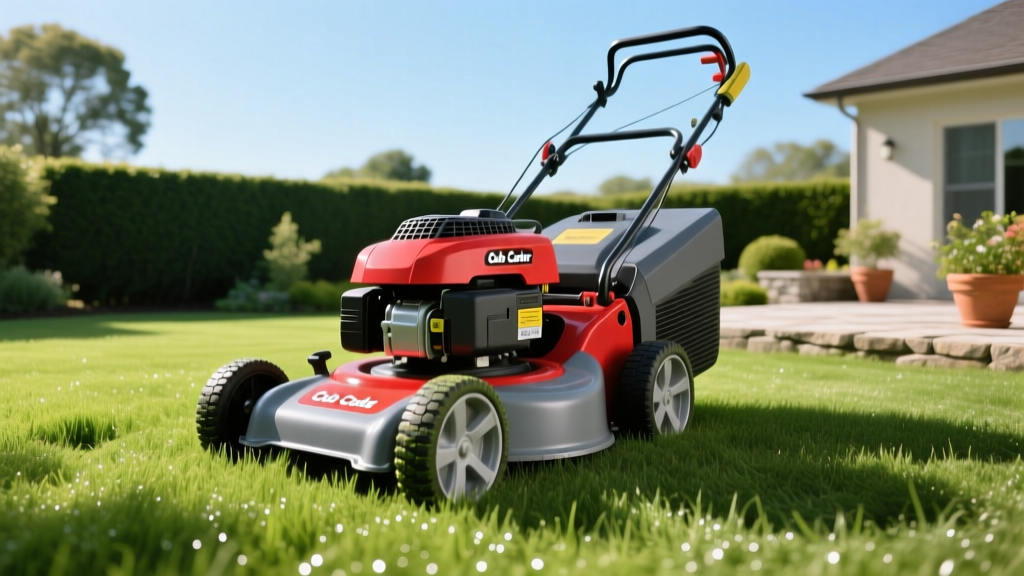
Cub Cadet SC100 Mower: Beginner Setup & Care Guide
The Cub Cadet SC100 is a staple in the entry-level lawn care market, offering a reliable 21-inch stamped steel deck and a 3-in-1 cutting system at an accessible price point (typically retailing between $299 and $349 in 2026). For first-time homeowners or those transitioning from a string trimmer to a dedicated push mower, the SC100 provides a straightforward, mechanical experience without the complexity of self-propelled transmissions or battery management systems. However, its simplicity demands proper initial setup and routine maintenance to prevent the most common beginner failure modes, such as flooded carburetors and uneven cutting decks.
Out-of-the-Box Assembly and First Start
When unboxing the SC100, the handle assembly and grass catcher bag are the primary installation tasks. Ensure the handle mounting bolts are tightened with a standard 13mm socket wrench, as hand-tightening often leaves the handle loose, causing vibration fatigue during use.
Fluid and Ignition Preparation
The SC100 is shipped without engine oil. Filling it incorrectly is the most frequent cause of engine seizure or excessive smoking in new mowers.
- Oil Type: Use SAE 30 small-engine oil for temperatures above 40°F (4°C). If you are mowing in early spring where temperatures dip below 40°F, switch to 5W-30 synthetic small-engine oil.
- Capacity: The 173cc OHV engine holds approximately 15 ounces (0.44 liters). Pour slowly and check the dipstick frequently. Overfilling will cause oil to blow past the piston rings and saturate the air filter.
- Fuel: Use fresh, ethanol-free gasoline (E0 or E10 maximum). Ethanol-blended fuels attract moisture and degrade the internal gaskets of the carburetor over time.
The Cold Start Sequence
The SC100 utilizes a manual choke system rather than an auto-choke or primer bulb. For a cold engine, set the throttle/choke lever to the FULL CHOKE position (closed). Pull the recoil starter cord smoothly until you feel resistance, then pull firmly. Once the engine catches and runs for 3 to 5 seconds, immediately move the lever to the RUN (open) position. Leaving the choke closed for more than 10 seconds will flood the combustion chamber with unburned fuel.
Mastering the 3-in-1 Cutting System
The SC100's primary advantage is its versatile deck design, allowing you to switch between mulching, bagging, and side-discharge without requiring specialized tools. Understanding when to use each mode is critical for turf health and mower longevity.
| Cutting Mode | Configuration | Best Use Case | Clipping Volume Limit |
|---|---|---|---|
| Mulching | Discharge chute closed; mulch plug inserted | Weekly mowing; dry grass; returning nitrogen to soil | Less than 1/3 of total grass blade height |
| Bagging | Discharge chute open; fabric catcher attached | Overgrown lawns; heavy weed seed heads; leaf cleanup | High volume; prevents thatch buildup |
| Side-Discharge | Discharge chute open; deflector flap down | Wet/tall grass; rural properties where clippings blow away | Maximum volume; prevents deck clogging |
Note: When switching to mulching mode, ensure the mulch plug is fully seated against the deck baffle. A loose plug will allow large, uncut clippings to escape and clump on the lawn.
Dual-Lever Height Adjustment Strategy
The SC100 features a dual-lever height adjustment system, controlling the front and rear axles independently. This system offers seven distinct cutting heights, ranging from 1.25 inches to 3.75 inches. While independent adjustment allows for leveling the deck on sloped terrain, it requires deliberate management to avoid 'scalping' the lawn.
According to turfgrass researchers at the University of Minnesota Extension, maintaining the correct mowing height is the single most impactful factor in lawn health. Never remove more than one-third of the grass blade in a single pass. For cool-season grasses like Kentucky Bluegrass and Tall Fescue, set both levers to the 3.0 or 3.25-inch notch during peak summer heat to shade the soil and retain moisture. For warm-season grasses like Bermuda or Zoysia, a lower setting of 1.5 to 2.0 inches promotes lateral density.
Pro-Tip: Deck Leveling
Because the SC100 uses dual levers, it is easy to accidentally set the front axle one notch lower than the rear. This causes the front of the blade to do all the cutting, increasing engine load and leaving visible 'step' marks in the turf. Always verify that both levers are resting in the exact same numbered notch before mowing.
Because the SC100 uses dual levers, it is easy to accidentally set the front axle one notch lower than the rear. This causes the front of the blade to do all the cutting, increasing engine load and leaving visible 'step' marks in the turf. Always verify that both levers are resting in the exact same numbered notch before mowing.
Preventative Maintenance and the 'Tipping Rule'
Routine maintenance on the SC100 is straightforward, but improper handling during maintenance causes more damage than neglect. The most critical concept for a beginner to master is the Tipping Rule.
WARNING: When lifting the front of the mower to inspect the blade or clear a debris jam, always tip the mower backward so the spark plug and air filter point straight up toward the sky. Tipping the mower onto its side or forward will cause engine oil to drain into the carburetor and air filter. This results in a hydro-locked engine, severe white smoke upon the next startup, and a ruined foam air filter.
Blade Care and Sharpening
The SC100 uses a standard 21-inch high-lift blade secured by a single center bolt. To remove it, block the blade with a scrap piece of 2x4 lumber and use a 5/8-inch (or 15mm) socket wrench. When sharpening, maintain the original 30-degree bevel angle. An unbalanced blade will vibrate violently at 3,000 RPM, eventually destroying the engine's crankshaft seals. Always hang the blade on a nail or use a magnetic balancer to ensure both ends weigh exactly the same before reinstalling.
Air Filter and Spark Plug Intervals
- Air Filter: The SC100 uses a dual-stage filter (foam pre-filter and paper element). Check every 25 hours of use. Wash the foam in warm soapy water, let it dry completely, and apply a few drops of clean engine oil before squeezing out the excess. Never oil the paper element.
- Spark Plug: Replace annually or every 100 hours. The required gap is precisely 0.030 inches. Use a feeler gauge to verify the gap; a gap that is too wide will cause misfires under load, while a gap that is too narrow will foul the plug with carbon.
Common Beginner Failure Modes & Troubleshooting
Even with proper care, mechanical quirks can arise. The Consumer Product Safety Commission (CPSC) emphasizes that proper troubleshooting prevents hazardous bypassing of safety features. Here is how to address the most common SC100 issues without resorting to a service center.
The Engine Cranks but Won't Start
If the recoil cord pulls easily but the engine fails to fire, you have likely flooded the carburetor by over-choking. The Fix: Move the throttle lever to the RUN (open) position. Pull the starter cord 5 to 10 times rapidly to draw fresh air through the carburetor and clear the excess fuel. Do not pull the spark plug wire unless absolutely necessary, as repeated removal can stretch the internal boot spring.
Uneven Cut or Scalping
If the mower leaves uncut strips of grass in the center of the deck, the blade is likely installed upside down. The cutting edges must face upward toward the deck, and the curved 'wings' of the blade must point upward to create the vacuum necessary for the 3-in-1 system to function. If the blade is installed backward, the mower will scalp the lawn and fail to discharge clippings.
Drive Belt and Cable Stretch
While the SC100 is a push mower and lacks a drive belt, it does utilize a blade control cable (if equipped with a blade brake clutch on certain regional models) and a throttle cable. Over the first season, these cables stretch. If the engine bogs down when engaging thick grass, locate the inline barrel adjuster on the throttle cable near the handle and turn it counterclockwise to increase tension, ensuring the carburetor throttle plate opens fully when the lever is engaged.
For comprehensive diagrams and warranty registration, always refer to the official Cub Cadet Support Portal using your specific serial number, located on the silver decal beneath the rear discharge flap of the deck.