
Home & Garden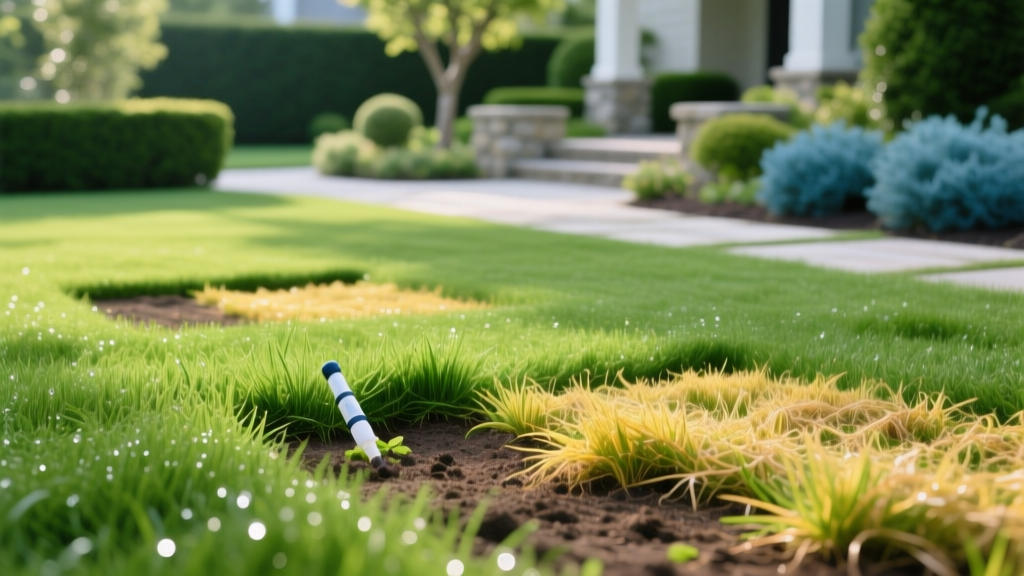
Effective Dallisgrass Killer Strategies for Spot Treatment
The Biological Challenge: Why Dallisgrass Resists Standard Herbicides
Dallisgrass (Paspalum dilatatum) is a perennial warm-season grassy weed that plagues both cool-season and warm-season lawns. Unlike annual weeds that complete their lifecycle in one year, dallisgrass survives via a robust network of short, thick, scaly rhizomes. These underground stems store carbohydrates, allowing the weed to regenerate rapidly even if the top growth is completely burned off by contact herbicides. Furthermore, its leaves feature a thick, waxy cuticle that repels many standard aqueous herbicide solutions, significantly reducing chemical uptake.
According to the University of California Statewide IPM Program, dallisgrass also produces a massive seed bank. A single mature plant can generate thousands of seeds that remain viable in the soil for years, germinating sporadically whenever soil temperatures reach 60°F to 65°F. This dual-threat survival strategy—rhizomatous regeneration and persistent seed banks—means that a successful dallisgrass killer protocol requires both systemic post-emergent herbicides and rigorous pre-emergent defense.
Identification Checklist:
- Growth Habit: Clumping, bunch-type growth with a slightly lighter green color than surrounding turf.
- Seed Heads: The most distinct feature. Stems produce 3 to 5 finger-like spikes (racemes) covered in tiny, dark brown or purplish seeds.
- Ligule: Features a prominent, membranous ligule with a hairy collar, unlike the smooth ligules of crabgrass.
Active Ingredient Matrix: Selective vs. Non-Selective Dallisgrass Killers
Selecting the correct chemical depends entirely on your desirable turfgrass species. What safely eradicates dallisgrass in a fescue lawn will instantly kill bermudagrass. Below is a comparison of the primary active ingredients used for spot treatment in 2026.
| Active Ingredient | Common Trade Names | Turf Safety Profile | Mode of Action | Estimated Cost (Residential) |
|---|---|---|---|---|
| Fluazifop-p-butyl | Ortho Grass B Gon | Safe for most cool-season grasses (Fescue, Bluegrass) | ACCase Inhibitor (Systemic) | $20 - $30 (32 oz RTU) |
| Sethoxydim | Bonide Grass Beater, Hi-Yield | Safe for cool-season grasses; damages warm-season | ACCase Inhibitor (Systemic) | $25 - $40 (16 oz Conc.) |
| Foramsulfuron | Bayer Revolver (Professional) | Safe for Bermudagrass and Zoysiagrass | ALS Inhibitor (Systemic) | $150+ (Professional sizing) |
| Glyphosate | Roundup Pro, Compare-N-Save | Non-selective (Kills all green tissue) | EPSP Synthase Inhibitor | $15 - $25 (Concentrate) |
Spot-Treatment Protocol for Cool-Season Lawns
If you maintain Tall Fescue, Kentucky Bluegrass, or Perennial Ryegrass, you have access to selective ACCase inhibitor herbicides. These chemicals target the lipid synthesis pathways specific to grassy weeds, leaving broadleaf plants and most cool-season turfgrasses unharmed.
Step 1: Preparation and Surfactant Application
Because dallisgrass leaves are highly hydrophobic, applying fluazifop or sethoxydim without a surfactant will result in the chemical beading up and rolling off the leaf blade. If using a concentrate like Bonide Grass Beater (sethoxydim), you must add a Non-Ionic Surfactant (NIS) or Crop Oil Concentrate (COC) at a rate of 0.25% v/v (approximately 1/2 ounce per gallon of mixed solution). Mow the lawn 24 hours prior to application to maximize the leaf surface area of the dallisgrass clumps.
Step 2: The 21-Day Interval Strategy
Systemic grass herbicides do not provide instant burn-down. Research from NC State Extension indicates that ACCase inhibitors take 14 to 21 days to fully translocate to the rhizomes and induce necrosis. Do not reapply if the weed still looks green after one week. Wait exactly 21 days, assess the center of the clump for new growth, and apply a second spot treatment if necessary. Applying too frequently causes the leaf tissue to die before the chemical reaches the roots, resulting in a failed eradication.
Temperature Restriction: Avoid applying fluazifop or sethoxydim when ambient temperatures exceed 85°F. High heat increases the risk of phytotoxicity (chemical burn) to your desirable cool-season turfgrass and causes rapid evaporation of the herbicide solution before it can penetrate the dallisgrass cuticle.
Managing Dallisgrass in Warm-Season Turf (Bermuda, Zoysia, Centipede)
Homeowners with warm-season lawns face a severe limitation: the selective herbicides that kill dallisgrass (fluazifop and sethoxydim) will also severely damage or kill bermudagrass, zoysiagrass, and centipedegrass. While professional turf managers use foramsulfuron (Revolver) or trifloxysulfuron (Monument) to selectively remove dallisgrass from warm-season sports fields, these products are largely restricted-use or prohibitively expensive for residential application.
The "Wipe-On" Precision Technique
For residential warm-season lawns, the most effective dallisgrass killer strategy is targeted application of a non-selective herbicide (glyphosate) using a physical barrier method. This prevents drift and protects the surrounding desirable turf.
- Mix a 2% Glyphosate Solution: Combine 2.5 ounces of 41% glyphosate concentrate per gallon of water. Add a blue turf-marking dye to track your applications.
- Use a Foam Brush or Sponge: Dip a 2-inch foam paintbrush or a specialized herbicide wicking wand into the solution.
- Paint the Leaves: Carefully wipe the solution onto the top and bottom of the dallisgrass blades. Do not spray. The goal is to coat the weed without letting the liquid drip onto the soil or adjacent bermudagrass.
- Timing is Critical: Perform this wipe-on treatment in late summer or early fall. During this period, dallisgrass is actively translocating carbohydrates down into its rhizomes for winter storage, which will pull the glyphosate deep into the root system for a complete kill.
Pre-Emergent Defense: Depleting the Seed Bank
Post-emergent spot treatments only address the visible plants. To prevent the thousands of seeds dropped by mature dallisgrass seed heads from germinating, a strict pre-emergent schedule is mandatory. Prodiamine (Barricade) and Dithiopyr (Dimension) are the industry standards for Paspalum seed control.
"Dallisgrass germination is not a single spring event like crabgrass. It germinates in multiple flushes from late spring through late summer as soil temperatures fluctuate. Split applications of pre-emergents are highly recommended to maintain an unbroken chemical barrier in the top inch of the soil profile."
— Turfgrass Weed Science Guidelines
Apply your first pre-emergent treatment when soil temperatures at a 2-inch depth consistently reach 55°F in early spring. Follow up with a second application 8 to 10 weeks later to cover the late-summer germination flush. Ensure the product is watered in with exactly 0.25 to 0.5 inches of irrigation immediately after application to activate the chemical barrier without pushing it too deep into the soil profile.
Frequently Asked Questions
Can I use MSMA to kill dallisgrass?
MSMA (Monosodium methanearsonate) was historically the standard dallisgrass killer for warm-season lawns. However, the EPA has heavily restricted MSMA for residential use due to arsenic toxicity concerns. It is no longer legally available for home lawn care, making fluazifop (for cool-season lawns) and targeted glyphosate (for warm-season lawns) the current standard of care.
Will pulling dallisgrass by hand work?
Manual removal is generally ineffective unless the soil is heavily saturated. Dallisgrass rhizomes are brittle and snap easily. If you pull the weed and leave even a half-inch of rhizome in the soil, it will generate a new plant within 10 to 14 days. If you must dig it out, use a soil knife to excavate at least 3 inches deep and 4 inches wide around the center of the clump to ensure complete rhizome extraction.
Why is my dallisgrass turning yellow but not dying?
Yellowing (chlorosis) without complete necrosis indicates that the herbicide reached the leaves but failed to translocate to the rhizomes. This usually happens for two reasons: applying the chemical during a drought-stress period when the plant's internal vascular flow is stalled, or mowing the lawn too soon after application. Always wait a minimum of 48 to 72 hours after spraying before mowing to allow maximum systemic movement.

