
Home & Garden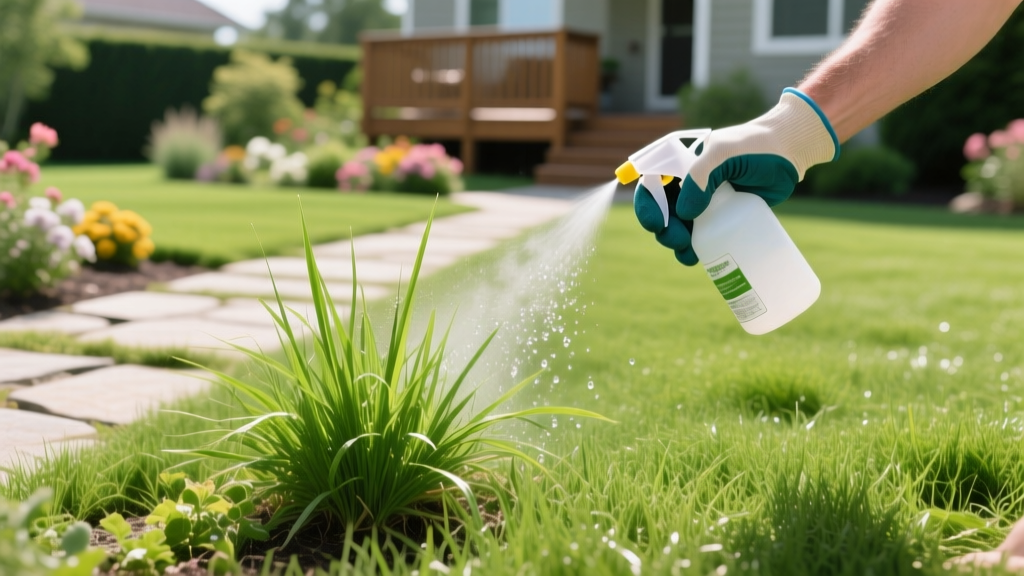
How to Kill Dallisgrass: The Ultimate Spot-Treatment Guide
The Dallisgrass Dilemma: Why Standard Herbicides Fail
Dallisgrass (Paspalum dilatatum) is a warm-season perennial grassy weed that plagues lawns across the southern and transitional zones of the United States. If you have spent money on standard broadleaf weed killers like 2,4-D, Dicamba, or MCPP—the active ingredients in most big-box store 'Weed B Gon' products—and seen zero results, you are not alone. These chemicals target broadleaf plant physiology and are completely ineffective against grassy weeds.
Furthermore, the historical silver bullet for dallisgrass, MSMA (monosodium methanearsonate), has been heavily restricted and phased out for residential lawn use by the EPA due to arsenic concerns. This leaves homeowners with a difficult botanical challenge: how do you selectively kill a grass weed growing inside a desirable grass lawn? According to the University of California Integrated Pest Management Program, dallisgrass thrives in moist, poorly drained soils and can rapidly colonize thin turf, making precise spot-treatment strategies mandatory for residential success.
Botanical Identification: Spotting the Enemy
Before initiating any treatment protocol, accurate identification is critical. Misidentifying dallisgrass as crabgrass or goosegrass will lead to incorrect herbicide selection and wasted resources. Dallisgrass exhibits several distinct morphological traits:
- Growth Habit: It grows in distinct, coarse clumps or tufts rather than spreading flat across the soil surface like crabgrass.
- Color and Texture: The leaves are a noticeably lighter, yellowish-green compared to surrounding Bermuda or Zoysia turf, with a coarse, rigid texture.
- Seed Heads: It produces 3 to 7 finger-like spikelets on a single stalk. Crucially, dallisgrass will continuously produce these seed heads even when mowed at low heights (1.5 to 2 inches), giving the lawn a perpetually unkempt appearance.
The Membranous Ligule Test
The most definitive way to distinguish dallisgrass from similar weeds is by examining the ligule—the tiny outgrowth where the leaf blade meets the leaf sheath. Dallisgrass features a tall, pointed, membranous ligule that can reach up to 1 inch in length. In contrast, crabgrass has a short, hairy ligule, and goosegrass has a short, membranous ligule with a fringe of hairs. Pull a leaf blade gently away from the stem; if you see a prominent, paper-like, pointed membrane, you are dealing with dallisgrass.
Spot-Treatment Decision Matrix: Selective vs. Non-Selective
Because dallisgrass is a true grass, selective control in residential lawns is notoriously difficult. The NC State University TurfFiles database notes that complete eradication with a single selective herbicide application is rarely achievable. Below is a comparison of the three viable spot-treatment pathways for homeowners.
| Treatment Method | Best For | Estimated Cost | Efficacy & Trade-offs |
|---|---|---|---|
| Manual Excavation | Lawns with fewer than 10 isolated clumps | $0 (Labor only) | High success if rhizomes are fully removed. Extremely labor-intensive; missing a 1-inch root fragment guarantees regrowth. |
| Precision Glyphosate Wicking | Moderate infestations (10-50 clumps) in any turf type | $40 (Herbicide + Wick tool) | 100% kill rate on contact. Requires careful application to avoid collateral damage to desirable turf. |
| Commercial Selective (Celsius WG) | Large-scale suppression in Bermuda/Zoysia/Centipede | $150+ per 2 oz bottle | Provides suppression, not total kill. Requires 2-3 applications spaced 21 days apart. Prohibitive cost for small yards. |
Step-by-Step Precision Glyphosate Wicking (The Residential Gold Standard)
For the vast majority of homeowners, attempting to spray selective herbicides for dallisgrass results in suppressed weeds and damaged lawns. The most effective, cost-efficient, and environmentally contained method for spot-treating dallisgrass is using a non-selective herbicide (41% Glyphosate) applied via a rope-wick or sponge-wick applicator. This exploits the vertical growth disparity between the weed and your turf.
Phase 1: Preparation and Timing
Timing is critical. Do not treat dallisgrass during summer drought stress. The optimal window is late summer to early fall (late August through September). During this period, the weed is actively photosynthesizing and translocating carbohydrates down into its deep rhizome network to prepare for winter. Systemic herbicides like glyphosate will be pulled directly into the root zone, ensuring a complete kill rather than just top-growth burn.
Stop mowing your lawn 5 to 7 days before treatment. Dallisgrass grows vertically much faster than desirable turfgrasses. By allowing the lawn to grow uncut for a week, the dallisgrass clumps will stand 2 to 4 inches taller than the surrounding Bermuda or Zoysia canopy.
Phase 2: The Wick Application Protocol
- Mix the Solution: Prepare a 2% to 3% glyphosate solution in the reservoir of your wick applicator. (e.g., 2.5 to 4 fluid ounces of 41% glyphosate concentrate per gallon of water). Add a non-ionic surfactant at 0.25% v/v to break the surface tension on the waxy dallisgrass leaves.
- Saturate the Wick: Prime the rope or sponge wick until it is damp but not dripping. A dripping wick will cause soil splash and collateral turf kill.
- Execute the Wipe: Walk slowly through the lawn, sweeping the wick applicator horizontally across the top of the turf canopy. The chemical will only transfer to the tall dallisgrass blades that protrude above the desirable grass.
- Directional Discipline: Always walk backward or in a single direction. Never step on treated dallisgrass and then step onto untreated desirable turf, as the herbicide will transfer via your shoes and create dead footprints.
- Wait and Observe: Glyphosate takes 7 to 14 days to show visible yellowing. Do not mow or disturb the treated clumps during this translocation period.
Post-Treatment Recovery and Pre-Emergent Defense
Once the dallisgrass clumps have completely browned and died, rake out the dead thatch. Because dallisgrass leaves bare spots in the soil, you must immediately reseed or lay sod to prevent secondary weed invasions. If you are in a warm-season turf zone, plug the bare areas with matching Bermuda or Zoysia plugs and water heavily to encourage lateral stolon spread.
Pre-Emergent Timing for Seed Control
While mature dallisgrass spreads via short rhizomes, it also produces massive amounts of seed. A robust pre-emergent barrier is non-negotiable to prevent the next generation from germinating. Apply Prodiamine 65 WDG at a rate of 0.375 to 0.5 lbs per 1,000 square feet. The application trigger is soil temperature, not the calendar. Use a digital soil thermometer to monitor the temperature at a 1-inch depth. Apply the pre-emergent when soil temperatures reach 55°F for three consecutive days in early spring, which typically coincides with the blooming of forsythia bushes in the transitional zone and slightly earlier in the deep south.
Warning: Aeration and Pre-Emergent Conflict
If you plan to core aerate your lawn to relieve compaction, you must do so before applying your spring pre-emergent. Core aeration after a pre-emergent application fractures the chemical barrier in the soil, creating microscopic entry points for dallisgrass seeds to bypass the herbicide shield and germinate.
Frequently Asked Questions
Can I use vinegar or boiling water to kill dallisgrass?
Acetic acid (horticultural vinegar) and boiling water are contact burners. They will destroy the top growth of the dallisgrass within hours, but they possess zero systemic activity. Because dallisgrass stores immense energy in its deep rhizomes, the plant will simply push up new shoots within two weeks. These methods waste time and damage the soil microbiome without solving the root problem.
Will pulling dallisgrass by hand work?
Only if the soil is heavily saturated and you use a specialized weeding tool, like a dandelion digger or a soil knife, to penetrate 4 to 6 inches deep. Dallisgrass rhizomes are thick and brittle. If you pull the leaves by hand, they will snap at the crown, leaving the root system intact to regenerate. Manual removal is only recommended for very young, first-year seedlings before the rhizome network has fully established.
Is there a selective spray I can buy at a hardware store for dallisgrass?
Currently, there are no highly effective, true selective herbicides available over-the-counter at standard hardware stores that will kill dallisgrass without harming surrounding Bermuda, Zoysia, or Fescue. Products labeled for 'grassy weeds' in lawns usually contain Quinclorac, which is highly effective against crabgrass but provides only temporary suppression of mature dallisgrass. For residential homeowners, the wick-application method detailed above remains the most reliable and cost-effective solution.

