
Home & Garden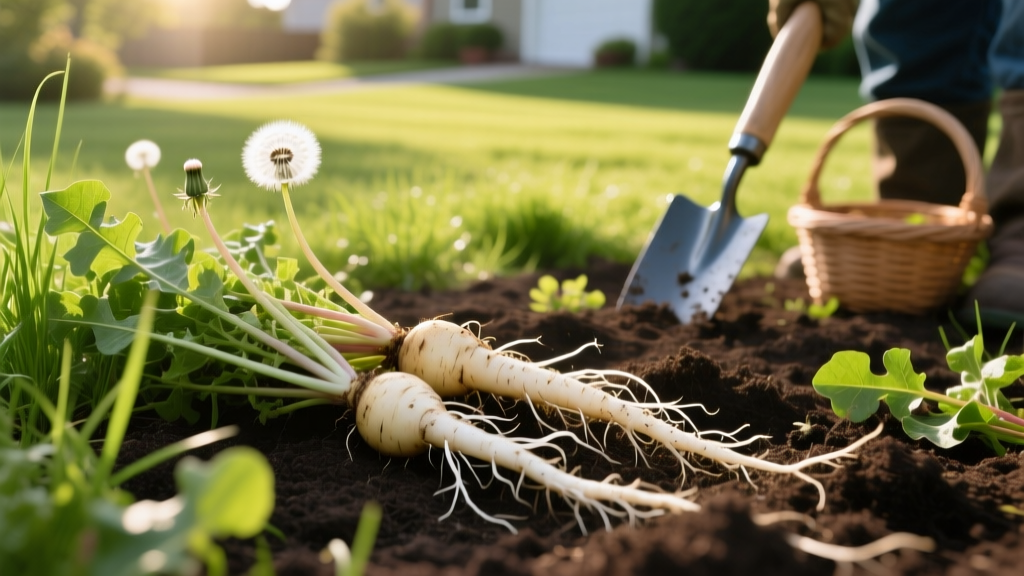
Top Dandelion Root Uses: Harvesting Guide & Lawn Spot-Treatment
The Dual Approach: Foraging and Lawn Management
For the average homeowner, Taraxacum officinale is a relentless broadleaf weed that disrupts the uniformity of a pristine turfgrass lawn. However, for the informed gardener, this ubiquitous plant is a valuable botanical resource. Before reaching for a broadcast herbicide, it is worth exploring practical dandelion root uses that transform a lawn nuisance into a pantry staple.
The most effective yard management strategy involves a dual approach: selectively harvesting the mature taproots for culinary and medicinal applications, while systematically spot-treating the remaining population to protect your turf. This guide details the exact protocols for safe harvesting, preparation, and targeted eradication.
Top Dandelion Root Uses for Home Gardeners
The taproot of a mature dandelion (typically in its second year of growth) stores a dense concentration of inulin, sesquiterpene lactones, and essential minerals. According to a comprehensive phytochemical review published in the National Center for Biotechnology Information (NCBI), dandelion roots contain significant levels of potassium, iron, and bioactive compounds like taraxacin, which stimulate digestion and liver function.
1. Roasted Dandelion Root Coffee Substitute
When properly roasted, the root's natural inulin caramelizes, yielding a dark, robust beverage that closely mimics the flavor profile of coffee without the caffeine or acidity.
- Preparation: Scrub harvested roots thoroughly with a stiff-bristled vegetable brush under cold running water. Do not peel; the skin holds vital nutrients.
- Dicing: Chop the damp roots into uniform 1/4-inch cubes to ensure even roasting.
- Roasting Protocol: Spread on a parchment-lined baking sheet. Roast at 350°F (175°C) for 35 to 45 minutes. Stir every 15 minutes. The roots are finished when they are brittle, dark brown, and emit a rich, chocolate-coffee aroma.
- Brewing: Grind the roasted chunks in a burr coffee grinder. Steep 1 tablespoon of grounds per 8 ounces of boiling water for 5 minutes, then strain through a fine mesh sieve.
2. Digestive Bitters and Herbal Tinctures
Dandelion root tinctures are prized as "digestive bitters," taken in 1ml doses 15 minutes before meals to stimulate bile production.
- Menstruum Selection: Use an 80-proof (40% ABV) neutral spirit, such as standard vodka, which effectively extracts both water-soluble minerals and alcohol-soluble resins.
- Ratio: Use a 1:5 ratio by weight (e.g., 100 grams of fresh, chopped root to 500 milliliters of vodka).
- Maceration: Seal in an amber glass jar. Store in a cool, dark cabinet for 4 to 6 weeks, shaking vigorously every 48 hours. Strain through cheesecloth and bottle in 2oz amber dropper bottles.
Phytochemical and Nutritional Profile
| Compound / Nutrient | Concentration / Role | Primary Health Benefit |
|---|---|---|
| Inulin (Prebiotic Fiber) | Up to 40% of dry root weight | Feeds beneficial gut microbiome; regulates blood sugar |
| Taraxacin (Sesquiterpene) | Variable; highest in autumn roots | Stimulates digestive enzymes and bile flow |
| Potassium | ~297 mg per 100g fresh root | Supports cellular fluid balance; acts as a mild diuretic |
| Taraxasterol | Triterpene alcohol | Exhibits anti-inflammatory properties |
Step-by-Step Harvesting Protocol
Extracting a dandelion taproot intact is notoriously difficult. The roots can plunge 10 to 18 inches into uncompacted soil. If the root snaps, the remaining fragment will regenerate a new crown within 14 days.
Pro-Tip: Soil Moisture Timing
Never attempt to harvest dandelion roots in dry, compacted soil. Water the target area deeply (applying roughly 0.5 inches of water) 24 hours before harvesting. Wait until the top 1 inch of soil feels dry to the touch. This achieves the ideal 20-30% volumetric water content, allowing the soil to release the root without snapping it.
Never attempt to harvest dandelion roots in dry, compacted soil. Water the target area deeply (applying roughly 0.5 inches of water) 24 hours before harvesting. Wait until the top 1 inch of soil feels dry to the touch. This achieves the ideal 20-30% volumetric water content, allowing the soil to release the root without snapping it.
- Tool Selection: Bypass standard trowels. Use a dedicated deep-root weeder like the Fiskars 39-inch Steel Stand-Up Weeder or a Radius Garden Pro-Lite Weeder with a serrated V-notch blade.
- Insertion Angle: Push the tool into the soil 12 inches deep, exactly 2 inches away from the center of the dandelion crown. Angle the tool slightly toward the root.
- Leverage: Pull back on the handle to loosen the soil column. Repeat this process in a circle around the weed (at 12 o'clock, 4 o'clock, and 8 o'clock positions).
- Extraction: Grasp the foliage at the very base of the crown and pull straight up with steady, even pressure. The taproot should slide out entirely.
Warning: Foraging Safety and Soil Contamination
Only harvest dandelions from areas you have managed organically for at least three years. Avoid roots from roadsides (heavy metal and runoff accumulation), golf courses, or commercial orchards due to synthetic pesticide and herbicide residues. According foraging safety guidelines outlined by Mount Sinai Health Library, individuals with ragweed allergies or gallbladder conditions should consult a physician before consuming dandelion products.
Only harvest dandelions from areas you have managed organically for at least three years. Avoid roots from roadsides (heavy metal and runoff accumulation), golf courses, or commercial orchards due to synthetic pesticide and herbicide residues. According foraging safety guidelines outlined by Mount Sinai Health Library, individuals with ragweed allergies or gallbladder conditions should consult a physician before consuming dandelion products.
Spot-Treating the Remaining Dandelion Population
While harvesting provides a yield, you cannot consume every weed in your yard. To maintain turf health, the remaining dandelions must be eradicated. Broadcast spraying damages the surrounding grass and soil biology; spot-treatment is the professional standard.
Organic vs. Synthetic Spot Treatment Matrix
The University of California Integrated Pest Management (UC IPM) program emphasizes that timing and active ingredient selection are critical for broadleaf weed control without injuring cool- or warm-season grasses.
| Active Ingredient | Product Example | Mode of Action | Efficacy & Timing |
|---|---|---|---|
| FeHEDTA (Iron-based) | Natria Lawn Weed Control, Sunday Dandelion Doom | Causes iron toxicity in broadleaf plants, leading to rapid tissue necrosis. | High. Apply when temps are 60°F-80°F. Causes grass to temporarily darken but recovers in 48 hours. Requires 2 applications spaced 14 days apart. |
| 2,4-D + Dicamba | Ortho WeedClear, Bayer BioAdvanced | Synthetic auxins that cause uncontrolled, fatal cellular growth in broadleaves. | Very High. Single application usually kills the root system. Do not apply if temps exceed 85°F to prevent vapor drift damaging nearby ornamentals. |
| Pelargonic Acid | Scythe Herbicide, various organic burn-downs | Destroys cell membranes on contact. | Low for mature dandelions. Only burns top growth; the taproot will regenerate. Best reserved for seedling-stage weeds. |
Application Best Practices
- Target the Crown: When using a pump sprayer for spot treatment, adjust the nozzle to a tight stream rather than a wide mist. Direct the chemical precisely into the center of the dandelion rosette.
- Surfactant Inclusion: Dandelion leaves are coated in a waxy cuticle. If your chosen herbicide does not contain a built-in surfactant, add 1/4 teaspoon of non-ionic surfactant (or a drop of liquid dish soap) per quart of mixed solution to ensure the liquid adheres to the foliage.
- Post-Treatment Mowing: Wait at least 48 hours after applying any systemic herbicide before mowing. The plant needs time to translocate the active ingredient down into the taproot.
Frequently Asked Questions
Can I harvest dandelion roots in the summer?
You can, but it is not optimal. In spring and summer, the plant directs its energy upward into foliage and flower production, making the root woody, fibrous, and bitter. The highest concentration of inulin and the best flavor profile for coffee substitutes occur in late autumn (October to November) after the first frost, when the plant pulls energy back down into the taproot for winter storage.
Is it safe to compost the foliage and crowns after harvesting the root?
Yes, but only if your compost pile reaches and maintains thermophilic temperatures of 140°F to 160°F for at least three consecutive days. If you use a passive, cold composting method, discard the crowns in your municipal green waste bin, as dormant crown tissue can easily sprout new roots when spread back onto your garden beds.
Will spot-treating with iron (FeHEDTA) harm my earthworms?
No. Chelated iron herbicides are highly specific to broadleaf plant physiology. They break down rapidly in the soil into naturally occurring iron and organic compounds, posing no toxicity risk to earthworms, soil nematodes, or beneficial mycorrhizal fungi. This makes FeHEDTA the preferred choice for gardeners actively building soil biology.