
Home & Garden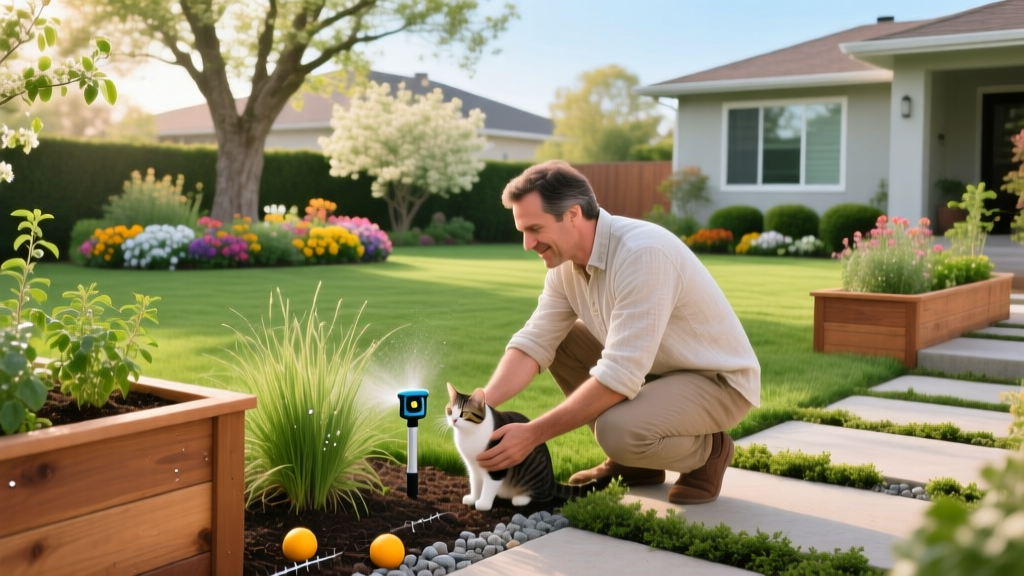
How to Deter Cats From Yard: A Homeowner's Defense Playbook
When neighborhood or feral cats treat your carefully maintained garden beds as a personal litter box, the damage goes far beyond uprooted seedlings. Feline feces carry Toxoplasma gondii, a parasite that poses severe health risks to pregnant women and immunocompromised individuals, while their digging habits destroy root systems and soil structure. Successfully reclaiming your outdoor space requires moving past internet myths and deploying a layered, scientifically grounded defense strategy.
This playbook breaks down exactly how to deter cats from yard environments using a three-tiered approach: active disruption, olfactory barriers, and tactical ground modifications. By combining these methods, you create an environment that is fundamentally hostile to feline intrusion without causing harm to the animals or your local ecosystem.
The Feline Intrusion Matrix: Understanding Yard Targeting
Cats do not dig randomly. They seek out specific environmental conditions: loose, dry, fine-textured topsoil that mimics the commercial litter they are trained to use. Mulch beds, freshly tilled vegetable gardens, and children's sandboxes are prime targets. Furthermore, cats are territorial creatures that rely on scent marking. Once a cat has established your yard as a latrine or territory marker, the pheromones left behind will attract other cats, creating a compounding intrusion problem. Breaking this cycle requires disrupting their physical comfort, auditory environment, and olfactory mapping simultaneously.
Tier 1: Active Deterrents (Motion & Sound)
Active deterrents rely on the element of surprise to trigger a cat's natural flight response. These are your most effective tools for immediate yard reclamation.
Motion-Activated Sprinklers
Water is the undisputed champion of feline deterrence. Cats despise sudden, unpredictable moisture. The industry standard for this application is the Orbit 62100 Yard Enforcer (retailing between $85 and $95). This device utilizes an infrared motion sensor with a 70-foot detection range and a 120-degree field of view.
- Optimal Setup: Mount the sensor at a height of 12 to 18 inches off the ground to target the cat's body heat signature rather than overhead bird movement.
- Power Efficiency: The 2026 model iterations run on 4 AA batteries, yielding over 3,000 activation cycles before requiring a swap.
- Failure Mode & Fix: False triggers from wind-blown branches will drain the battery and dilute the psychological impact. Adjust the sensitivity dial down and prune low-hanging branches within a 10-foot radius of the sensor cone.
Ultrasonic Frequency Emitters
While humans max out at hearing frequencies around 20 kHz, feline hearing extends up to 64 kHz. Ultrasonic repellents exploit this biological gap by emitting high-pitched sounds between 13.5 kHz and 25.5 kHz, often paired with a flashing LED strobe.
Devices like the Aspectek Ultrasonic Animal Repeller ($35 to $45) are solar-powered and weather-resistant. However, they come with a critical physical limitation: ultrasonic sound waves do not penetrate solid objects. If a dense hedge, wooden fence, or large terracotta pot sits between the emitter and the target zone, the sound wave will bounce off, creating a 'shadow zone' where cats can enter undetected. For maximum efficacy, mount emitters on stakes directly inside the garden bed, ensuring a completely unobstructed line of sight to the primary entry points.
Tier 2: Olfactory and Botanical Barriers
Cats possess roughly 200 million olfactory receptors (compared to a human's 5 million). You can weaponize this hyper-sensitive sense of smell to make your yard deeply unpleasant for them.
Botanical Repellents
Integrating specific plants into your landscape design provides a passive, low-maintenance deterrent. Coleus canina (often marketed as the 'Scaredy Cat' plant or Plectranthus caninus) emits a pungent odor reminiscent of skunk spray when brushed against. While highly effective, it is a tender perennial in most USDA zones and will die back in winter. For year-round coverage, border your vulnerable beds with dense plantings of Rosemary, Lavender, or Rue—all of which contain essential oils that felines find highly offensive.
Commercial Granular Repellents
When botanical barriers are insufficient, commercial granules offer concentrated olfactory disruption. Nature's Mace Cat Repellent ($25 for a 40oz shaker) relies on putrescent whole egg solids (4.63% active ingredient) and garlic oil. This mimics the scent of decaying organic matter, signaling to the cat that the area is biologically unsafe.
Application Protocol: Apply granules at a rate of 1 lb per 100 square feet. Reapplication is strictly required every 21 days, or immediately following 1 inch of rainfall, as the active volatile compounds degrade rapidly under UV exposure and water saturation.
Deterrent Method Comparison Matrix
| Deterrent Method | Upfront Cost | Maintenance Level | Efficacy Rating | Best Use Case |
|---|---|---|---|---|
| Motion Sprinkler | $85 - $95 | Low (Battery swap) | 95% | Large lawns, primary entry points |
| Ultrasonic Emitter | $35 - $45 | Low (Solar) | 70% | Open garden beds, patios |
| Commercial Granules | $25 (40oz) | High (Bi-weekly) | 65% | Perimeter fencing, small flower beds |
| Subsurface Wire Mesh | $15 - $30 | None (One-time) | 90% | Vegetable gardens, new mulch beds |
| Botanical Borders | $10 - $40 | Medium (Pruning) | 50% | Long-term landscape integration |
Tier 3: Tactical Ground Modifications
Cats are fastidious groomers. They will avoid any surface that threatens to soil their paws or cause mild physical discomfort. Modifying the physical texture of your soil and mulch is the most permanent solution to digging behavior.
Subsurface and Surface Texture Disruption
For newly planted vegetable gardens or prized flower beds, lay down 1-inch galvanized chicken wire before adding your top layer of soil or mulch. Bury the wire approximately 1 inch beneath the surface, bending the edges outward. Plant seeds or seedlings directly through the gaps. The wire is entirely invisible once covered, but when a cat attempts to dig, their claws will hit the unyielding metal mesh, immediately halting the behavior without causing injury.
For existing mulch beds where wire cannot be retroactively installed, top-dress the soil with highly textured, uncomfortable materials. Excellent options include:
- Sweetgum Balls: The spiky seed pods of the sweetgum tree are incredibly effective and free if you have a tree on-site.
- Pine Cones: Dense, irregular, and sticky when sap is present.
- Holly Leaf Cuttings: The rigid, spiny margins of holly leaves act as a natural barbed wire for soft paws.
- Crushed Gravel (3/4-inch): Too large and heavy for cats to comfortably shift or dig through.
⚠️ CRITICAL WARNING: The Mothball Myth
Do not use mothballs (naphthalene or paradichlorobenzene) outdoors. Not only are they highly toxic to pets, children, and local wildlife, but using them outside is a violation of federal law. The Environmental Protection Agency (EPA) strictly regulates mothballs as pesticides, and outdoor application contaminates soil and groundwater while posing severe respiratory risks. Always stick to EPA-registered, pet-safe repellents.
Do not use mothballs (naphthalene or paradichlorobenzene) outdoors. Not only are they highly toxic to pets, children, and local wildlife, but using them outside is a violation of federal law. The Environmental Protection Agency (EPA) strictly regulates mothballs as pesticides, and outdoor application contaminates soil and groundwater while posing severe respiratory risks. Always stick to EPA-registered, pet-safe repellents.
Troubleshooting: When Deterrents Fail
If you have deployed Tier 1 and Tier 2 tactics and cats are still entering your yard, you are likely dealing with one of two edge cases: habituation or a managed feral colony.
Habituation and Desensitization
Cats are highly adaptable. If an ultrasonic emitter is left on the exact same frequency setting for months, local cats may realize the sound poses no physical threat and simply ignore it. To combat habituation, rotate your deterrents. Move the motion sprinkler to a new location every two weeks, and if your ultrasonic device has adjustable frequency dials, shift the pitch monthly to maintain the element of unpredictability.
Feral Colonies and TNR Programs
If you are facing a high volume of cats, you may be bordering a feral colony. In these scenarios, individual yard deterrents will be overwhelmed by sheer numbers and territorial desperation. The most effective, humane, and scientifically backed approach to reducing feral cat populations is Trap-Neuter-Return (TNR). By contacting local animal control or rescue organizations, you can borrow humane traps, have the cats spayed/neutered and vaccinated, and return them. Neutered cats roam significantly less, fight less, and produce no new litters, naturally shrinking the colony's footprint over time. The Humane Society of the United States provides extensive resources and directories for local TNR coordinators who can assist with this process.
Final Playbook Execution Strategy
Do not rely on a single silver bullet. The most resilient defense against feline intrusion combines a physical barrier (chicken wire or textured mulch) with an active psychological deterrent (motion-activated water). Start by securing your most vulnerable, high-value zones—such as children's play areas and vegetable patches—with subsurface wire. Then, deploy an Orbit Yard Enforcer at the primary entry point where cats are hopping your fence. Monitor the area for 14 days, adjusting sensor angles and reapplying olfactory granules as needed. Through consistent, layered application of these tactics, you will successfully reclaim your yard and restore the integrity of your landscape.