
Home & Garden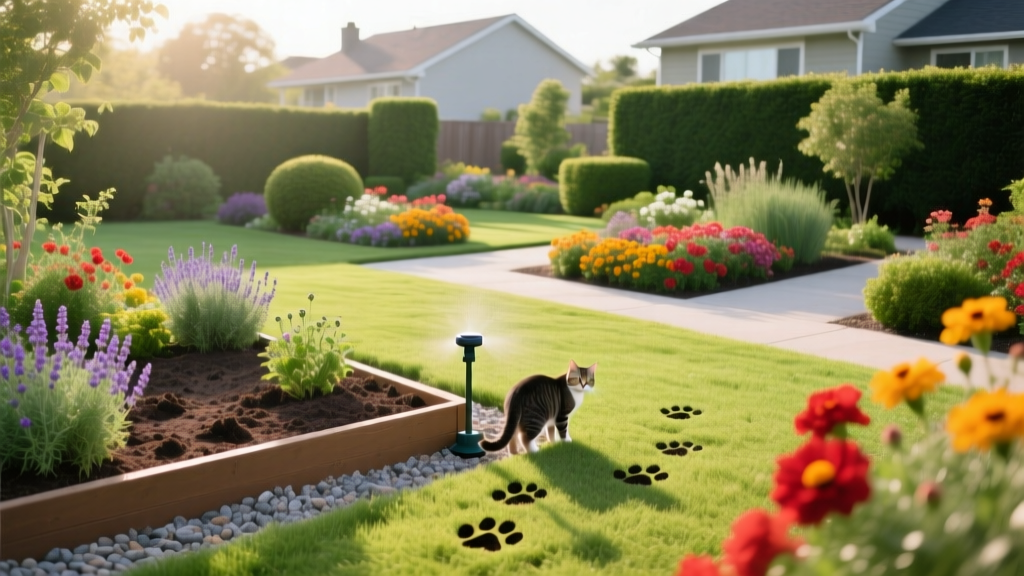
How to Deter Feral Cats From Digging in Garden Beds
Feral and community cats view freshly tilled garden beds and loose mulch as ideal, oversized litter boxes. This behavior is more than a landscaping nuisance; it introduces severe biological hazards to your soil. Feral cat feces can carry Toxoplasma gondii and Toxocara cati (roundworms), parasites that persist in soil for months and pose significant health risks to humans, particularly when handling contaminated vegetables or soil. According to the Centers for Disease Control and Prevention (CDC), environmental exposure to infected cat feces is a primary transmission vector for toxoplasmosis.
Successfully reclaiming your yard requires a multi-layered playbook. Relying on a single deterrent almost always results in habituation. This guide details the exact physical barriers, chemical repellents, and technological interventions required to make your garden inhospitable to feral felines, alongside protocols for repairing the turf damage they leave behind.
Key Data Point: A single feral cat can deposit up to 1.5 pounds of feces and over 2 gallons of urine in a residential yard per month. Cat urine contains highly concentrated urea, which causes localized nitrogen burns that kill turfgrass roots within 48 hours of contact.
Physical Barriers: The First Line of Defense
Cats are tactile creatures. They despise digging in surfaces that prick their paws or offer resistance. Physical barriers yield the highest long-term success rate because they do not degrade in the rain or require weekly reapplication.
Subsurface Wire Mesh Installation
For new or existing garden beds, lay down 1-inch hexagonal 20-gauge galvanized chicken wire just below the soil surface. Cats cannot dig through the metal, and plant roots easily grow through the 1-inch gaps.
- Installation Depth: Bury the wire 1 to 2 inches below the topsoil. If buried deeper, cats will dig above it; if placed on top, it poses a laceration risk to wildlife and pets.
- Perimeter Trenching: To prevent cats from digging under raised bed walls, extend the wire 12 inches outward from the base and bury it in an L-shape.
Surface Texture Modifications
If wire mesh is impractical for established perennial beds, alter the surface texture. Avoid fine shredded bark or cocoa mulch, which cats find comfortable.
- Plastic Spike Mats: Products like the Dalen Scat Mat feature blunt, 1-inch plastic spikes. Costing roughly $15 for a pack of five 13x13-inch panels, they can be cut to fit around plant stems and covered with a thin layer of decorative river rock to hide them.
- Holly Cuttings and Pine Cones: Prune English holly branches and lay them directly on the soil. The rigid, spiny leaves create an impenetrable, biodegradable barrier. Pine cones also work but must be packed densely (at least 3 inches deep) to prevent cats from simply pushing them aside.
Scent and Taste Repellents: Efficacy and Application Rates
Repellents target a cat's highly developed olfactory system (which contains roughly 200 million odor-sensitive cells, compared to a human's 5 million). However, efficacy varies wildly based on weather conditions and active ingredient concentrations.
| Repellent Type | Active Ingredient | Cost per 100 sq ft | Rainfastness | Reapplication |
|---|---|---|---|---|
| Commercial Liquid | Methyl nonyl ketone | $4.50 - $6.00 | Low (Washes off) | Every 3-5 days |
| Granular Spicy | Capsaicin / Piperine | $8.00 - $12.00 | Medium | Every 7-10 days |
| Predator Urine | Coyote / Fox urine | $15.00 - $20.00 | Low | Every 2 weeks |
| DIY Citrus Oil | d-Limonene (Citrus) | $1.50 - $2.50 | Very Low | Every 2-3 days |
Warning on Mothballs: Never use naphthalene or paradichlorobenzene mothballs as an outdoor cat repellent. They are highly toxic to soil biology, groundwater, and local wildlife. Using them outdoors violates EPA regulations and poses severe poisoning risks to neighborhood children and dogs.
Motion-Activated Tech: Ultrasonic and Water Deterrents
When physical barriers and scent repellents fail to break a cat's territorial habit, active deterrence is required. Motion-activated devices leverage a cat's startle response to create negative associations with specific zones of your yard.
Pressurized Water Deterrents
The Orbit 62100 Yard Enforcer (typically priced between $70 and $80) remains the gold standard for active deterrence. It uses an infrared sensor to detect body heat and motion, triggering a sharp, 5-second burst of water from a standard garden hose.
- Calibration for Felines: Cats have a low profile. Angle the sensor downward at 15 degrees and mount the unit so the sensor lens is exactly 6 to 8 inches above the ground. If mounted at standard human waist height, the infrared beam will pass directly over the cat.
- Failure Mode: In freezing temperatures (below 32°F), the water valve will freeze and rupture. You must winterize or remove the unit during cold snaps.
Ultrasonic Emitters: The Habituation Problem
Devices like the Aspectek Ultrasonic Animal Repeller ($30-$40) emit high-frequency sounds (13.5 to 45.5 kHz) intended to irritate feline hearing. While initially effective, The Humane Society of the United States notes that wildlife and feral animals quickly habituate to passive noise deterrents once they realize no physical threat follows the sound. Furthermore, older feral cats often suffer from high-frequency hearing loss, rendering ultrasonic devices completely useless against the most entrenched offenders. Use ultrasonic devices only as a temporary supplement while installing physical barriers.
Lawn Repair: Fixing Nitrogen Burns and Dig Holes
If feral cats have already damaged your turf, deterrence must be paired with immediate remediation. Cat urine burns manifest as yellow necrotic rings with a dark green, rapidly growing outer halo (caused by sub-lethal nitrogen fertilization).
- Immediate Flushing: Within 8 hours of discovering a urine spot, flood the area with 1.5 gallons of water per square foot. This dilutes the urea concentration below the root-burn threshold.
- Soil Extraction: For severe burns where the grass is dead, use a 3-inch bulb planter to extract the contaminated soil cores. Discard the soil (do not compost it).
- Reseeding with Resistant Cultivars: Fill the voids with a mix of topsoil and Festuca arundinacea (Tall Fescue). Tall Fescue possesses a deep, extensive root system and thicker leaf blades that exhibit significantly higher tolerance to nitrogen and salt spikes compared to Kentucky Bluegrass or Fine Fescues.
Frequently Asked Questions
Does planting Coleus caninus (Scaredy Cat Plant) actually work?
The efficacy of Coleus caninus is largely anecdotal. While the plant emits a skunk-like odor when its leaves are crushed or brushed, feral cats navigating through your garden will simply avoid stepping directly on the plant. It does not create an invisible perimeter, and cats will readily dig in the bare soil two feet away from it. Rely on physical barriers instead.
Should I trap and relocate the feral cats?
Relocation is widely condemned by wildlife and animal welfare experts due to the "vacuum effect." When you remove a territorial feral cat, neighboring cats will immediately migrate into the newly available territory with abundant resources. The standard recommended by the ASPCA and Humane Society is TNR (Trap-Neuter-Return). Neutered cats roam less, spray less, and fight less. Combine TNR with the physical garden barriers outlined above to protect your plants while humanely managing the population.
Will coffee grounds keep cats out of my garden beds?
Spent coffee grounds are a popular internet myth. While cats dislike the texture and mild smell, the concentration required to cover a garden bed is massive. More importantly, coffee grounds alter soil pH and can stunt the growth of certain vegetables and ornamentals. They also promote fungal growth and mold in damp climates. Stick to cedar mulch or holly cuttings for a safer, more effective organic barrier.

