
Home & Garden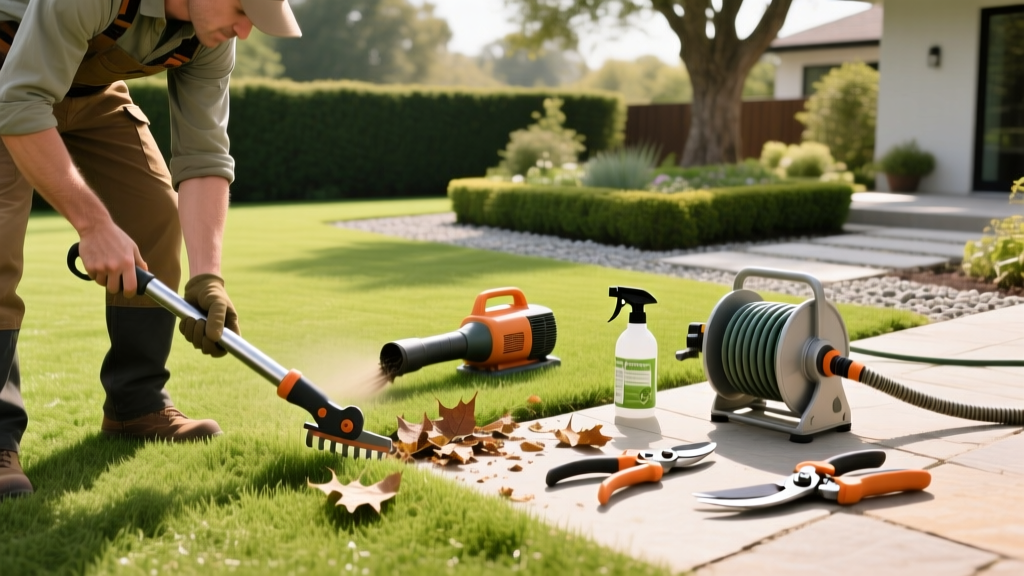
Yard Problem Diagnosis: Matching Tools for Yard Work to the Fix
Buying the wrong equipment is the most expensive mistake in landscaping. Homeowners frequently purchase heavy-duty machinery to solve problems that require precision hand tools, or worse, they use aeration equipment to fix thatch buildup—a biological impossibility. Effective yard maintenance requires accurate problem diagnosis before selecting the correct tools for yard work. This guide breaks down the exact diagnostic tests for common turf and soil failures and matches them with the specific equipment required to execute the fix.
Soil Compaction and Drainage Failures
Compacted soil suffocates turf roots by eliminating pore space, leading to water pooling, shallow root systems, and severe heat stress. Many homeowners mistake compaction for a watering issue and over-irrigate, which only worsens the anaerobic soil environment.
The Diagnostic Test: The Screwdriver Penetration Method
Do not guess if your soil is compacted. Take a standard 6-inch flathead screwdriver and push it into the lawn at three different locations during normal moisture conditions (not immediately after a heavy rain). If you cannot push the screwdriver at least 3 to 4 inches into the soil using only hand pressure, your lawn suffers from critical compaction and requires mechanical intervention.
Matched Tools for the Fix
- Small Yards (Under 2,500 sq ft): Use a manual coring tool like the Yard Butler Lawn Coring Aerator (Model ID-4). Priced around $40, this tool extracts 3.5-inch soil cores. Avoid spike aerators; they simply push soil outward, increasing lateral compaction.
- Large Yards (Over 5,000 sq ft): Tow-behind plug aerators are required. The Agri-Fab 40-Inch Plug Aerator (Model 45-0101) retails for approximately $135. Fill the weight tray with concrete blocks (up to 150 lbs) to ensure the tines penetrate deeply enough to pull 3-inch cores.
According to the University of Minnesota Extension, core aeration should be performed during active growth periods—early fall for cool-season grasses like Kentucky Bluegrass, and late spring for warm-season grasses like Bermuda.
Thatch Buildup and Turf Suffocation
Thatch is a tightly intermingled layer of living and dead stems and roots that accumulates between the green vegetation and the soil surface. A common myth is that leaving grass clippings on the lawn causes thatch; in reality, clippings decompose rapidly. Thatch is caused by the over-application of nitrogen fertilizers and the accumulation of lignin-rich stem tissue that soil microbes cannot break down quickly enough.
The Diagnostic Test: The 3-Inch Plug Extraction
Use a sharp spade or a soil probe to cut out a 3-inch deep, wedge-shaped plug of your lawn. Examine the cross-section. If the spongy, brown, root-bound layer between the green grass blades and the dark topsoil exceeds 0.5 inches in thickness, you have a thatch problem that requires mechanical removal.
Matched Tools for the Fix
Aeration does not remove thatch. You must use vertical mowing or dethatching equipment to physically slice and pull the mat to the surface.
- Moderate Thatch (0.5 to 1 inch): A manual thatching rake with sharp, curved tines, such as the Ames True Temper 15-Inch Thatching Rake ($35), is sufficient. The curved blades slice through the mat without tearing healthy turf roots.
- Severe Thatch (Over 1 inch): Rent a gas-powered vertical mower (verticutter) or purchase an electric dethatcher like the Sun Joe TJ62M 15-Amp Electric Dethatcher ($169). The Sun Joe features a 15-inch cutting deck and 24 spring-loaded tines that aggressively rip the thatch layer to the surface for bagging.
The Penn State Extension explicitly warns against dethatching during summer drought conditions, as the exposed soil will dry out rapidly and stress the newly exposed root crowns. Always dethatch when the soil is moist and the grass is actively growing.
Overgrown Brush and Invasive Root Systems
When reclaiming neglected yard edges or fighting invasive species like English Ivy or Blackberry brambles, standard pruning shears and string trimmers will fail. You must diagnose the stem thickness and root depth to select the appropriate cutting and extraction tools for yard work.
Diagnostic Framework: Stem and Root Assessment
- Stem Diameter: Measure the thickest branches. If they exceed 1.5 inches, bypass loppers will bind and crush the wood rather than cutting it.
- Root Architecture: Shallow, mat-like roots (like Ivy) require wide scraping tools. Deep taproots (like Wild Lettuce or Thistle) require narrow, deep extraction tools.
Matched Tools for the Fix
| Target Vegetation | Diagnostic Profile | Required Tool | Specific Model / Spec |
|---|---|---|---|
| Thick Woody Brush | Stems 1.5" to 2.5" diameter | Compound Action Loppers | Fiskars 32" PowerGear2 Bypass Lopper (Generates 3x cutting power) |
| Shallow Mat Roots | Ivy, Creeping Charlie, surface runners | Stirrup / Push-Pull Hoe | Rogue Hoe 70F (7-inch blade, slices roots just below soil line) |
| Deep Taproots | Dandelion, Dock, Thistle | Soil Knife / Hori Hori | AM Leonard Stainless Steel Hori Hori (Serrated edge for deep leverage) |
| Dense Brambles | Blackberry, Raspberry, multi-stem thickets | Brush Axe / Machete | True Temper 24" Brush Axe (Hooks and pulls thorny canes safely) |
Troubleshooting Tool Failures and Inefficiencies
Sometimes the problem is not the yard, but the equipment. Misdiagnosing a tool failure often leads to unnecessary replacements. Use this troubleshooting matrix to diagnose equipment issues before buying new gear.
Equipment Diagnostic Matrix
- Symptom: String trimmer line feeds but snaps immediately upon contact with grass.
Diagnosis: Using incorrect line geometry or thickness. If you are cutting thick weeds with .065-inch round line, it will snap. Upgrade to .095-inch multi-sided (square or star) line, which acts like a serrated knife and resists breakage.
Fix: Spool Oregon Gatorline .095 square trimmer line. - Symptom: Lawn mower leaves torn, frayed, white tips on grass blades instead of a clean cut.
Diagnosis: Dull mower blade tearing the tissue, which invites fungal pathogens like Dollar Spot.
Fix: Remove the blade and sharpen it using an angle grinder or file, maintaining the original 30-to-45-degree bevel angle. Balance the blade on a nail to prevent engine crankshaft vibration damage. - Symptom: Wheelbarrow pulls heavily to one side and the tire constantly deflates.
Diagnosis: Punctured inner tube or misaligned axle bracket.
Fix: Replace the pneumatic tire with a solid polyurethane foam-filled wheel (e.g., Marathon 41026 Flat-Free Tire) to permanently eliminate puncture downtime.
Ergonomic Mismatches and Physical Strain
Yard work injuries frequently stem from using tools that do not match the user's biomechanics. A tool that is too short forces spinal flexion, while a tool that is too heavy causes rotator cuff strain.
Warning: The Handle Length Rule
When standing upright and holding the tool handle parallel to the ground, the grip should rest comfortably at your waist level (roughly 36 to 40 inches from the ground for an average adult). If you must bend your elbows sharply or hunch your shoulders to use a shovel or rake, the handle is too short. Replace standard 48-inch wooden handles with 54-inch or 60-inch fiberglass D-grip handles to maintain a neutral spine posture during digging and raking.
Selecting the correct tools for yard work is entirely dependent on accurate environmental diagnostics. By testing your soil, measuring your thatch, and assessing your vegetation before opening your wallet, you ensure that every piece of equipment you purchase directly solves a verified landscape problem.

