
Home & Garden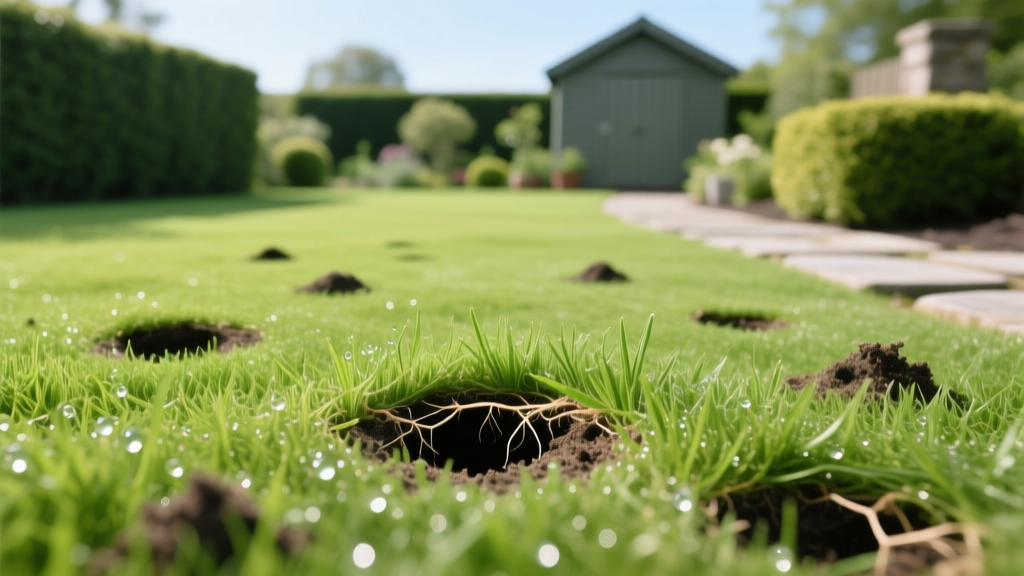
Diagnosing Holes in My Yard With No Mounds: Causes and Solutions
The Mound-less Mystery: Why Your Lawn is Pockmarked
When homeowners spot excavations in their turf, the immediate suspicion usually falls on moles or pocket gophers. However, those subterranean mammals are notorious for pushing soil to the surface, creating distinct volcano-shaped or crescent-shaped mounds. If you are finding holes in my yard with no mounds of displaced dirt around the perimeter, you are dealing with an entirely different class of excavators.
Identifying the culprit requires analyzing the hole's diameter, depth, soil condition, and surrounding turf damage. Misdiagnosing the problem leads to wasted money on inappropriate repellents. Below is a comprehensive diagnostic framework to identify the specific pest and implement targeted, ecologically sound solutions.
Warning: Do not apply broad-spectrum insecticides or toxic baits blindly. Many mound-less holes are created by beneficial pollinators or harmless foragers. Accurate identification is critical before initiating any control protocol.
Diagnostic Matrix: Hole Size and Profile
Use this matrix to match the physical characteristics of the holes in your lawn to the most likely organism. Measure the widest point of the opening with a ruler before proceeding.
| Hole Diameter | Shape & Profile | Soil Condition | Likely Culprit |
|---|---|---|---|
| 1/4 to 1/2 inch | Perfectly round, vertical shaft | Clean edges, loose granular soil nearby | Ground-Nesting Bees / Solitary Wasps |
| 1 to 1.5 inches | Round, golf-ball sized, slanted entry | Clean, often connected to hidden surface runways | Voles (Meadow Mice) |
| 2 to 3 inches | Shallow, irregular, scattered divots | Scratched soil, torn grass roots | Squirrels, Skunks, or Foraging Birds |
| Pencil-width | Tiny, erratic surface pockmarks | Small granular castings (not mounds) around rim | Earthworms |
Category 1: The Insect Excavators
Ground-Nesting Bees and Solitary Wasps
Approximately 70% of native bee species are ground-nesters. Species like Andrena (mining bees) and solitary wasps like the cicada killer (Sphecius speciosus) dig individual burrows to lay eggs. Unlike social yellowjackets, they are non-aggressive and highly beneficial for pollination and pest control.
Identification: You will see perfectly round holes, usually 1/4 to 1/2 inch wide. There may be a tiny, localized pile of loose, granular soil (not a compacted mound) next to the hole. These insects prefer dry, sandy, or compacted soil with sparse turf cover.
Solution: According to the University of Minnesota Extension, the most effective long-term deterrent is cultural, not chemical. Ground-nesters avoid thick, moist turf.
- Irrigation: Apply 1 to 1.5 inches of water per week. These insects cannot dig in saturated, cohesive soil.
- Overseeding: Thicken your lawn. A dense turf canopy with less than 5% bare soil eliminates their preferred nesting sites.
- Topdressing: Apply a 1/4-inch layer of organic compost to improve soil moisture retention and grass density.
Cicada Killers (Large Solitary Wasps)
If the hole is closer to 1 inch wide and you see large, black-and-yellow wasps hovering low over the lawn in mid-to-late summer, you have cicada killers. Despite their intimidating size, females are docile. Deterrence relies on maintaining a lush, heavily mulched, or thickly grassed landscape, as they require bare patches of loose soil to dig.
Category 2: Small Mammal Foragers
Voles (Meadow Mice)
Voles are herbivorous rodents that create extensive tunnel systems. While they often use surface runways hidden under snow or tall grass, their entry and exit holes are frequently visible in the lawn.
Identification: Holes are 1 to 1.5 inches in diameter (the size of a golf ball). Unlike mole holes, there is no mounded dirt. If you part the grass around the hole, you will likely find a cleared, 1.5-inch-wide surface runway leading away from it. The UC Statewide IPM Program notes that voles cause severe damage to tree bark and plant roots in winter.
Solution: Habitat modification and targeted trapping are the only reliable control methods.
- Clear Debris: Remove leaf piles, thick mulch, and dense groundcover within 3 feet of your lawn edge to eliminate their protective canopy.
- Trap Placement: Use standard wooden snap traps baited with a mix of peanut butter and oatmeal. Place the trap perpendicular to the runway, with the trigger facing the runway path.
- Protective Shelters: Cover the trap with a 3-inch PVC pipe or a cardboard box with a small entry hole. This prevents birds, pets, and non-target wildlife from accessing the trap.
Squirrels and Chipmunks
These rodents are notorious for digging shallow holes to retrieve cached acorns and nuts, or to bury new ones.
Identification: Holes are 2 to 3 inches wide but rarely deeper than 3 inches. They are scattered randomly across the yard, and the excavated dirt is usually scratched loosely to the side rather than pushed up in a mound.
Solution: Repellents and physical barriers are required. Capsaicin-based liquid repellents (containing at least 0.05% capsaicin) sprayed directly on the soil surface can deter digging for 2 to 3 weeks. Reapply after heavy rainfall. If you are planting spring bulbs, lay a 1/2-inch galvanized hardware cloth over the planting bed before covering with 2 inches of topsoil; squirrels cannot dig through the steel mesh.
Category 3: Avian and Invertebrate Foraging
Birds Hunting for Grubs
Crows, starlings, robins, and skunks will tear up a lawn to feed on white grubs (the larvae of Japanese beetles and June bugs).
Identification: The holes are irregular, 2 to 4 inches deep, and often accompanied by large, torn flaps of sod. The edges look scratched or pecked, not smoothly excavated.
Solution: You must eliminate the food source. Treating the birds or the symptom is ineffective. The Penn State Extension recommends biological control using beneficial nematodes.
Pro Protocol for Nematode Application: Purchase Heterorhabditis bacteriophora (Hb) nematodes. Apply at a rate of 1 billion per acre (approx. 23,000 per square foot) in the late afternoon to avoid UV degradation. Irrigate the lawn with 1/4 inch of water immediately after application to wash the nematodes into the soil profile where the grubs reside.
Earthworms (The Beneficial Engineers)
If the holes are the size of a pencil lead and surrounded by tiny, granular pellets of soil (castings), you have a thriving earthworm population. This is a sign of excellent soil health. Earthworm castings provide highly bioavailable nitrogen, phosphorus, and calcium to your turf. Do not treat this issue; simply mow the lawn when the grass is dry to disperse the castings evenly across the turf canopy.
Lawn Repair and Remediation Protocol
Once the underlying pest or foraging issue is managed, the physical holes must be repaired to prevent weed invasion and tripping hazards. Follow this exact procedure for a seamless repair:
Step 1: Prepare the Cavity
Use a hand trowel to break up the compacted sidewalls of the hole. If the hole was caused by voles or grubs, collapse any remaining subterranean tunnels by stepping firmly on the adjacent soil.
Step 2: Mix the Repair Medium
Do not use pure topsoil, which will compact and sink over time. Mix a 70/30 blend of coarse washed sand and screened organic compost. The sand provides structural stability and drainage, while the compost retains moisture for seed germination.
Step 3: Fill and Tamp
Fill the hole with the sand-compost mix until it is level with the surrounding soil surface. Tamp it down gently with the back of a rake or your foot. Leave the fill exactly 1/8 inch below the surrounding grass blades to allow for settling.
Step 4: Seed and Protect
Sprinkle 10 to 15 grass seeds over the repaired spot, matching your existing turf type (e.g., Kentucky Bluegrass, Tall Fescue, or Bermuda). Lightly dust the seeds with a remaining pinch of compost. Keep the spot consistently moist (watering lightly twice daily) for 14 days until germination is complete.
Frequently Asked Questions
Can crayfish cause holes without mounds?
No. Crayfish require high water tables and typically build distinct, mud-chimney mounds (2 to 4 inches tall) around their burrow entrances in wet, poorly drained areas of the yard.
Is pouring ammonia or bleach into the holes an effective deterrent?
No. Pouring household chemicals into the soil is illegal in many jurisdictions, harms soil microbiology, kills beneficial earthworms, and rarely reaches the depth required to deter deep-burrowing mammals. Stick to targeted trapping and cultural lawn modifications.
Why do the holes keep reappearing in the exact same spot every spring?
Many solitary bees and wasps exhibit high site fidelity, returning to the exact same patch of bare, well-draining soil year after year to nest. Breaking the cycle requires permanently altering the soil structure by topdressing with clay-heavy loam or establishing a dense, shade-producing turf canopy over that specific zone.