
Home & Garden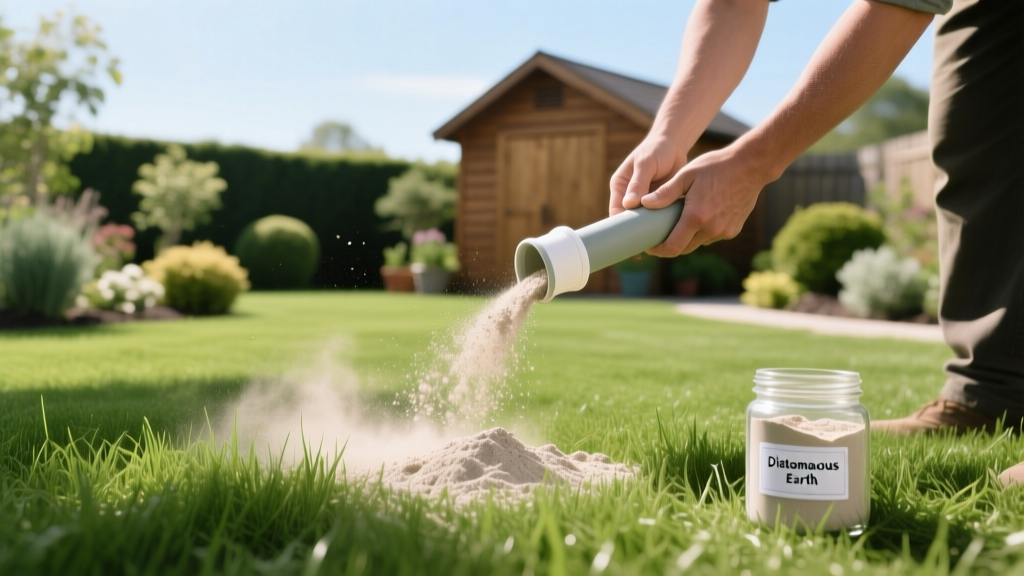
Using Diatomaceous Earth for Yard Pest Control: A Beginner Guide
The Mechanics of Diatomaceous Earth: How It Actually Works
Diatomaceous earth (DE) is not a chemical poison; it is a mechanical insecticide. Mined from the fossilized remains of aquatic organisms called diatoms, this powdery substance is composed primarily of amorphous silicon dioxide. Under a microscope, DE particles look like shards of broken glass. When crawling insects with exoskeletons—such as ants, earwigs, and fleas—walk across it, the microscopic shards scratch their waxy outer cuticle. This damage causes the insect to lose its ability to retain moisture, leading to fatal desiccation within 24 to 72 hours.
Because it relies on physical destruction rather than chemical toxicity, insects cannot develop a genetic resistance to DE. However, its effectiveness in an outdoor yard environment hinges entirely on proper application techniques, moisture management, and selecting the correct product grade.
⚠️ Critical Safety Warning: Food Grade vs. Filter Grade
Never use pool-grade or filter-grade DE in your yard. Filter-grade DE is heat-treated (calcined), which converts the amorphous silica into crystalline silica. Inhaling crystalline silica causes severe, irreversible lung damage (silicosis). Always purchase products explicitly labeled as Food Grade or Feed Grade, which contain less than 1% crystalline silica. Even with food-grade DE, the fine particulate matter is a respiratory irritant. Always wear an NIOSH-approved N95 respirator and safety goggles during dry application.
Target Pests: What DE Will (and Won't) Kill
DE is highly effective against soft-bodied crawling insects and arachnids, but it is not a universal yard solution. It requires the insect to physically contact the dry powder. According to the University of California Statewide Integrated Pest Management Program (UC IPM), DE is best utilized as a targeted barrier rather than a broadcast lawn treatment.
| Target Pest | Effectiveness | Optimal Application Zone |
|---|---|---|
| Carpenter & Fire Ants | High | Directly on mound perimeters and entry trails |
| Fleas & Ticks | Moderate to High | Dry, shaded soil areas and pet resting zones |
| Slugs & Snails | Moderate | Thick rings around plant bases (requires dry weather) |
| Earwigs & Roaches | High | Foundation perimeters and mulch bed edges |
| Caterpillars & Worms | Low / Ineffective | N/A (Mucus coating protects them from desiccation) |
The Dry Application Method: Step-by-Step
The most common mistake beginners make is applying DE too heavily. A thick, snow-like pile of powder is easily blown away by wind and acts as a physical barrier that insects will simply walk around. The goal is a microscopic, barely visible dusting.
- Prep the Zone: Mow the lawn and clear away wet leaves or dense thatch from the target area. DE must contact the soil surface or the plant base to be effective.
- Check the Forecast: Only apply when you have a minimum 48-hour window of dry weather. Heavy dew, sprinkler runoff, or rain will instantly neutralize the powder's desiccating properties.
- Gear Up: Put on your N95 mask, safety glasses, and gardening gloves.
- Apply Thinly: Using a handheld bellows duster or a shaker can, apply 1 to 2 pounds of DE per 1,000 square feet. You should be able to see the green grass or brown soil through the dusting.
- Target the Micro-Habitats: Focus on cracks in patio pavers, the base of tree trunks, and the underside of low-lying foliage where crawling insects harbor during the day.
The Slurry Hack: Overcoming Wind and Moisture
Outdoor environments are unpredictable. Wind can scatter dry DE immediately, and morning dew can render it useless before the sun dries it out. For perimeter treatments and garden bed borders, professional organic landscapers often use a wet application (slurry) method.
💡 Pro Tip: The DE Slurry Recipe
Mix 4 tablespoons (1/4 cup) of Food Grade DE per 1 gallon of water in a pump sprayer. Shake the sprayer vigorously every 2 minutes—DE does not dissolve in water; it remains in suspension. Spray the mixture directly onto plant stems, foundation walls, and soil borders. While it looks messy and white when wet, it will dry into a tightly adhered, microscopic film that resists light winds and stays in place far longer than dry dust.
Top Recommended DE Products for Outdoor Use
When shopping for DE, ignore marketing buzzwords and look at the active ingredient label. You want 100% diatomaceous earth (amorphous silicon dioxide) with no added chemical synergists.
- Harris Food Grade Diatomaceous Earth (4 lb bag): Priced around $18-$22. This is the industry standard for homeowners. It includes a proprietary stainless steel duster that prevents the powder from clumping, which is a common issue with cheaper plastic dusters.
- Bonide Crawling Insect Killer (4 lb shaker): Priced around $15-$18. Formulated specifically for yard perimeters, the omni-directional shaker lid makes it easy to apply into tight cracks along home foundations without bending over.
- DE Store Feed Grade (50 lb bulk bag): Priced around $45-$55. Ideal for large rural properties, acreage, or extensive livestock fencing where you need to treat massive perimeter distances for fleas and ticks.
Protecting Pollinators and Beneficial Insects
While DE is non-toxic to mammals and birds, it is a mechanical hazard to beneficial insects, including bees and ladybugs, if they come into direct contact with it while it is wet or freshly applied. The National Pesticide Information Center (NPIC) notes that DE poses a high risk to bees if applied directly to blooming flowers.
"To minimize harm to pollinators, never apply diatomaceous earth to the open blossoms of flowering plants. Apply DE at the base of the plant, in soil cracks, or in the late evening when bees and butterflies have returned to their hives and are no longer foraging."
Frequently Asked Questions
Does diatomaceous earth lose its effectiveness over time?
DE does not expire or lose its mechanical killing power as long as it is kept dry. If stored in a sealed, moisture-proof bucket in your garage, a bag of DE will remain effective indefinitely. However, once applied outdoors, it must be reapplied after every heavy rain or significant irrigation event.
Is it safe for my dogs and cats to walk on treated grass?
Yes. Food-grade DE is completely non-toxic to pets and is actually used as an anti-caking agent in commercial pet foods. Once the initial dust has settled (usually 30 minutes after application), it is perfectly safe for pets to walk, roll, and play on the treated areas. Just ensure they do not inhale the dust cloud during the actual application process.
Can I mix DE with other organic pesticides?
You can mix DE with water-based organic sprays like Neem oil or insecticidal soaps using the slurry method. However, do not mix DE with liquid chemical fertilizers or heavy oil-based horticultural oils, as these will coat the microscopic silica shards, blunting their sharp edges and rendering the DE mechanically useless.

