
Home & Garden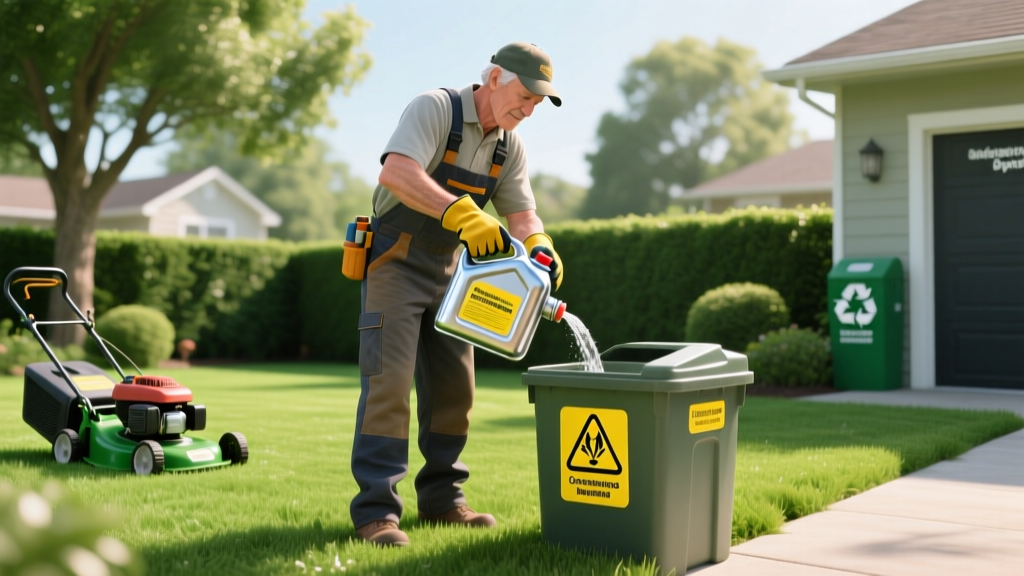
Where Can I Dispose of Old Gasoline From Lawn Equipment Safely?
The Hidden Cost of Stale Fuel in Small Engines
Modern gasoline degrades rapidly. Thanks to the ethanol mandated in most U.S. fuel supplies (E10 and E15), the shelf life of standard pump gas has shrunk to just 30 to 60 days. When left sitting in a lawn mower, string trimmer, or snow blower carburetor over the winter, the fuel undergoes a destructive process called phase separation. Ethanol is hygroscopic—meaning it absorbs moisture from the air. Once the fuel absorbs enough water (roughly 0.5% by volume), the ethanol and water detach from the gasoline and sink to the bottom of the tank.
When you pull the starter cord in the spring, the engine draws this corrosive water-ethanol sludge directly into the carburetor, leading to hydro-lock, ruined gaskets, and severe internal corrosion. If your equipment has been sitting with untreated fuel for more than three months, you must drain it. But because gasoline is a highly flammable, environmentally toxic hazardous waste, you cannot simply throw it in the trash or pour it down a drain. Here is exactly where and how to dispose of old gasoline from your lawn equipment safely and legally.
How to Confirm Your Gasoline Has Gone Bad
Before hauling fuel to a disposal center, verify that it actually needs to be discarded. Drain a small sample from the bottom of the mower tank (where water settles) into a clear glass jar and perform these three sensory checks:
- The Smell Test: Fresh gasoline has a sharp, distinct chemical odor. Degraded gasoline smells sour, pungent, and remarkably similar to old varnish or paint thinner. This sour smell indicates the volatile hydrocarbons have evaporated, leaving behind heavy, gummy resins.
- The Visual Test: Hold the glass jar up to natural light. Fresh gas is mostly clear with a slight yellow or greenish tint (depending on the dye). Bad gas appears dark amber, cloudy, or murky. If you see distinct layers or water droplets at the bottom, phase separation has occurred.
- The Particle Check: Look for floating black specks or a thick, sludge-like coating at the bottom of the jar. This is oxidized fuel varnish that will instantly clog your carburetor jets and fuel filter.
Where Can I Dispose of Old Gasoline?
Finding a legal disposal site requires locating a facility equipped to handle Household Hazardous Waste (HHW). According to the U.S. Environmental Protection Agency (EPA), local municipalities are responsible for providing HHW collection services to residents. Here are your primary options:
| Disposal Method | Estimated Cost | Convenience Level | Best Used For |
|---|---|---|---|
| County HHW Facility | Free (usually) | Medium (requires driving) | Standard 1 to 5-gallon gas jugs |
| Community Collection Events | Free | Low (happens 1-2 times a year) | Seasonal spring/fall cleanup |
| Private Transfer Stations | $5 to $15 per container | High (open daily) | Urgent disposal needs |
| Local Fire Departments | Free | Low (many no longer accept it) | Rural areas without HHW centers |
To find the nearest drop-off location, use the Earth911 recycling locator. Simply enter "gasoline" and your zip code to find verified municipal and private facilities in your area. Always call the facility ahead of time to confirm their current acceptance policies, operating hours, and container limits.
⚠️ CRITICAL WARNING: Illegal Dumping Penalties
Never pour old gasoline down storm drains, sanitary sewers, onto the ground, or into bodies of water. Under the federal Clean Water Act, illegal dumping of petroleum products can result in fines exceeding $25,000 per day, plus the cost of environmental remediation. Furthermore, pouring gas into household trash cans creates a severe explosion risk for sanitation workers when the fuel vapor mixes with air and heat in the garbage truck compactor.
Step-by-Step Guide to Transporting Old Gas Safely
Transporting degraded fuel to a disposal site carries inherent fire and spill risks. The Department of Transportation (DOT) and the National Fire Protection Association (NFPA) enforce strict limits on how civilians can transport gasoline in personal vehicles.
1. Use Approved Safety Containers
Do not transport old gas in milk jugs, glass bottles, or cracked plastic containers. You must use an EPA and CARB-compliant safety can. Look for heavy-duty, DOT-approved containers from brands like Eagle Manufacturing or SafeCan. These feature flame arrestors (wire mesh screens in the spout) that prevent external sparks from igniting vapors inside the can, and pressure-relief valves that prevent bursting in hot vehicle trunks.
2. Observe Volume Limits
Civilian drivers are legally restricted to transporting a maximum of 60 gallons of gasoline total, divided into containers no larger than 5 gallons each. For most lawn care disposal tasks, a single 2.5-gallon or 5-gallon jug is more than sufficient.
3. Secure and Ventilate the Vehicle
Never transport gasoline in the trunk of a sedan or the enclosed cabin of an SUV where vapors can accumulate and ignite from a static spark. Transport the container in the bed of a pickup truck or on an open utility trailer. If you must use an SUV, place the container on a spill-containment mat, strap it down to prevent tipping, and keep the rear windows rolled down for continuous cross-ventilation.
Can You Salvage or Recondition Stale Gasoline?
Before paying to dispose of the fuel, determine if it can be saved. Standard fuel stabilizers (like STA-BIL) are designed to prevent degradation; they cannot reverse it once the gas has turned to varnish. However, if the gas is only slightly stale, you can recondition it using specialized restorative treatments.
The Reconditioning Decision Matrix
- Less than 4 months old, clear color, slight sour smell: Salvageable. Add a restorative fuel treatment like PRI-G (Petroleum Research International), which is widely used by marine mechanics to restore degraded hydrocarbons. Mix the treated old gas with fresh, premium non-ethanol gas at a strict 1:5 ratio (one part old gas to five parts fresh gas) and use it in a high-consumption vehicle like a truck, not a small engine.
- 4 to 8 months old, slightly dark but no water layer: Borderline. Use only in heavy-duty 4-stroke engines (like a riding mower or truck) mixed at a 1:10 ratio with fresh fuel and a double dose of Sea Foam Motor Treatment to clean the resulting carbon deposits.
- Over 8 months old, cloudy, or phase-separated (water at bottom): Unsalvageable. The chemical bonds are permanently broken. Dispose of it immediately at an HHW facility.
Preventing Gas from Going Bad in the First Place
The most cost-effective way to deal with old gasoline is to avoid creating it. Small engine mechanics universally recommend two strategies to protect your lawn equipment during off-season storage:
Switch to Canned Ethanol-Free Fuel
Products like TruFuel 4-Cycle or VP Small Engine Fuel are synthetic, ethanol-free, and pre-mixed with high-grade stabilizers. While expensive (roughly $22 to $28 per gallon), they boast a shelf life of up to five years in an opened container and ten years sealed. Using TruFuel in your final tank of the season ensures the carburetor is coated in clean, stable fuel that will fire instantly the following spring.
Use the Right Stabilizer at the Right Time
If you prefer using standard pump gas, you must add a stabilizer like STA-BIL 360° Protection before the fuel begins to degrade. Add the stabilizer to your gas can immediately upon returning from the pump, not when you winterize the mower months later. Run the engine for 10 minutes after filling the tank to ensure the treated fuel completely replaces the untreated fuel inside the carburetor bowl and fuel lines.
Frequently Asked Questions
Does AutoZone or Advance Auto Parts accept old gasoline?
Generally, no. Major auto parts retailers do not have the hazardous waste infrastructure to accept liquid fuel from consumers. Some independent, locally-owned small engine repair shops may accept small quantities of old gas for their own waste-stream disposal, but you must call and ask for permission first.
Can I just let the old gas evaporate in the sun?
No. Allowing gasoline to evaporate outdoors releases volatile organic compounds (VOCs) and benzene—a known carcinogen—into the atmosphere. It also leaves behind a highly flammable, sticky varnish residue that is difficult to clean and poses a lingering fire hazard.
What do I do with the empty gas can?
Once the liquid is disposed of, leave the cap off the empty container and let it air-dry outdoors in a well-ventilated, shaded area away from ignition sources. Once the interior is completely dry and the fumes have dissipated, check your local municipal guidelines; many cities allow empty, dried-out plastic fuel containers to be placed in standard recycling bins.