
Home & Garden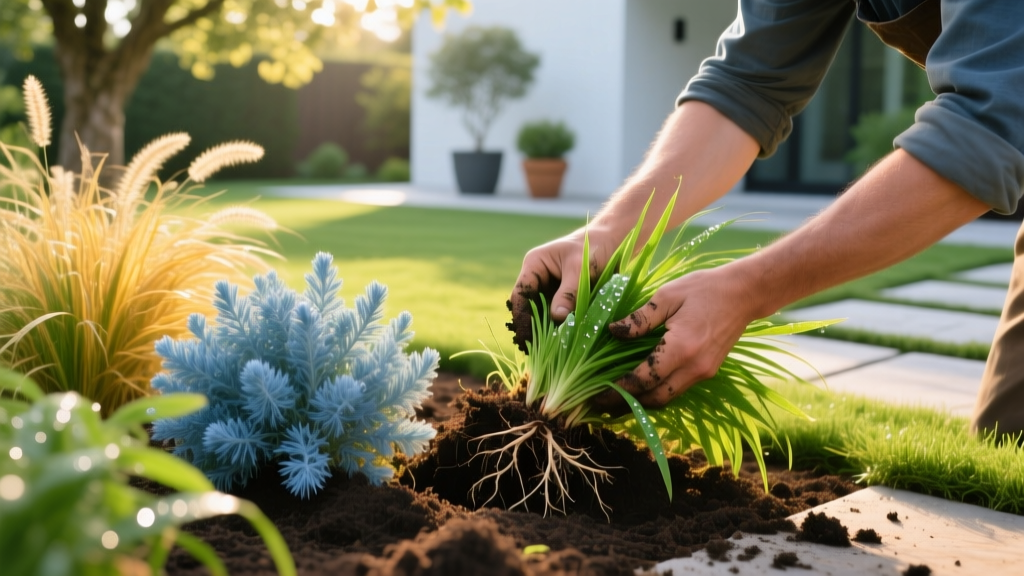
How to Divide and Transplant Overgrown Ornamental Grasses
The Biology of the 'Donut Effect' in Perennial Grasses
Ornamental grasses like Miscanthus sinensis (Maiden grass) and Pennisetum alopecuroides (Fountain grass) typically thrive for three to five years before their center crowns die out. As the outer rhizomes expand, the original center becomes a dense, impermeable mass of dead tissue that chokes new growth and blocks water infiltration. This creates the classic 'donut effect'—a ring of vibrant green foliage surrounding a barren, brown center. Dividing the root ball is not just a cosmetic fix; it is a biological necessity to restore vigorous nutrient uptake and prevent fungal crown rot.
Decision Matrix: Is Your Grass Ready to Divide?
Timing the division correctly is critical. Dividing warm-season grasses too early in cold, wet soil invites Pythium root rot. Use the table below to determine the exact soil temperature and seasonal window for your specific species.
| Grass Species | Growth Habit | Ideal Division Season | Target Soil Temperature |
|---|---|---|---|
| Miscanthus sinensis | Warm-season | Mid-to-Late Spring | 55°F - 60°F |
| Pennisetum alopecuroides | Warm-season | Mid-to-Late Spring | 55°F - 60°F |
| Calamagrostis acutiflora | Cool-season | Early Spring or Early Fall | 50°F - 55°F |
| Festuca glauca (Blue Fescue) | Cool-season | Early Spring | 45°F - 50°F |
| Hakonechloa macra | Cool-season | Early Spring | 50°F - 55°F |
Required Tool Loadout
Standard garden spades will bend or snap when confronted with a mature, 5-year-old grass root ball. Assemble the following heavy-duty tools before breaking ground:
- 14-Inch Trenching Spade: Look for a forged steel blade with a straight edge (e.g., Fiskars Super Duper Digging Shovel, approx. $45). The narrow blade reduces soil friction.
- 3-Pound Splitting Maul or Forged Axe: Necessary for splitting the woody center crowns of large Miscanthus clumps.
- Pruning Saw (14-inch curved blade): For sawing through thick, fibrous surface roots that resist the spade.
- Tarp (6x8 feet, heavy-duty poly): Essential for dragging the heavy root sections without tearing the outer fibrous sheath.
- Soil Amendment: A mycorrhizal-inoculated starter fertilizer like Espoma Bio-tone Starter Plus (4-3-3 NPK) to accelerate root hair regeneration.
Step-by-Step Division and Transplant Execution
Step 1: Pre-Hydration and Top-Growth Reduction
Forty-eight hours before division, deeply water the grass clump to soften the surrounding soil matrix. On the day of division, use hedge shears to cut the dead winter top-growth down to 4 inches above the crown. This eliminates leverage that can tear the root ball and provides clear visibility of the base.
Step 2: Trenching the Perimeter
Measure 2 inches outward from the visible base of the grass (the drip line of the crown, not the foliage). Drive the trenching spade straight down at a 90-degree angle to a depth of 10 to 12 inches. Overlap each spade thrust to create a continuous trench completely encircling the plant. Rock the spade handle inward to break the deep taproots.
Step 3: Sectioning the Root Ball
Lever the entire root ball out of the trench and onto your tarp. Inspect the base. You will see a clear demarcation between the healthy, white-tipped outer roots and the dark, spongy dead center.
Expert Tip: Never attempt to salvage the dead center core. It lacks viable meristematic tissue and will only harbor pathogens in the new planting hole. Discard or compost the center mass.Using the splitting maul, drive the blade through the healthy outer ring, cutting the clump into 4-to-6-inch wide wedges. Each wedge must contain at least 3 to 5 active growth buds (eyes) and a robust network of fibrous feeder roots.
Step 4: Replanting and Grade Adjustment
Dig the new planting holes twice the width of the divided wedge, but no deeper than the original root ball height. According to Clemson University Extension, planting ornamental grasses too deep is the leading cause of post-transplant crown rot. Place the wedge in the hole so the top of the root crown sits exactly 0.5 inches above the surrounding soil grade. This prevents water from pooling against the stem base. Backfill with native soil mixed with 2 cups of the 4-3-3 mycorrhizal starter fertilizer. Tamp gently to eliminate large air pockets, but do not compact the soil.
Post-Transplant Care Schedule
Divided grasses experience severe root shock and rely entirely on stored carbohydrates until new feeder roots establish. Follow this strict 30-day protocol:
- Days 1-3: Water deeply to field capacity (approx. 1.5 inches of water). The soil should be moist but not saturated.
- Days 4-14: Water every 3 days. Monitor the foliage; slight wilting in the afternoon is normal, but morning wilting indicates critical moisture deficit.
- Days 15-30: Transition to a standard 1-inch per week watering schedule. Research from Penn State Extension highlights that withholding high-nitrogen synthetic fertilizers during this window forces the plant to prioritize root development over premature, weak top-growth.
Troubleshooting Common Failure Modes
If your transplanted grasses fail to thrive, diagnose the issue using these specific failure indicators:
- Symptom: Foliage turns pale yellow and base feels mushy.
Cause: Crown planted below grade or soil drainage is insufficient.
Fix: Carefully lift the clump, add 2 inches of coarse sand to the hole base, and replant 0.5 inches above grade. - Symptom: Outer edges of the foliage brown and crisp within 5 days.
Cause: Wind desiccation combined with root loss.
Fix: Erect a temporary burlap windbreak on the prevailing wind side and apply a 2-inch layer of shredded hardwood mulch (kept 2 inches away from the crown) to retain soil moisture. - Symptom: Zero new growth after 4 weeks in warm soil.
Cause: Divided too late in the season or division pieces were too small (lacking sufficient carbohydrate reserves).
Fix: Perform a 'scratch test' on the crown base. If the tissue beneath the surface is green, continue watering. If brown and brittle, the division has failed and must be replaced.
By executing precise cuts, respecting soil temperature thresholds, and managing the planting grade, you will successfully multiply your ornamental grass inventory while restoring the architectural vitality of your landscape beds.