
Home & Garden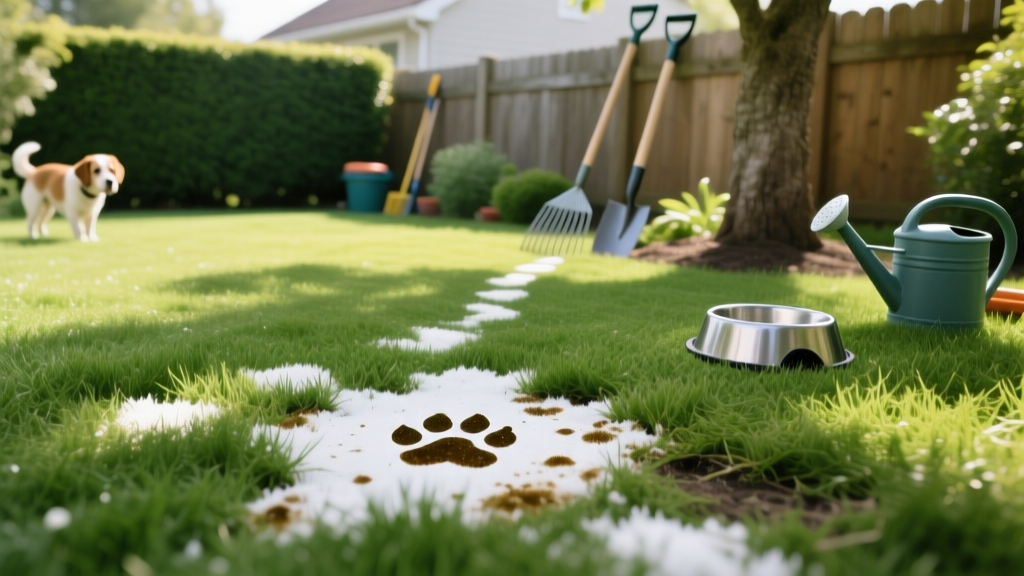
Dog Urine with White Spots on Lawns: Diagnosis and Fixes
The Science Behind Dog Urine with White Spots
Most homeowners are familiar with the classic "dog spot" on a lawn: a dead brown center surrounded by a lush, dark green ring of accelerated growth. However, encountering dog urine with white spots or bleached, papery centers indicates a more severe chemical reaction occurring at the soil and tissue level. When the white symptom appears, it is rarely a simple nitrogen burn; it is a combination of extreme osmotic shock, uric acid crystallization, and localized pH disruption.
A medium-sized dog excretes roughly 15 to 30 grams of nitrogen per day in their urine. When deposited in a concentrated 6-inch diameter area, this translates to an application rate exceeding 15 lbs of nitrogen per 1,000 square feet in a single dose. According to turfgrass researchers at Penn State Extension, this massive nitrogen overload causes rapid osmotic shock. The grass cells lose water so quickly that chlorophyll degrades before the tissue can undergo standard necrosis (browning), leaving a bleached, white center. Furthermore, as the liquid evaporates, uric acid and calcium oxalate salts precipitate out of the urine, leaving a visible white, crusty residue on the grass blades and soil surface.
Diagnostic Matrix: Identifying Your White Spot Type
Before applying any rescue treatments, you must accurately diagnose the specific type of white damage. Misidentifying a fungal infection as a salt burn will lead to wasted time and further turf decline.
| Symptom Profile | Primary Cause | Tactile Test | Required Rescue Action |
|---|---|---|---|
| Bleached, papery white center with green halo | Extreme Nitrogen Osmotic Shock | Dry, brittle, crumbles when pinched | Deep flush & immediate overseeding |
| White crusty/powdery residue on blades | Uric Acid & Mineral Salt Crystallization | Gritty, leaves white dust on fingers | Surfactant wash & Gypsum application |
| White fuzzy webbing or halo edges | Secondary Powdery Mildew or Snow Mold | Damp, web-like, wipes off as smudge | Fungicide treatment & core aeration |
Phase 1: The 8-Hour Flush and Salt Displacement Protocol
If you catch the dog in the act, the clock starts immediately. You have an 8-hour window before the urea converts to ammonia and begins burning the root zone. However, if the white spots and crusty residue have already formed, a standard watering won't suffice. You must displace the bonded salts.
Step 1: The Surfactant Flush
Uric acid is not highly water-soluble. To break the surface tension and lift the white salt crusts off the grass blades, mix 1 ounce of liquid humic acid or a non-ionic agricultural surfactant (like Scotts Turf Builder Wetting Agent) into 2 gallons of water. Pour this directly over the white spots. The surfactant breaks the waxy cuticle of the damaged grass, allowing the water to penetrate the hydrophobic salt crust.
Step 2: Calcium Sulfate (Gypsum) Application
Flushing with water alone can push sodium and uric salts deeper into the root zone, where they will continue to inhibit water uptake. You must use a cation exchange process to displace them. Apply Calcium Sulfate Dihydrate (Gypsum) at a rate of 40 to 50 lbs per 1,000 square feet. Products like Espoma Organic Traditions Garden Gypsum (approx. $15 for a 4-lb box, or $30 for a 40-lb bag) are ideal. The calcium ions bind to the toxic salts, forming soluble compounds that can be safely flushed below the root zone without altering the soil's pH.
Phase 2: Soil pH Correction and Rescue Overseeding
Dog urine typically has a pH between 6.0 and 6.5, but the nitrification process (where soil bacteria convert urea to nitrate) releases hydrogen ions, creating localized acidity. This acidic micro-environment prevents new grass seed from germinating, even if the nitrogen levels have dropped.
Neutralizing the Micro-Zone
Do not use standard agricultural lime (calcium carbonate) for spot treatments, as it reacts too slowly and requires soil incorporation. Instead, use Fast-Acting Pelletized Lime or Wood Ash (applied at a very light dusting of 1 cup per 10 sq ft) to rapidly neutralize the acidic urine pocket. Wait 48 hours after liming before introducing new seed.
Selecting the Right Rescue Seed
For spot repairs, avoid slow-growing Kentucky Bluegrass, which takes 21-28 days to germinate and will be outcompeted by weeds in the nitrogen-rich urine pocket. The American Kennel Club notes that high-traffic areas require rapid establishment. Use Perennial Ryegrass (Lolium perenne) or a Tall Fescue blend. Ryegrass germinates in 5 to 7 days and has a high tolerance for the residual nitrogen left behind by dog urine.
- Scarify the Spot: Use a hand cultivator to scratch the top 1/4 inch of the bleached soil. Remove the dead, white papery tissue.
- Seed Drop: Apply ryegrass seed at a rate of 8-10 seeds per square inch.
- Top Dress: Cover with 1/8 inch of peat moss or compost to retain moisture and hide the seed from birds.
- Hydrate: Water lightly 3 times a day for 5 minutes each session until germination occurs.
Myth Buster: The Tomato Juice & Apple Cider Vinegar Fallacy
A pervasive internet myth suggests that feeding dogs tomato juice, apple cider vinegar, or vitamin C will acidify their urine and prevent lawn burns. This is scientifically false. The damage is caused by the nitrogen concentration, not the pH of the urine. Altering your dog's dietary pH can actually lead to severe veterinary issues, including calcium oxalate bladder stones. The only effective dietary intervention is increasing the dog's water intake to naturally dilute the nitrogen concentration in their urine.
Hardscape Rescue: Removing White Uric Acid Etching
Dog urine with white spots isn't limited to grass. When dogs urinate on concrete patios, limestone pavers, or stamped concrete, the uric acid and alkaline salts react with the calcium carbonate in the masonry. This leaves permanent-looking white, chalky etch marks that cannot be washed away with a standard hose.
- For Concrete & Pavers: Use an enzymatic cleaner specifically designed for outdoor uric acid, such as Simple Green Outdoor Odor Eliminator or Nature's Miracle Yard & Lawn Spray. These contain uricase enzymes that break the chemical bonds of the white crystals.
- For Natural Stone (Limestone/Travertine): Avoid acidic cleaners like vinegar, which will worsen the etching. Use a specialized stone poultice (like StoneTech Restore) to draw the mineral salts out of the porous stone matrix.
- Preventative Sealing: Once the white spots are removed, apply a penetrating silane/siloxane concrete sealer (e.g., RadonSeal Clear Penetrating Concrete Sealer, approx. $45/gallon). This fills the microscopic pores, preventing future urine from penetrating and crystallizing inside the stone.
Long-Term Yard Management and Design
If your lawn is suffering from chronic white spot damage, behavioral and landscape modifications are more effective than constant chemical rescue missions.
Establish a Designated Potty Zone
Train your dog to use a specific area of the yard covered in materials that are immune to nitrogen burn and do not show white salt residue. The best substrates include:
- Pea Gravel (3/8 inch): Allows urine to drain rapidly into the sub-soil, diluting before it can pool and crystallize.
- Cedar Mulch: Naturally masks odors and breaks down slowly. Avoid cocoa bean mulch, which is highly toxic to dogs if ingested.
- Artificial Turf with Zeolite Infill: Zeolite is a natural volcanic mineral that absorbs ammonia and nitrogen, preventing the white crust and odor associated with synthetic lawns.
Hydration Stations
The most practical way to reduce the nitrogen concentration in your dog's urine is to increase their water intake. Place multiple outdoor water bowls around the yard, and consider adding a low-sodium bone broth to their water during the hot summer months when urine is naturally more concentrated due to dehydration. By diluting the source, you eliminate the osmotic shock that causes the white, bleached spots on your turf.