
Home & Garden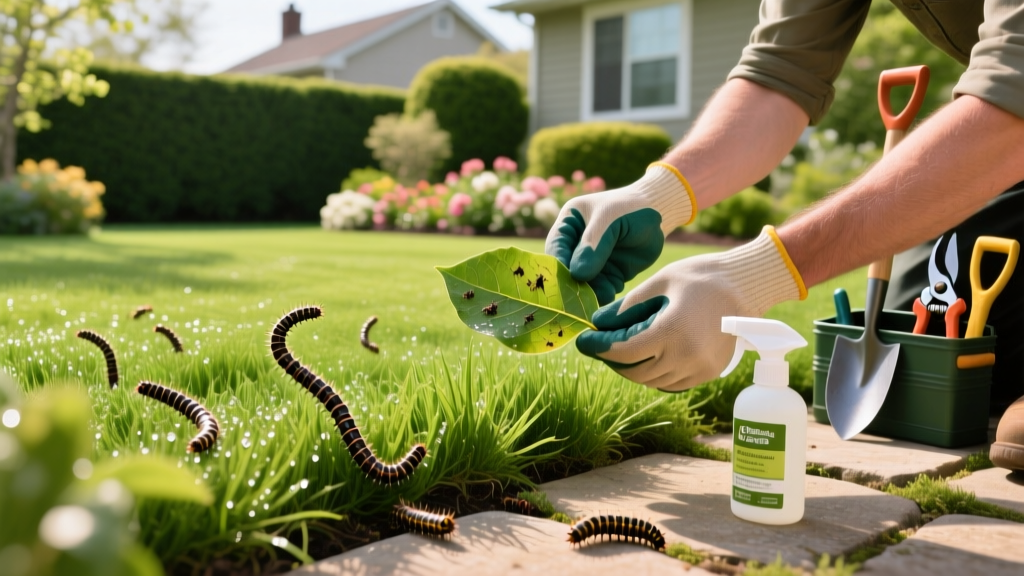
How to Eliminate Moths in Yard and Stop Destructive Lawn Caterpillars
Seeing a swarm of moths in yard spaces at dusk is a common summer occurrence, but it is rarely just a nuisance. While adult moths do not consume turfgrass or ornamental plants, their presence indicates active egg-laying. The real threat to your landscape comes from their larvae—specifically sod webworms (Crambus spp.), armyworms (Spodoptera spp.), and cutworms. These caterpillars chew through grass blades at the soil line, leaving behind irregular brown patches that mimic drought stress or fungal disease.
Effective yard defense requires shifting your focus from the flying adults to the subterranean and thatch-dwelling larvae, utilizing precise diagnostic tests and targeted biological interventions before resorting to broad-spectrum chemicals.
The Real Threat: Why Moths in Yard Mean Lawn Damage
Adult sod webworms are small, tan or gray moths with a wingspan of about one inch. When at rest, they hold their wings tightly against their bodies, giving them a distinct cigar-like shape. According to the University of Minnesota Extension, these moths fly in short, erratic zig-zag patterns just above the turf canopy at twilight to drop eggs. A single female can lay up to 200 eggs over her brief two-week lifespan.
Identification Callout: The Dusk Flight Pattern
If you notice small, pale moths fluttering low over your lawn when you turn on the porch light or mow in the early evening, you are likely disturbing resting adult webworms. This is the exact window when egg-laying peaks, meaning larval damage will appear 10 to 14 days later.
Diagnostic Testing: The Soapy Water Flush
Do not apply treatments based solely on the presence of adult moths. You must confirm an active larval infestation and measure its density. The industry standard for this is the soapy water flush test, which forces caterpillars out of the thatch layer and onto the surface.
- Mix the Solution: Combine 2 tablespoons of liquid dish soap (such as Dawn Ultra) with 2 gallons of water in a standard watering can.
- Apply to Suspect Areas: Pour the mixture evenly over a 1-square-yard section of lawn, specifically targeting the margins where green grass meets brown, damaged patches.
- Wait and Count: Allow the solution to sit for 10 minutes. The soap irritates the caterpillars' skin, forcing them to the surface.
- Evaluate the Threshold: Count the larvae. If you find more than 10 to 15 caterpillars per square yard, the population has crossed the economic injury threshold and requires immediate treatment.
Targeted Eradication Protocols
Once larvae are confirmed, select a treatment based on your landscape's ecological sensitivity and the severity of the infestation. The Environmental Protection Agency (EPA) notes that biological controls are highly effective against early-instar caterpillars while preserving beneficial predator insects.
1. Biological Controls (Low Toxicity)
Bacillus thuringiensis var. kurstaki (Btk): This naturally occurring soil bacterium produces proteins that crystallize in the alkaline gut of caterpillars, causing them to stop feeding within hours and die within days. Products like Monterey B.t. (approx. $18 per pint) are highly effective. Apply Btk at dusk when larvae are actively feeding, and ensure thorough coverage of the grass blades, as the caterpillars must ingest the treated foliage.
Beneficial Nematodes: For a subterranean approach, apply Steinernema carpocapsae nematodes. These microscopic worms actively seek out caterpillars in the thatch and soil, entering their bodies and releasing lethal bacteria. Arbico Organics and similar suppliers sell these in sponge or powder formulations (approx. $35 for 10 million nematodes). Apply via a hose-end sprayer in the late evening when soil temperatures are above 60°F, and water the lawn immediately afterward to wash the nematodes off the grass blades and into the soil.
2. Chemical Interventions (High Efficacy)
For severe infestations where biological controls are insufficient, modern chemistry offers targeted options that minimize collateral damage to pollinators.
- Chlorantraniliprole (Acelepryn): This anthranilic diamide insecticide provides exceptional control of lepidopteran larvae with very low toxicity to bees and mammals. It is typically sold as a liquid concentrate (approx. $150 per gallon) or granular formulation. It acts as a residual barrier, killing larvae as they feed.
- Bifenthrin (Talstar P): A broad-spectrum pyrethroid that provides rapid knockdown of both larvae and adult moths. Use this only as a last resort, as it will also eliminate beneficial ground beetles and spiders that naturally regulate pest populations.
Treatment Comparison Matrix
| Treatment Type | Active Ingredient / Organism | Speed of Control | Impact on Beneficials | Best Application Window |
|---|---|---|---|---|
| Biological Ingestion | Btk (Bacillus thuringiensis) | 3 to 5 days | None (Highly specific) | Early evening, early instar larvae |
| Biological Parasitic | Steinernema carpocapsae | 2 to 4 days | None | Dusk, soil temp > 60°F, moist soil |
| Chemical Residual | Chlorantraniliprole | 1 to 3 days | Very Low | Preventative or early curative |
| Chemical Contact | Bifenthrin | Hours (Knockdown) | High (Broad spectrum) | Severe active outbreaks only |
Cultural Controls: Thatch Management and Mowing
Larvae thrive in thick thatch layers, which provide a humid, protected environment safe from desiccation and avian predators. According to University of Florida IFAS, maintaining a thatch layer of less than 0.5 inches is critical for lawn defense. If your thatch exceeds this depth, schedule core aeration and vertical mowing (dethatching) in the early fall. Additionally, avoid scalping the lawn; maintaining a mowing height of 2.5 to 3.5 inches for cool-season grasses shades the soil, making it less attractive for adult moths seeking warm, exposed soil for egg deposition.
Deterring Adult Moths from Your Landscape
While you cannot stop moths from flying into your yard from neighboring properties, you can make your landscape less attractive to them. Moths navigate using celestial light and are highly sensitive to ultraviolet (UV) and blue light spectrums. Standard 3000K to 4000K white LED security lights act as massive beacons, drawing thousands of egg-laying females directly to your turf.
Lighting Modification Strategy
Replace all exterior landscape and security bulbs with 2200K amber or dedicated yellow 'bug lights.' These emit light in the longer wavelength spectrum (above 550nm) that moths cannot easily perceive. Philips and Feit Electric offer LED amber floodlights in the $25 to $40 range that provide excellent human visibility while remaining virtually invisible to nocturnal insects.
Warning Signs of Secondary Pest Infestations
A heavy population of moth larvae in your yard often triggers a secondary invasion of foraging wildlife. If you notice small, conical digging holes in your lawn, or patches of turf that have been rolled back like a carpet, you likely have skunks, raccoons, or armadillos excavating the soil to feed on the dense caterpillar population. Treating the underlying moth larvae infestation will naturally eliminate the food source and drive these digging mammals away without the need for separate rodent or wildlife trapping.
Frequently Asked Questions
Will standard grub control products kill moth caterpillars?
Not always. Products containing imidacloprid (like Merit) are highly effective against beetle grubs (Japanese beetles, June bugs) but offer poor control against lepidopteran larvae like sod webworms and armyworms. You must use products specifically labeled for caterpillars, such as those containing Btk, chlorantraniliprole, or bifenthrin.
How long does it take for a lawn to recover from moth larvae damage?
Once the larvae are eradicated, the recovery timeline depends on the grass species and the time of year. Warm-season grasses like Bermuda and Zoysia will typically send out new stolons and fill in the damaged patches within 3 to 4 weeks during peak summer growth. Cool-season grasses like Kentucky Bluegrass may take 4 to 6 weeks, and severe damage in late fall may require overseeding with a compatible ryegrass or fescue blend.
Do moth repellent plants actually work for yard defense?
Plants like lavender, citronella, and marigolds contain volatile oils that can mildly deter adult moths from resting on the specific plant. However, they do not create a sufficient vapor barrier to protect an entire lawn from egg-laying females. Rely on lighting modifications and targeted larval treatments rather than companion planting for turf defense.

