
Home & Garden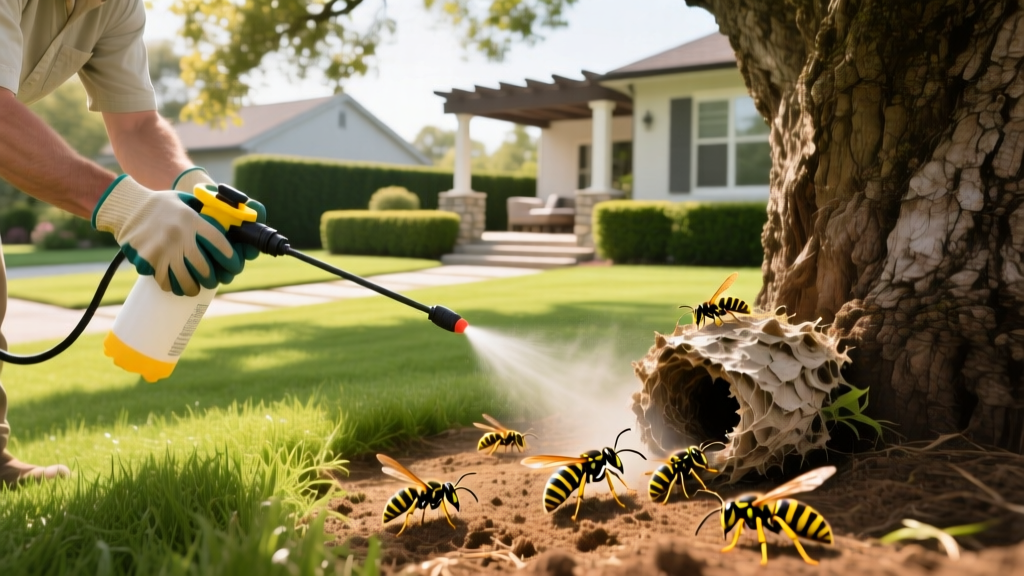
Emergency Yellow Jacket Control: Diagnose Nests & Rescue Your Yard
Symptom Diagnosis: Is It a Yellow Jacket Emergency?
Yellow jackets (Vespula and Dolichovespula species) are aggressive, territorial predators that transition from garden allies to severe liabilities by late summer. Unlike docile honeybees or solitary mud daubers, yellow jackets defend their colonies with lethal persistence, capable of stinging repeatedly. Before deploying any yellow jacket control measures, you must accurately diagnose the nest location and colony maturity. Misidentifying the threat level or nest type often results in mass envenomation events.
| Observable Symptom | Probable Nest Location | Threat Level | Immediate Action Required |
|---|---|---|---|
| Heavy, low-altitude flight traffic converging on a single dime-sized hole in the lawn. | Subterranean (Ground Nest) | Critical | Do not mow. Apply insecticidal dust at dusk. |
| Wasps entering/exiting a soffit vent, eave gap, or retaining wall crack. | Structural Void | Extreme | Do NOT seal the hole. Call a structural pest professional. |
| Visible, gray, papery football-shaped envelope hanging from a tree branch or roof overhang. | Aerial (Exposed Nest) | High | Use a 20-foot jet-stream foaming aerosol at night. |
| Swarming around outdoor dining areas, but no visible nest or flight path in the yard. | Off-Property / Hidden | Moderate | Deploy perimeter traps using season-specific baits. |
Rescue Fix 1: Eradicating Subterranean Nests (The Dust Method)
Ground nests are the most dangerous. Colonies located in abandoned rodent burrows or hollow tree roots can house 3,000 to 5,000 workers by late summer. Liquid sprays are ineffective here; the soil absorbs the moisture, and the colony simply relocates deeper. The only reliable rescue fix is insecticidal dust, which the workers track into the brood chambers on their legs and bodies.
Required Materials
- Delta Dust (Deltamethrin) or Sevin Dust 5% (Carbaryl): $12–$18. Delta Dust is preferred for damp soil because its active ingredient is waterproof. According to the National Pesticide Information Center, Carbaryl disrupts the insect nervous system rapidly, but Deltamethrin offers superior residual tracking in moist environments.
- Handheld Bulb Duster or a modified squeeze bottle with a narrow tube: $8–$12.
- PPE: Bee veil, heavy canvas jacket, leather gloves, and a headlamp with a red-light filter (yellow jackets cannot see red light well).
Step-by-Step Night Eradication
- Time the Attack: Wait until at least two hours after sunset. Temperatures below 55°F ensure nearly all foragers have returned to the nest and their metabolic activity is sluggish.
- Locate the Entrance: During the day, mark the hole with a small stone or landscaping flag from a safe distance (at least 15 feet away). Do not approach with heavy foot vibrations.
- Apply the Dust: Approach slowly using your red-light headlamp. Insert the duster tube 1 to 2 inches into the hole. Puff 3 to 4 heavy clouds of dust directly into the entrance. You want the dust to coat the tunnel walls, not plug the hole.
- Retreat and Wait: Back away immediately. Do not step on the surrounding soil. The colony will absorb the lethal dust over 24 to 48 hours. You will notice a sharp decline in daytime traffic by day two, and total cessation by day four.
⚠️ CRITICAL WARNING: Never Plug the Hole
Homeowners frequently make the fatal mistake of shoving dirt, steel wool, or expanding foam into the entrance after dusting. If you block the exit, the trapped colony will chew through root systems, landscape fabric, or even wooden deck joists to find a new exit—often emerging directly into your living space or underneath your deck stairs.
Rescue Fix 2: Knocking Down Aerial and Eave Nests
Aerial nests built in shrubs, under deck railings, or on roof eaves require a completely different tactical approach. You need immediate knockdown power and physical distance. Standard aerosol bug sprays will only agitate the colony and result in a swarm attack.
Product Comparison Matrix: Jet Sprays vs. Foaming Aerosols
| Product Type | Example Brand (2026 Pricing) | Reach / Penetration | Best Use Case | Drawbacks |
|---|---|---|---|---|
| Jet-Stream Liquid | Raid Wasp & Hornet Killer (~$7) | Up to 22 feet; highly directional. | Distant nests on high eaves or tall tree branches where you cannot safely approach. | Drips heavily; does not encapsulate the nest envelope. |
| Foaming Aerosol | Ortho Home Defense Hornet & Wasp (~$9) | Up to 20 feet; expands to fill voids. | Nests tucked inside soffit gaps, hollow fence posts, or dense shrubbery. | Foam expands unpredictably; can stain painted wood or siding. |
The "Arc and Saturate" Technique
When treating an exposed aerial nest, do not aim for the entrance hole. Aim for the pedicel—the small stem attaching the nest to the structure. Saturate the attachment point and the entire outer envelope using a sweeping arc motion for 5 to 7 seconds. The rapid-expanding foam or heavy liquid will encapsulate the nest, trapping the guards inside while the pyrethroid active ingredients (usually Prallethrin and Cypermethrin) penetrate the paper layers. Leave the treated nest in place for 48 hours to allow returning foragers to contact the residual pesticide before scraping it down with a long-handled hoe.
Rescue Fix 3: Containing Swarms When the Nest is Hidden
If yellow jackets are aggressively scavenging your patio but you cannot locate the nest (it may be on a neighbor's property or deep in a municipal storm drain), eradication is impossible. Your rescue fix shifts from eradication to perimeter containment and diversion.
Seasonal Bait Selection Framework
The most common failure in DIY yellow jacket trapping is using the wrong bait for the season. Yellow jackets undergo a drastic dietary shift as the colony lifecycle progresses. Using sugar bait in June will yield zero catches.
- Spring to Mid-Summer (April – July): The colony is in the "brood expansion" phase. Workers are hunting protein to feed developing larvae. Rescue Bait: Canned cat food, deli turkey, or commercial protein lures. Place traps 20 feet away from seating areas.
- Late Summer to Fall (August – October): The colony stops producing brood and shifts to foraging for carbohydrates to sustain the adults and new queens. Rescue Bait: Fruit juice, soda (not diet), or commercial sugar-based attractants like the Rescue! Yellowjacket Trap ($14–$18).
💡 Pro-Tip: Trap Placement Strategy
Never hang a yellow jacket trap directly over your dining table or near your back door. Traps are designed to draw wasps in. Place them at the extreme perimeter of your property line, at least 30 feet away from human activity zones, to pull the foraging flight path away from your home.
Contraindications: When to Abort and Call a Professional
Not every yellow jacket infestation is a DIY rescue scenario. Attempting to treat certain nest locations without commercial-grade equipment and structural liability insurance can result in catastrophic property damage or severe medical emergencies. Abort the DIY mission and hire a licensed structural pest control operator if you observe any of the following:
- Structural Voids: If wasps are entering behind vinyl siding, inside brick weep holes, or through attic vents. Sealing these or spraying into them will force thousands of agitated wasps through drywall seams into your living space.
- Proximity to HVAC Intakes: Nests located near fresh air returns or dryer vents. Pesticide dust or aerosol residues will be pulled directly into the home's air circulation system.
- Allergy Proximity: If any household member or immediate neighbor has a known Hymenoptera venom allergy (anaphylaxis), the risk of a stray guard wasp during a DIY treatment is an unacceptable liability. Professional exterminators use specialized micro-encapsulated formulations and HEPA-filtered dusting equipment to eliminate zero-risk exposure.