
Home & Garden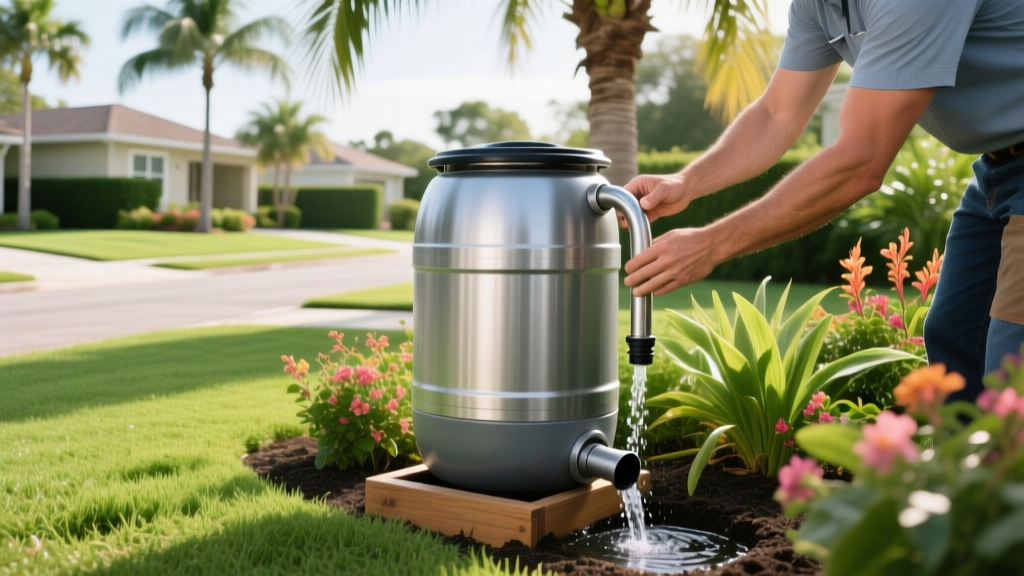
Is It Illegal to Collect Rainwater in Florida? (Laws & HOA Rules)
The Short Answer: Florida Rainwater Harvesting Laws
No, it is not illegal to collect rainwater in Florida. In fact, the state explicitly protects and encourages the practice. Under Florida Statute 373.144, the state legislature mandates that water management districts actively promote rainwater harvesting and issue guidelines for its implementation. Homeowners have a protected right to capture roof runoff for non-potable outdoor uses, such as landscape irrigation, car washing, and pool top-offs.
However, while state law is permissive, the intersection of local municipal codes, Homeowner Association (HOA) covenants, and strict indoor plumbing regulations creates a complex compliance landscape. Misunderstanding these boundaries is where most Florida homeowners run into legal or financial trouble.
State Protections vs. Allowable HOA Restrictions
The most common friction point for Florida gardeners is the HOA. Under Florida Statute 720.3075(4), HOAs are legally prohibited from enforcing covenants that unreasonably restrict or prohibit the installation of rain barrels. An HOA cannot outright ban rainwater collection. However, the statute does grant HOAs the authority to dictate how and where the system is installed to maintain neighborhood aesthetics.
| Regulatory Aspect | What Florida State Law Mandates | What Your HOA CAN Legally Enforce |
|---|---|---|
| System Ownership | HOAs cannot ban rain barrels outright. | N/A (Bans are illegal) |
| Placement | Homeowner's right to install on private property. | Can require barrels to be in the backyard or side yards, hidden from street view. |
| Aesthetics | No state aesthetic mandates. | Can require screening (e.g., lattice, vegetation) or dictate acceptable colors (e.g., earth tones, terracotta). |
| Roof Catchment | Protects right to use existing gutters/downspouts. | Can prohibit altering rooflines or installing visible, non-standard gutter systems. |
Actionable Advice: Before purchasing a $150 decorative rain barrel, submit a brief architectural review request to your HOA detailing the barrel's dimensions, color, and proposed screening method. Cite FL Stat 720.3075 if they attempt a blanket denial.
Plumbing Codes: Outdoor Irrigation vs. Indoor Use
The legality of your rainwater system changes drastically depending on where the water ends up. Capturing water for outdoor irrigation is virtually unregulated at the county level. Routing that water inside your home for flushing toilets or laundry triggers strict Florida Building Code (FBC) plumbing requirements.
Outdoor Use (Unregulated & Easy)
Connecting a 55-gallon high-density polyethylene (HDPE) barrel to a downspout diverter for garden irrigation requires no permits, no inspections, and no specialized plumbing. You can legally use a standard garden hose or a low-pressure drip irrigation system connected directly to the barrel's spigot.
Indoor Use (Highly Regulated & Expensive)
If you intend to pump rainwater indoors for non-potable uses (like toilet flushing), Florida law requires a completely separate, dedicated plumbing network. This includes:
- Purple Pipe Identification: All non-potable water lines must be colored purple to prevent accidental cross-contamination with drinking water.
- Backflow Preventers: Commercial-grade, testable backflow prevention assemblies must be installed where the rainwater system interfaces with the municipal water backup.
- Permitting: A formal plumbing permit and inspection by your county building department (e.g., Orange County Building Safety or Miami-Dade DERM) are mandatory.
Because retrofitting a standard Florida slab-on-grade home with a secondary purple pipe system can cost between $3,000 and $8,000, 98% of residential rainwater harvesting in the state remains strictly outdoors.
Step-by-Step: Setting Up a Compliant Florida Rain Barrel
To build a system that maximizes water pressure, prevents foundation damage, and complies with local mosquito control ordinances, follow these exact specifications.
1. Elevate for Gravity Pressure
Water pressure from a gravity-fed barrel is dictated by physics: every 1 foot of elevation generates 0.433 PSI. A standard sprinkler requires 15-20 PSI, which would require a 46-foot tower. Instead, elevate your barrel 24 inches using four 4x4x16-inch concrete cinder blocks (cost: ~$12 total). This provides roughly 0.86 PSI, which is insufficient for sprinklers but perfect for a soaker hose or filling a watering can. If you need higher pressure for a standard hose, install a transfer pump like the Wayne PLS100 1/6 HP (approx. $85) to boost output to 30+ PSI.
2. Install a Downspout Diverter
Rather than cutting your downspout and resting the barrel directly under it, use a closed-loop downspout diverter kit (e.g., Oatey Mystic Rainwater Collection System, ~$25). You drill a 2-1/8 inch hole into your existing PVC or aluminum downspout and insert the diverter. When the barrel fills to the top of the diverter hose, water automatically bypasses the barrel and continues down the normal downspout, preventing overflow.
3. Route Overflow Away from the Foundation
Florida's summer afternoon thunderstorms can dump 2 inches of rain in an hour, generating over 600 gallons of runoff from a standard 1,500 sq. ft. roof. If your diverter fails or clogs, the barrel's top overflow port must be plumbed with 1.5-inch PVC pipe routed at least 4 feet away from your home's concrete slab foundation to prevent soil erosion and hydrostatic pressure damage.
Warning: Mosquito Control Compliance
Florida's warm, humid climate makes standing water a prime breeding ground for Aedes aegypti mosquitoes, which carry Zika and Dengue. County code enforcement officers can issue fines for harboring breeding sites. You must cover your barrel's top inlet with a 1mm fiberglass mesh screen. Furthermore, drop one Bti (Bacillus thuringiensis israelensis) mosquito dunk into the barrel every 30 days. Bti is a naturally occurring bacterium that targets mosquito larvae but is 100% safe for plants, pets, and wildlife. According to the UF/IFAS Extension, Bti is the gold standard for residential rain barrel maintenance.
Florida's warm, humid climate makes standing water a prime breeding ground for Aedes aegypti mosquitoes, which carry Zika and Dengue. County code enforcement officers can issue fines for harboring breeding sites. You must cover your barrel's top inlet with a 1mm fiberglass mesh screen. Furthermore, drop one Bti (Bacillus thuringiensis israelensis) mosquito dunk into the barrel every 30 days. Bti is a naturally occurring bacterium that targets mosquito larvae but is 100% safe for plants, pets, and wildlife. According to the UF/IFAS Extension, Bti is the gold standard for residential rain barrel maintenance.
Financial Incentives: County Rebates and Tax Exemptions
Because rainwater harvesting reduces strain on municipal aquifers and stormwater infrastructure, many Florida municipalities offer financial incentives to offset the initial $80 to $150 cost of a food-grade HDPE barrel.
- Sales Tax Exemption: Under Florida law, the purchase of rain barrels and related rainwater harvesting equipment is exempt from state sales tax.
- Utility Rebates: The Southwest Florida Water Management District (SWFWMD) and various local utilities (such as Orange County Utilities and the City of Sarasota) frequently run rebate programs. These typically reimburse homeowners $50 to $100 per barrel, up to a maximum of two barrels per property. Always check your specific county's water conservation portal for active 2026 funding availability, as these programs are subject to annual budget approvals.
Frequently Asked Questions
Can I drink rainwater collected from my Florida roof?
No. Drinking untreated roof runoff is illegal and highly dangerous. Asphalt shingles leach petrochemicals, and Florida roofs accumulate bird droppings, pollen, and heavy metals. Making rainwater potable requires a multi-stage filtration system including UV sterilization and reverse osmosis, which is rarely cost-effective for residential use.
Will a rain barrel attract iguanas or wildlife?