
Home & Garden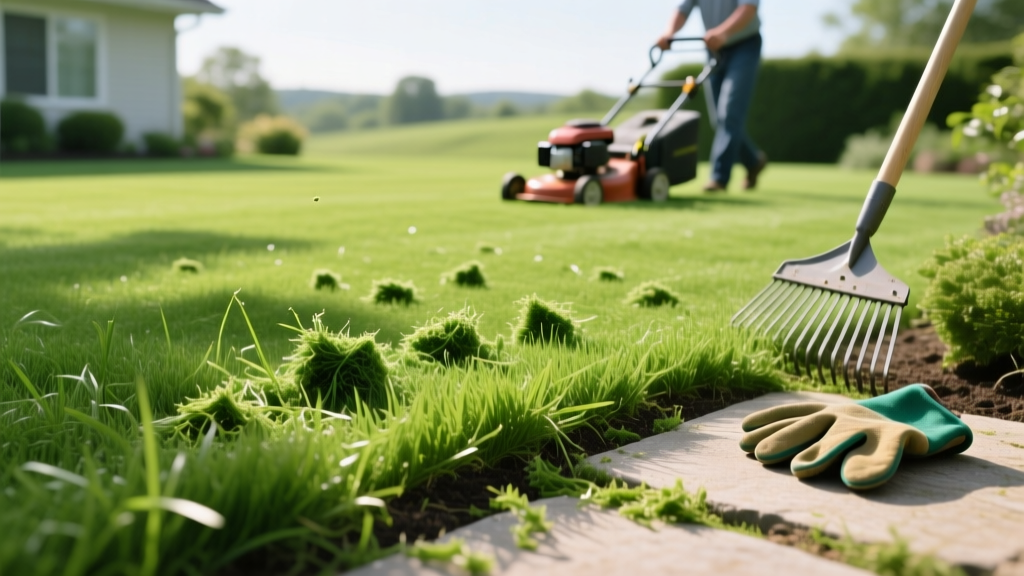
Grasscycling How-To: Step-by-Step Guide to Leaving Lawn Clippings
The Core Mechanics of Grasscycling
Grasscycling is the practice of leaving grass clippings on the lawn after mowing rather than bagging them. When executed correctly, the clippings decompose within 1 to 2 weeks, returning vital nutrients to the soil profile and reducing municipal green waste. According to the University of Minnesota Extension, grass clippings contain approximately 4% nitrogen, 1% phosphorus, and 2% potassium. Over a single growing season, grasscycling returns roughly 1 pound of nitrogen per 1,000 square feet to your soil—effectively replacing one full application of synthetic fertilizer.
The Financial Impact: Based on 2026 average fertilizer pricing ($45–$65 per 50lb bag of premium turf fertilizer), a standard 5,000 sq. ft. lawn saves between $35 and $50 annually in nitrogen costs alone. Factoring in the elimination of disposal bags and the 15–20% reduction in mowing time (since you skip the bagging and dumping steps), the seasonal ROI on a mulching mower upgrade is substantial.
Equipment Setup: Configuring Your Mower for Mulching
You cannot achieve a proper grasscycle with a standard side-discharge mower operating with the chute open. The clippings will form heavy, wet windrows that smother the turf below. You need a dedicated mulching mower or a 3-in-1 mower configured with a mulch plug and a specialized blade.
Standard vs. Mulching Blades
The geometry of the mower blade dictates the success of the grasscycling process. Standard high-lift blades are designed to create a vacuum that stands grass up and ejects it out the side chute. Mulching blades feature a distinct geometry with extra cutting teeth and a modified lift angle.
| Feature | Standard High-Lift Blade | Mulching Blade (e.g., Toro Atomic) |
|---|---|---|
| Lift Angle | High (Creates strong vacuum for bagging) | Low to Medium (Keeps clippings suspended in the deck) |
| Cutting Edge | Straight, single edge | Serrated, multiple cutting surfaces |
| Clipping Size | 1 to 2-inch segments | 1/4 to 1/2-inch fine particles |
| Decomposition Time | 3 to 5 weeks | 3 to 7 days |
Recommended Mulching Mowers for Home Lawns
- EGO Power+ 21' Select Cut (LM2135SP): Features a multi-blade system specifically engineered for ultra-fine mulching. The lower RPM combined with the specialized mulch insert yields virtually invisible clippings on dry turf.
- Toro Recycler 22 (Model 21382): Utilizes Toro's patented Vortex chamber under the deck, which forces air and clippings into a circular cutting path, ensuring the grass is chopped 3 to 4 times before dropping to the soil.
- Honda HRX217VKA: Features the MicroCut twin-blade system. The upper blade cuts the grass, and the lower blade immediately chops the clipping again before it hits the lawn.
The 1/3 Rule: Mowing Cadence and Cutting Heights
The most common failure point in grasscycling is violating the 1/3 Rule. You must never remove more than one-third of the grass blade's total height in a single mowing session. If your target height is 3 inches, you must mow when the grass reaches 4.5 inches. Removing more than 1/3 of the blade shocks the root system and produces clippings too long to decompose quickly, leading to thatch buildup and clumping.
| Grass Type | Target Mowing Height | Mow When Height Reaches | Optimal Mower Deck Setting |
|---|---|---|---|
| Tall Fescue | 3.0' - 4.0' | 4.5' - 6.0' | 3.5' (Notch 4 on most decks) |
| Kentucky Bluegrass | 2.5' - 3.5' | 3.75' - 5.25' | 3.0' (Notch 3 or 4) |
| Bermudagrass | 1.0' - 2.0' | 1.5' - 3.0' | 1.5' (Notch 2) |
| Zoysiagrass | 1.5' - 2.5' | 2.25' - 3.75' | 2.0' (Notch 2 or 3) |
Step-by-Step Execution for a Perfect Grasscycle
- Verify Turf Dryness: Never grasscycle wet grass. Morning dew or recent rain causes clippings to mat together, forming anaerobic clumps that smell sour and block sunlight. Wait until mid-afternoon when the blades are completely dry.
- Scrape the Mower Deck: Use a plastic putty knife to scrape the underside of your mower deck before starting. Built-up, dried grass residue disrupts the aerodynamic vortex required to keep clippings suspended for secondary chopping.
- Install the Mulch Plug: If using a 3-in-1 mower, ensure the plastic or metal mulch insert is securely blocking the side discharge chute. A loose plug will leak long, un-mulched clippings onto the lawn.
- Mow in Overlapping Patterns: Overlap your mowing rows by 2 to 3 inches. This ensures that any clippings blown to the side by the mower wheels are picked up and chopped on the return pass.
- Execute the Double-Cut (If Necessary): If the grass has overgrown past the 1/3 rule due to heavy spring rain, do not bag it. Instead, set the mower deck 1 inch higher than your target height for the first pass. Then, lower the deck to the final target height and mow again in a perpendicular direction (e.g., North-South, then East-West).
Troubleshooting Common Grasscycling Failures
Myth Alert: Grass Clippings Cause Thatch
Grass clippings are 85% water and break down rapidly via soil microbes. True thatch is a dense layer of undecomposed stems, stolons, and roots (high in lignin) that sits between the soil and the green grass. According to Texas A&M AgriLife Extension, grasscycling does not contribute to thatch accumulation. If you have a thatch problem, it is caused by over-fertilization, over-watering, or compacted soil, not by leaving clippings.
Grass clippings are 85% water and break down rapidly via soil microbes. True thatch is a dense layer of undecomposed stems, stolons, and roots (high in lignin) that sits between the soil and the green grass. According to Texas A&M AgriLife Extension, grasscycling does not contribute to thatch accumulation. If you have a thatch problem, it is caused by over-fertilization, over-watering, or compacted soil, not by leaving clippings.
Issue: Heavy Clumps Left on the Lawn
Cause: Mowing wet grass, a dull mower blade, or cutting off more than 1/3 of the blade height.
Fix: Sharpen your mower blade immediately. A dull blade tears the grass rather than slicing it, resulting in jagged, moisture-heavy clippings that mat together. Sharpen the blade every 20 to 25 hours of operation. If clumps are already on the lawn, rake them out immediately to prevent the turf underneath from yellowing and dying from light deprivation.
Issue: Clippings Blowing Out from Under the Deck
Cause: The mower deck is clogged, the mulch plug is missing, or the engine RPM is too low.
Fix: Clean the deck thoroughly. If using a battery-powered mower (like the EGO or Ryobi 40V), ensure the battery is fully charged; as voltage drops, blade RPM drops, reducing the centrifugal force needed to mulch effectively. Always mow with a fresh or fully charged battery for optimal mulching torque.
When to Stop Grasscycling and Start Bagging
While grasscycling should be your default protocol, there are three specific edge cases where you must attach the bagger:
- Active Fungal Disease: If your lawn is suffering from Dollar Spot, Brown Patch, or Snow Mold, bag the clippings to prevent spreading the fungal spores across the healthy sections of your yard.
- Heavy Weed Seed Heads: If your lawn has gone to seed with weeds like crabgrass, dandelions, or poa annua, bag the clippings to avoid redistributing thousands of weed seeds back into the soil profile.
- Recent Herbicide Application: If you have applied a broadleaf weed killer containing 2,4-D or Dicamba within the last 14 days, bag the clippings. Do not use these clippings as mulch in garden beds, as the residual herbicide will severely damage or kill your ornamental plants and vegetables.

