
Home & Garden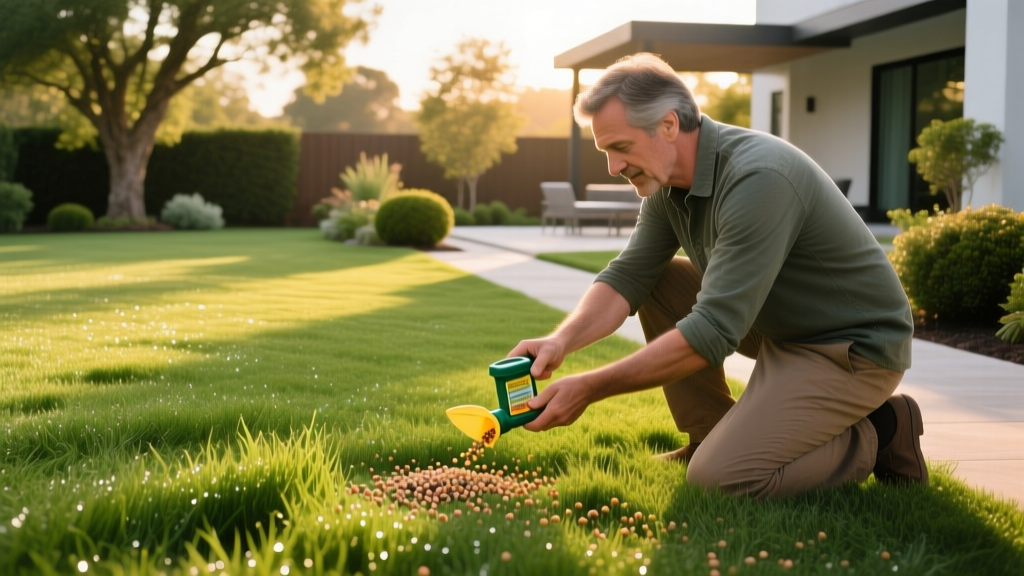
When and How to Apply Grasshopper Bait for Lawn Control
The Strategic Advantage of Bait Over Sprays
A single adult grasshopper can consume up to 50% of its body weight in green foliage daily. When populations surge, they can strip a suburban lawn or vegetable garden in hours. While liquid contact insecticides offer a quick knockdown, they fail to provide residual control and indiscriminately kill beneficial pollinators. Grasshopper bait, however, leverages the insect's natural foraging behavior. By targeting their feeding habits, baits provide a highly efficient, low-toxicity method for population suppression. According to the USDA APHIS Grasshopper Management Guidelines, bait applications are the preferred method for large-scale and perimeter suppression due to their minimal environmental footprint and high efficacy when timed correctly.
Choosing Your Active Ingredient: Biological vs. Chemical
The success of your application hinges entirely on selecting the correct active ingredient for your specific infestation stage. The market is dominated by two primary categories of grasshopper bait: microsporidian biologicals and carbamate chemicals.
| Feature | Nosema locustae (e.g., Nolo Bait, Semaspore) | Carbaryl 2% (e.g., Sevin Grasshopper Bait) |
|---|---|---|
| Mode of Action | Biological parasite; infects gut, causes chronic fatigue and starvation | Carbamate neurotoxin; disrupts nervous system upon ingestion |
| Target Life Stage | Strictly 2nd and 3rd instar nymphs (1/2 to 3/4 inch) | Nymphs and adults of all sizes |
| Speed of Kill | Slow (3 to 6 weeks); stops feeding within days | Fast (24 to 48 hours) |
| Secondary Kill | High; cannibalism spreads spores to uninfected hoppers | None; strictly relies on direct ingestion of bait |
| Cost per Acre | ~$45.00 (1 lb bag) | ~$30.00 (10 lb bag) |
| Pet & Wildlife Safety | Highly safe; specific to orthopterans | Moderate; toxic to fish and aquatic invertebrates |
Expert Insight: If you are seeing large, winged adult grasshoppers invading from a neighboring field, Nosema locustae baits will fail. Biological baits require the soft gut lining of young nymphs to establish infection. For adult invasions, you must switch to a Carbaryl-based bait or a targeted perimeter spray.
The Critical Timing Window
The most common reason homeowners report that "bait didn't work" is improper timing. Grasshoppers hatch from overwintered eggs in the soil as temperatures warm in late spring. The optimal window for bait application is when the majority of the population has reached the 2nd or 3rd instar stage. At this stage, nymphs are approximately 1/2 to 3/4 of an inch long, lack fully developed wings, and are actively foraging near their hatching sites.
According to Colorado State University Extension, applying bait before the 2nd instar is wasteful, as 1st instar nymphs do not consume enough bait to receive a lethal dose. Applying after the 4th instar allows the insects to disperse widely, making localized baiting ineffective.
Step-by-Step Application Protocol
To maximize the return on your bait investment, follow this precise application framework. Do not broadcast bait blindly across your entire lawn; grasshoppers typically migrate from dry, undisturbed breeding grounds (like vacant lots, ditches, or fence lines) into your irrigated yard.
Step 1: Map the Perimeter and Hatching Zones
Identify the dry, weedy areas bordering your property. These are the primary hatching zones. Your goal is to create a 10-to-15-foot wide baited barrier between the hatching zone and your manicured lawn or garden beds.
Step 2: Calibrate Your Spreader
Wheat bran and rolled oat baits are lightweight and flaky. Standard fertilizer spreaders often clog or distribute unevenly.
- Equipment: Use a specialized bait spreader (like the EarthWay A36) or a handheld rotary broadcaster.
- Setting: Set the aperture to the lowest setting that allows a steady flow. For Nolo Bait, the target rate is exactly 1 lb per acre (approx. 15-20 pellets per square foot). For Carbaryl bait, the rate is typically 10 to 15 lbs per acre.
Step 3: Execute the Application
- Check the Forecast: Apply only when no rain is expected for at least 24 hours. Moisture causes wheat bran baits to mold rapidly, rendering them unpalatable to grasshoppers.
- Time of Day: Apply in the early morning or late evening. Grasshoppers are most active foragers during the cooler parts of the day. Mid-day heat drives them into the thatch and shade, reducing bait encounter rates.
- Distribute Evenly: Walk at a steady pace of 2.5 mph. Overlap your spreader passes by 10% to ensure complete coverage of the barrier zone.
Pro-Tip for Garden Beds: Avoid broadcasting bait directly onto dense vegetable foliage where it will get trapped and mold. Instead, scatter the bait in a 2-inch wide ring around the base of vulnerable plants (like tomatoes and squash) or along the bare soil pathways between rows.
Troubleshooting Common Bait Failures
Even with perfect timing, environmental factors can compromise your results. Use this diagnostic guide to troubleshoot poor performance.
- Symptom: Bait disappears overnight, but grasshoppers remain.
Cause: Non-target foraging. Ants, birds, and rodents will consume wheat bran bait. Fix: Switch to a coarser rolled-oat formulation which is less attractive to ants, or apply bait in the late evening after bird foraging has ceased. - Symptom: Grasshoppers are eating the bait but not dying.
Cause: Misunderstanding biological kill times. If using Nosema locustae, the pathogen takes 3 to 6 weeks to kill the host. However, infected nymphs become lethargic and stop feeding on your plants within 48 hours. Fix: Monitor for reduced plant damage rather than counting dead insects. The UC Statewide IPM Program notes that secondary transmission via cannibalism will eventually crash the local population. - Symptom: Bait turns black and fuzzy after a few days.
Cause: Moisture degradation. High humidity or light dew can spoil the bran carrier. Fix: Ensure bait is stored in an airtight, climate-controlled bucket prior to use. If applied in a high-humidity climate, consider smaller, more frequent applications rather than one heavy broadcast.
Storage and Shelf Life Economics
Grasshopper baits are highly perishable compared to liquid concentrates. Nosema locustae spores degrade when exposed to high temperatures. Always store biological baits in a refrigerator or a climate-controlled basement (below 65°F) to maintain spore viability. A $45 bag of Nolo Bait kept in a hot garage for two months will lose up to 80% of its efficacy, resulting in wasted capital and unchecked crop damage. Chemical Carbaryl baits are more stable but will still mold if the packaging is left unsealed in a humid shed. Buy only what you intend to use in the current season, and calculate your acreage precisely: a standard 10,000 sq ft suburban lawn requires only about 1/4 acre of perimeter treatment, making a single 1 lb bag of biological bait sufficient for multiple seasons if stored correctly.