Home & Garden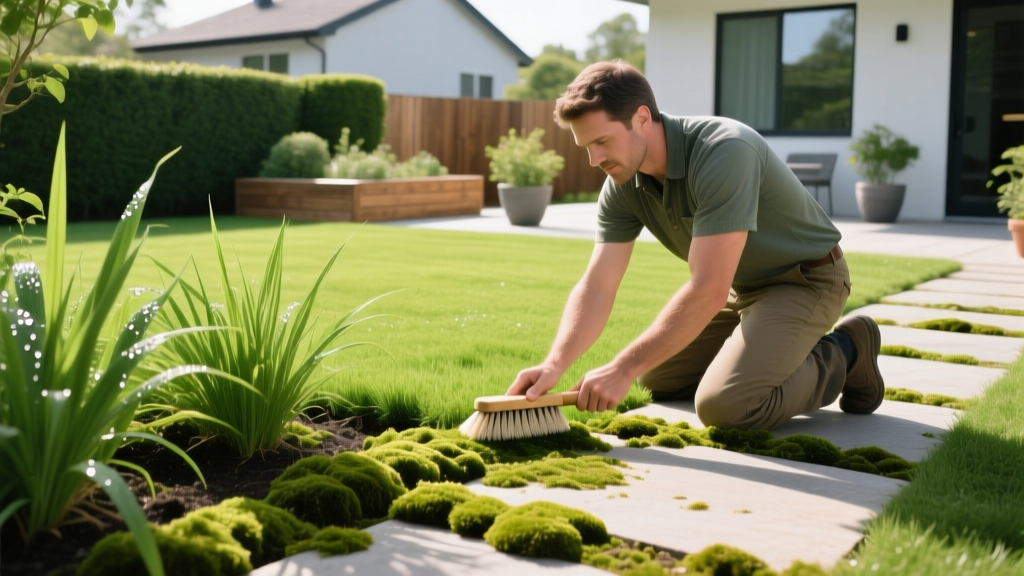
How to Get Rid of Moss in Lawns and Shade Beds Permanently
The Bryophyte Advantage: Why Moss is Winning
Moss is not a standard weed; it is a non-vascular bryophyte. Unlike turfgrass, which relies on a deep root system to pull water and nutrients from the soil profile, moss absorbs moisture and dissolved nutrients directly through its leaf-like structures (phyllids). This biological distinction means that standard soil-applied pre-emergent herbicides are entirely useless against moss. Furthermore, moss thrives in the exact conditions that cause turfgrass to fail: soil pH below 5.5, heavy clay compaction, and less than four hours of direct sunlight. To permanently eradicate moss, you must execute a two-pronged approach: chemical knockdown of the existing colony, followed by aggressive environmental remediation.
Diagnostic Matrix: Identifying Your Moss Catalyst
Before applying any treatments, diagnose the specific environmental failure allowing moss to colonize. Use this matrix to cross-reference your yard's symptoms with the required corrective action.
| Primary Catalyst | Visual Symptoms in Lawn | Diagnostic Test | Corrective Threshold & Action |
|---|---|---|---|
| High Soil Acidity | Grass is pale yellow; moss is vibrant, deep green and spongy. | Soil pH probe or lab test | If pH is below 6.0, apply pelletized lime at 50 lbs per 1,000 sq ft. |
| Soil Compaction | Puddling after rain; turfgrass roots are shallow (under 2 inches). | Wire flag test (push into soil) | If wire bends before 3 inches, perform core aeration immediately. |
| Insufficient Light | Moss dominates under tree canopies; grass is thin and elongated. | Track direct sun hours | If under 4 hours of direct sun, switch to shade-tolerant groundcover. |
| Excess Thatch | Spongy feel when walking; water runs off instead of penetrating. | Cut a 2-inch wedge of turf | If thatch layer exceeds 0.5 inches, perform mechanical dethatching. |
Phase 1: The Chemical Knockdown
Because moss lacks a vascular system, contact-based desiccants and metallic salts are highly effective at destroying the colony within 24 to 48 hours. Choose your active ingredient based on your hardscape proximity and environmental preferences.
Option A: Ferrous Sulfate (Iron Sulfate)
Ferrous sulfate (typically 20% iron content) is the industry standard for rapid moss eradication. Products like Lilly Miller Moss Out! For Lawns (approx. $18 for 10 lbs) dehydrate the moss, turning it black and brittle within a day. Application Rate: Apply 2 to 3 lbs per 1,000 square feet using a rotary spreader. The lawn must be damp during application, and you should avoid watering for 48 hours post-application. Critical Warning: Iron sulfate will permanently stain concrete driveways, stone patios, and light-colored vinyl siding with severe rust-orange marks. Sweep any granules off hardscapes immediately before they get wet.
Option B: Potassium Salts of Fatty Acids (Insecticidal/Moss Soaps)
For areas adjacent to patios, water features, or delicate ornamental beds, fatty acid salts (e.g., Safer Brand Moss & Algae Killer, approx. $22 for 32 oz ready-to-spray) are the safer alternative. These soap-based solutions destroy the moss's cell membranes on contact. Application Rate: Spray until the moss is thoroughly saturated. Trade-off: Fatty acids do not stain hardscapes, but they are less effective on mature, thick moss mats and often require a second application 14 days later to achieve total kill.
Phase 2: Physical Extraction and Soil Remediation
Once the moss has turned black and died (usually 7 to 10 days post-treatment), it must be physically removed. Leaving dead moss in place will create a hydrophobic thatch layer that prevents new grass seed from making soil contact.
- Mechanical Raking: Use a spring-tine thatch rake or a power dethatcher (rentable for approx. $60/day at most hardware stores) to aggressively pull the dead moss mat out of the turf. Rake in two perpendicular directions to ensure complete extraction.
- Core Aeration: Rent a walk-behind core aerator. The machine must pull plugs that are 2 to 3 inches deep and 0.5 inches wide. Leave the soil cores on the lawn; they will break down and introduce beneficial microbes back into the thatch layer.
- Calcitic Lime Application: According to research from the University of Minnesota Extension, turfgrass outcompetes moss when soil pH is maintained between 6.2 and 6.8. Apply calcitic lime (if your soil test shows adequate magnesium) or dolomitic lime at a rate of 40 to 50 lbs per 1,000 square feet to raise the pH by approximately 0.5 points.
Phase 3: The Sunlight Threshold Decision Tree
The most common reason moss removal fails is attempting to force turfgrass to grow in environments where photosynthesis is mathematically impossible. Use this framework to decide whether to reseed or pivot to an alternative groundcover.
The 4-Hour Rule
Standard Kentucky Bluegrass requires 6 to 8 hours of direct sunlight. Fine Fescues (like Creeping Red or Chewings) can survive on 4 hours of direct, unfiltered sunlight or a full day of bright, dappled shade. If your yard receives less than 4 hours of direct sunlight, no grass seed will permanently outcompete moss. You must pivot to shade-tolerant groundcovers such as Liriope muscari (Big Blue Lilyturf), Pachysandra terminalis, or Lysimachia nummularia (Creeping Jenny).
If you meet the 4-hour threshold, overseed immediately after aeration with a shade-specific blend. Look for endophyte-enhanced seeds, such as Jonathan Green Black Beauty Ultra (approx. $75 for 20 lbs), which contain symbiotic fungi that make the grass blades naturally resistant to surface-feeding insects and environmental stress.
Real-World Failure Modes and Edge Cases
Even with perfect execution, homeowners frequently encounter these specific failure modes during moss remediation:
Failure Mode 1: The 'Bounce Back' Effect
Moss spores can remain dormant in the top 1/4 inch of soil for years. If you kill the surface moss and reseed, but fail to correct the underlying soil compaction or pH, the moss spores will germinate alongside your new grass seed. Moss germinates faster than fescue, choking out the new seedlings. Fix: Never skip the core aeration and lime application steps.
Failure Mode 2: Tree Root Competition
Moss often thrives under mature maples or oaks not just because of shade, but because the tree's dense surface root network monopolizes all available soil moisture and nitrogen. The Royal Horticultural Society (RHS) notes that turfgrass in the 'drip line' of mature trees is almost always destined to fail. Fix: Mulch the area under the tree canopy out to the drip line with 2 inches of hardwood bark mulch, and restrict grass planting to areas outside the root zone.
Preventative Maintenance Schedule
Once the moss is eradicated and the lawn is established, implement this annual schedule to prevent recolonization:
- Early Spring (March): Apply a pre-emergent crabgrass preventer (e.g., Prodiamine) and conduct a soil pH test. Apply lime if pH has dropped below 6.0.
- Late Spring (May): Prune lower tree branches to raise the canopy and increase ambient light penetration to the turf.
- Early Fall (September): Core aerate high-traffic zones, apply a winterizer fertilizer (high potassium, low nitrogen), and overseed thin patches with fine fescue.
- Winter Prep (November): Rake all fallen leaves immediately. A wet layer of leaves left on the lawn for more than two weeks creates the exact dark, humid microclimate moss requires to initiate winter growth.