Home & Garden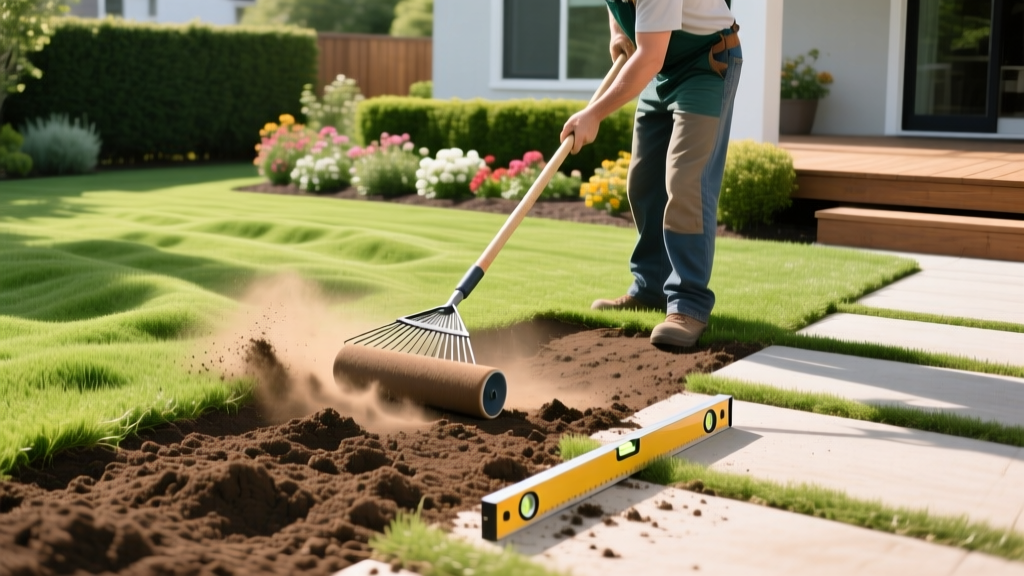
How to Level a Yard: Step-by-Step Topdressing & Grading Guide
Assessing the Unevenness: Topdressing vs. Regrading
Understanding how to level a yard requires first diagnosing the severity of the grade issues. Minor undulations, settling from decomposed tree roots, and localized depressions under 2 inches deep are best addressed via topdressing. Severe slopes, negative grading toward foundations, or depressions exceeding 3 inches require regrading with heavy machinery and complete turf removal.
Diagnostic Decision Matrix:
- Variance < 0.5 inches: Use a 100% screened compost topdressing. Apply with a stiff push broom.
- Variance 0.5 to 2 inches: Use a sand/soil/compost mix. Apply with a 36-inch aluminum leveling rake.
- Variance > 2 inches: Requires cut-and-fill regrading. Strip sod, laser-grade subsoil, and replace sod.
According to Penn State Extension, topdressing not only smooths the turf canopy but also improves soil structure, increases water retention, and accelerates thatch decomposition when paired with core aeration.
The Ideal Topdressing Soil Matrix
The most common failure mode in DIY lawn leveling is using the wrong material. Never use 'play sand' or 'builder's sand'; these contain high silt and clay fractions that will compact into a concrete-like layer over your turf. You must use washed masonry sand or washed river sand.
| Existing Soil Type | Topdressing Mix Ratio (by Volume) | Primary Benefit |
|---|---|---|
| Heavy Clay | 70% Washed Masonry Sand / 30% Screened Topsoil | Improves drainage, prevents waterlogging |
| Sandy Loam | 50% Screened Compost / 50% Screened Topsoil | Increases moisture and nutrient retention |
| Mixed/Unknown | 60% Washed Sand / 20% Topsoil / 20% Compost | Balanced structural support and nutrition |
5-Step Procedure to Level Your Lawn
Step 1: Mow Low and Dethatch
Drop your mower deck to 1.5 inches. Scalping the lawn slightly allows the topdressing material to reach the soil surface rather than getting trapped in the grass blades. If your thatch layer exceeds 0.5 inches, run a power dethatcher (rental cost: ~$65/day) first. Thick thatch acts as a physical barrier, preventing the leveling mix from integrating with the root zone.
Step 2: Core Aeration
Run a walk-behind core aerator over the entire yard in two perpendicular passes. Core aeration extracts 3-inch deep soil plugs, relieving compaction and creating channels for the topdressing sand to infiltrate. Leave the extracted plugs on the lawn; the leveling rake will break them apart and redistribute the native soil.
Step 3: Mix and Distribute the Material
Mix your chosen soil matrix thoroughly. Using a wheelbarrow and a flat shovel, dump small piles of the mix across the lawn. The critical rule of topdressing is depth control: never apply more than 0.5 inches of material at one time. Applying thicker layers will smother the turf crowns, blocking sunlight and gas exchange, which leads to widespread necrosis.
Step 4: Drag and Level
Use a 36-inch aluminum leveling rake (such as the Rocklin Industry Leveling Rake or Yard Butler Terra Tamer). Push the material into the depressions, pulling the excess off the high spots. For large areas (over 5,000 sq ft), attach a chain-link drag mat or a specialized turf drag (like a Parma drag mat) to a utility vehicle or ATV to distribute the material evenly across the canopy.
Step 5: Water and Settle
Immediately water the lawn with 0.5 inches of irrigation. This washes the sand and soil mix off the grass blades and down into the aeration holes and low spots. Wait 48 hours, then inspect the yard. If minor low spots remain visible, apply a second micro-layer (0.25 inches) and repeat the dragging process.
Critical Edge Cases and Safety Protocols
Utility Clearance Warning: If your leveling project requires regrading or digging deeper than 6 inches to fix severe swales, you must contact National 811 Safe Digging at least 72 hours before breaking ground. Striking shallow irrigation lines, fiber optics, or gas mains is a severe risk during aggressive grading procedures.
Dealing with Tree Roots: Never add topdressing over the critical root zone (drip line) of mature trees. Adding even 1 inch of soil over tree roots restricts oxygen flow to the feeder roots, leading to canopy dieback within 12 to 18 months. Keep leveling materials at least 2 feet away from the trunk flare.
Drainage Swales: If your yard slopes toward your home's foundation, topdressing will not fix the hydrostatic pressure issue. You must cut a 5% minimum slope (6 inches of drop over the first 10 feet) away from the foundation using subsoil regrading before addressing the turf canopy.
Equipment and Material Cost Breakdown
Budgeting accurately prevents mid-project delays. Below are the current average material and rental costs for a standard 5,000 square foot lawn requiring a 0.5-inch topdressing application (approx. 7.7 cubic yards of material).
- Washed Masonry Sand: $30 - $45 per ton (delivered). Requires ~5 tons for 5,000 sq ft.
- Screened Compost: $40 - $60 per cubic yard (delivered).
- 36-inch Aluminum Leveling Rake: $80 - $130 (one-time purchase).
- Walk-Behind Core Aerator Rental: $75 - $110 per day from local equipment rental yards.
- Power Dethatcher Rental: $60 - $85 per day.
By executing this procedure during the turf's peak growing season (late spring for warm-season grasses like Bermuda and Zoysia; early fall for cool-season grasses like Fescue and Kentucky Bluegrass), the grass will rapidly push through the leveling matrix, resulting in a perfectly graded, professional-quality lawn surface.