
Home & Garden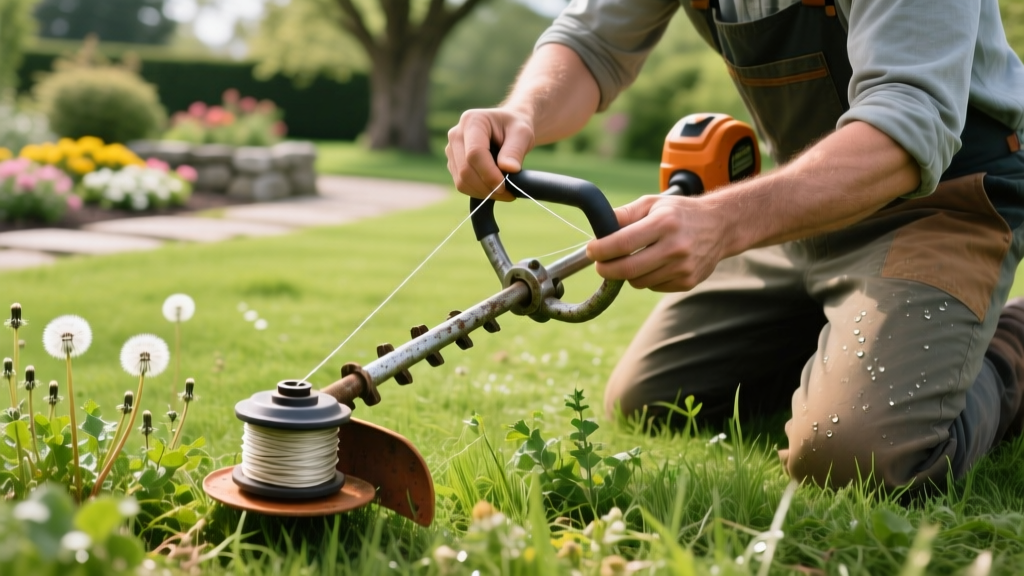
How to Weedeater String Your Trimmer for Spot-Treating Tough Weeds
Spot-treating invasive weeds in a cultivated lawn requires surgical precision. While herbicides are effective for broad applications, mechanical removal via a string trimmer is often the preferred method for eradicating isolated patches of fibrous or woody weeds without introducing chemicals to your soil. However, the efficacy of this mechanical spot-treatment hinges entirely on your equipment's configuration. Understanding how to weedeater string your machine with the correct diameter, geometry, and material composition is the difference between cleanly severing a Canada Thistle at the crown and violently shredding your line while scalping your desirable fescue.
The Physics of Weed Cutting: Why String Geometry Matters
Trimmer line is not a one-size-fits-all consumable. The cross-sectional geometry of the string dictates how it transfers kinetic energy to the plant stalk. When spot-treating specific weed species, selecting the wrong geometry will either fail to penetrate the stalk or cause excessive collateral damage to surrounding turfgrass.
- Round Line: Slices through vegetation with minimal aerodynamic drag. It is ideal for delicate spot-treatment of soft-stemmed annuals like crabgrass or spurge, but it tends to bounce off or wrap around fibrous, woody stalks.
- Square and Star (Multi-Sided) Line: Features sharp edges that act like a serrated blade. The aggressive chopping action is mandatory for severing the thick, fibrous taproots and hollow stalks of broadleaf perennials like plantain and dandelions.
- Twisted Line: The spiral design reduces air resistance and dampens the high-frequency vibration that causes trimmer head fatigue. It is engineered for heavy brush and woody invasive species.
Matching String Diameter to Target Weed Species
Diameter dictates the mass and impact force of the line. Using a 0.065-inch line on Japanese Knotweed will result in immediate line breakage, while using a 0.105-inch line to spot-treat dandelions in a Kentucky Bluegrass lawn will likely scalp the turf crowns and cause irreversible damage. According to turf management guidelines from the University of Minnesota Extension, mechanical weed control must balance stalk severance with turf preservation.
| Target Weed Species | Stalk Density & Structure | Recommended Diameter | Optimal Geometry |
|---|---|---|---|
| Crabgrass / Annual Bluegrass | Soft, low-mass, shallow roots | 0.065" - 0.080" | Round |
| Dandelion / Broadleaf Plantain | Fibrous, medium-mass taproots | 0.085" - 0.095" | Square / Star |
| Canada Thistle / Bindweed | Highly fibrous, resilient stalks | 0.095" - 0.105" | Star / Twisted |
| Japanese Knotweed / Kudzu | Woody, hollow, high-mass canes | 0.105" - 0.130" | Twisted Copolymer |
Step-by-Step: How to Weedeater String Your Spool for Precision
Even the most advanced copolymer line will fail if the spool is wound incorrectly, leading to line fusing and feed-jams during critical spot-treatments. Follow this exact mechanical procedure to restring a standard bump-feed trimmer head (such as the Echo Speed-Feed or Husqvarna T25):
- Disassemble and Clean: Depress the side tabs to remove the spool. Clear out compacted grass clippings and dirt from the arbor shaft. Debris causes friction heat, which melts nylon line.
- Measure and Cut: For standard residential spools, cut exactly 22 feet of line. Excessive length creates overlapping tension that locks the spool; insufficient length reduces cutting efficiency.
- Anchor the Line: Locate the center divider eyelet on the spool. Thread the line through and pull it until you have equal lengths on both sides.
- Wind with Tension: Locate the directional arrows stamped on the underside of the spool. Wind the line tightly in the indicated direction (usually clockwise). Critical: You must apply physical tension to the line while winding. Loose winding causes the outer layers to bite into the inner layers during high-RPM operation, permanently welding the string together.
- Lock and Thread: Secure the loose ends in the notches on the spool rim. Re-seat the spool onto the arbor, ensuring the pulley spring engages. Thread the lines through the metal or reinforced plastic eyelets on the outer housing, pull to release them from the retention notches, and snap the housing back onto the base.
Material Science: Copolymer vs. Standard Nylon for Fibrous Stalks
When spot-treating aggressive perennials, the friction generated by the line impacting the stalk can exceed 400°F. Standard extruded nylon softens at these temperatures, causing the line to flatten, lose its geometric cutting edge, and eventually fuse to the spool. For weeds with high silica content or woody bark, you must upgrade to a copolymer blend or an aluminum-reinforced core (such as Oregon Gatorline or Cyclone Desert Extrusion). These premium lines cost between $18 and $28 per spool—roughly triple the price of standard nylon—but they retain their structural integrity under extreme thermal loads. As noted in the Pacific Northwest Weed Management Handbook, mechanical eradication of resilient perennials requires repeated, aggressive cutting at the soil line to exhaust the root system's carbohydrate reserves; a line that melts and snaps on the third impact renders this biological exhaustion strategy impossible.
⚠️ Warning: Debris and Kickback Hazards
When upgrading to 0.105"+ star or twisted line for woody weeds like Knotweed, the trimmer's kinetic energy increases dramatically. Always wear ANSI Z87.1 rated polycarbonate eye protection and heavy denim. Hitting hidden rocks or thick woody taproots with heavy-gauge geometric line can launch shrapnel at speeds exceeding 150 mph.
Spot-Treatment Techniques: Avoiding Turf Damage
The physical restringing of your tool is only half the battle; the operator's technique dictates the survival of the surrounding lawn. When spot-treating invasive weeds embedded in desirable turfgrass, utilize the "Tickle and Drop" method:
- Do not swing parallel to the ground. Swinging horizontally risks the line dipping slightly and scalping the crowns of your desirable grass, leaving permanent brown arcs in your lawn.
- Tilt the trimmer head. Angle the guard slightly upward so only the very tip of the string makes contact with the target weed's stalk.
- Use the line's apex velocity. The cutting force is concentrated at the outermost 1/4 inch of the string. By tapping the weed stalk precisely with the tip, you sever the weed while the bulk of the string passes harmlessly over the lower-growing turfgrass canopy.
By meticulously matching your string's diameter and geometry to the biological structure of the target weed, and executing a disciplined winding process, your string trimmer transforms from a blunt edging tool into a highly calibrated instrument for ecological weed management.
"The mechanical failure of trimmer line during invasive species management is rarely a product defect; it is almost exclusively a mismatch between the polymer's thermal rating and the kinetic friction required to sever the target plant's specific cellular structure." — Oregon Product Engineering Guidelines

